
Youth Club Volleyball Injuries: A Parent's Guide
Growing knees in a jumping sport, the back-pain rule that saves seasons, and the club calendar's hidden math
Updated October 20263 minute read
Club volleyball runs year-round on growing bodies: Osgood-Schlatter and Sever's in the younger years, jumper's knee and hitter's shoulder as jump and swing counts climb, and one rule every volleyball parent should know — persistent one-sided, arching-related back pain in a young hitter needs an assessment for a stress injury of the spine, not a stretching assignment. Most teen volleyball problems are very fixable; the difference between a two-week fix and a lost season is how early someone looks.
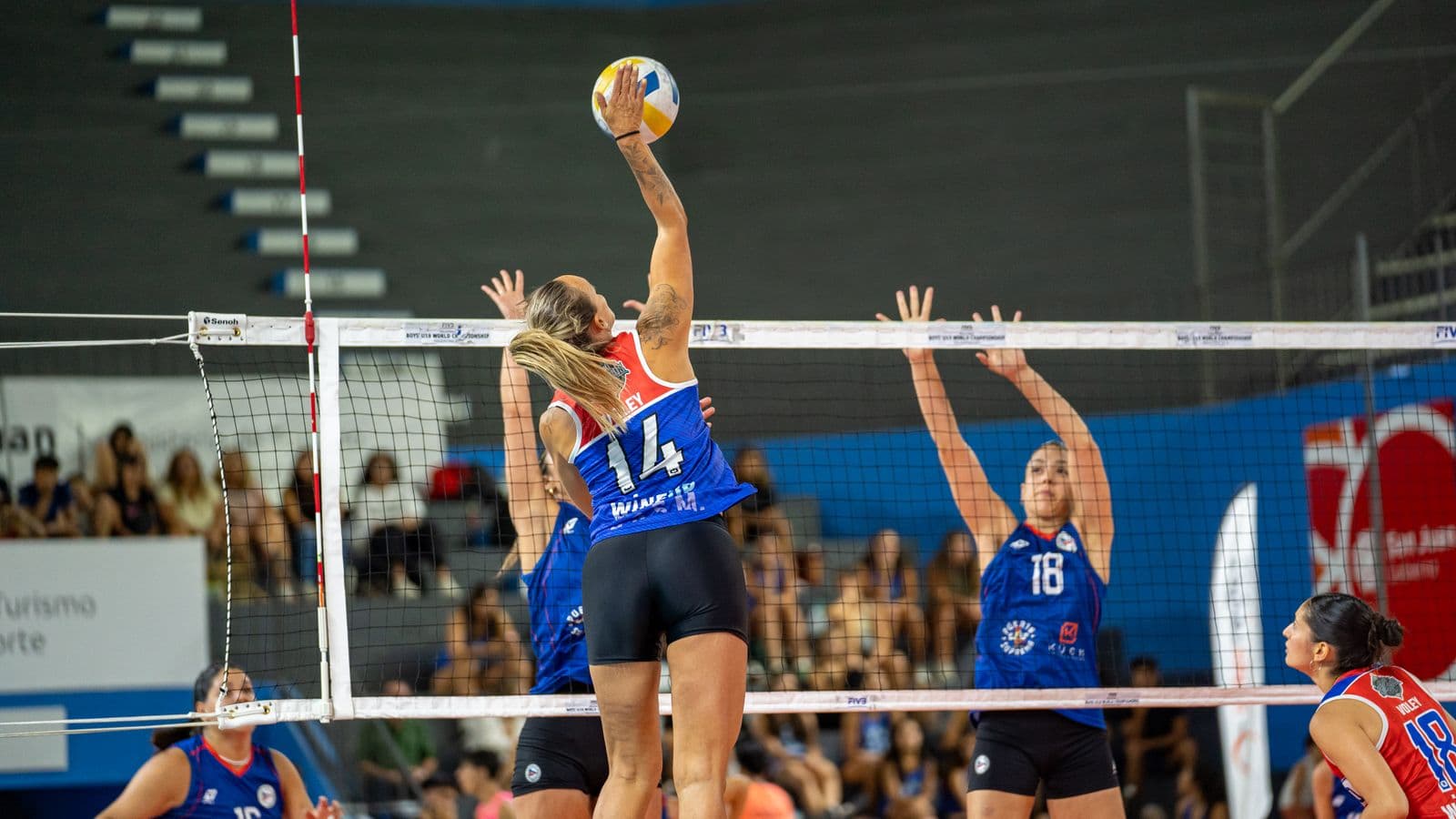
Why volleyball kids get hurt differently
Club volleyball is one of the country's biggest youth sports — and one of its most year-round: school season rolls into club season rolls into beach, with tournament weekends of six to ten sets. Put that calendar on a growing body and the patterns are predictable. Growth plates are weaker than the tendons pulling on them, so jumping teens get growth-plate irritation where adults get tendon pain. Growth spurts change the math mid-season. And the jump and swing counts of a club weekend are genuinely adult-sized loads.
None of this makes volleyball unsafe — it remains one of the best things a teenager can do. It means the warning signs are worth knowing.
The injuries that matter, by age
Younger players (roughly 10–14): pain at the bump below the kneecap is Osgood-Schlatter — the jumping sport's classic — and heel pain with jumping is Sever's. Both are growth-plate conditions, both respond to load management and strength work, and both typically resolve as the plate matures.
Older teens: the patterns start to look adult — jumper's knee as jump counts climb, and hitter's shoulder as swing counts do. Both are load-tolerance problems that respond to managed volume plus loading programs, not rest alone.
The landing-sport note: girls' volleyball, like soccer and basketball, carries elevated ACL risk on landings — and the encouraging, trial-tested news is that landing-training warm-up programs cut lower-limb injuries substantially in youth team sports. The ingredients live in strength and landing training, and the ACL guide covers the bigger conversation.
The back-pain rule every volleyball parent should know
A young hitter who arches and snaps hundreds of times a week puts repeated extension through a growing spine. So here is the rule, stated plainly: persistent back pain in a teen hitter — especially one-sided, especially worse with arching — gets assessed, not stretched. The concern is a stress injury of the spine (spondylolysis), which is common in extension-sport adolescents, very manageable when caught early, and much costlier when toughed out. The hitter's back guide maps the patterns.
The club calendar and the quiet part
Year-round single-sport training is the classic overuse setup — the specialization research is clear that intense, single-sport training raises injury risk in young athletes. Parents' best levers are boring ones: a real off-season or second sport where possible, jump counts that someone is actually watching, and sleep.
Then name the quiet part: club kids hide pain. Playing time, travel teams, club fees guilt, and college recruiting all reward silence. The dinner-table distinction worth teaching: sore is both legs, after hard weekends, gone in a day. Hurt is one spot, every practice, sticking around. Sore is training; hurt is information.
What to expect from PT for a minor
A parent or guardian attends the evaluation and consents to care. Expect questions about the training calendar, growth (recent height changes), sleep, and position — a libero's load and an outside hitter's load are different sports. Plans lean on modified practice rather than shutdown: most kids keep training with their team in some form, which matters more than adults tend to realize. Ask the clinic specifically about experience with adolescent athletes — here's how to vet a volleyball PT, and Bay Area families can browse volleyball-friendly PTs by region.
The sibling guides cover the same ground in other sports: basketball, soccer, swimming, and tennis.
Frequently asked questions
Sources (6)
- DiFiori JP, et al. Overuse injuries and burnout in youth sports: a position statement from the American Medical Society for Sports Medicine. Clin J Sport Med. 2014. — Clin J Sport Med
- Jayanthi NA, et al. Sports-specialized intensive training and the risk of injury in young athletes: a clinical case-control study. Am J Sports Med. 2015. — AJSM
- Standaert CJ, Herring SA. Expert opinion and controversies in sports and musculoskeletal medicine: the diagnosis and treatment of spondylolysis in the adolescent athlete. Arch Phys Med Rehabil. 2007. — Arch Phys Med Rehabil
- Olsen OE, et al. Exercises to prevent lower limb injuries in youth sports: cluster randomised controlled trial. BMJ. 2005. — BMJ
- Agel J, et al. Anterior cruciate ligament injury in National Collegiate Athletic Association basketball and soccer: a 13-year review. Am J Sports Med. 2005. — AJSM
- AAOS OrthoInfo. Osgood-Schlatter disease (knee pain). — AAOS OrthoInfo
This article is for education only and isn't medical advice. Always talk to a licensed clinician about your specific situation.