
Ankle Sprains in Volleyball: The Injury That Lives Under the Net
The landing that rolls it, the X-ray decision, and the rehab that keeps it from becoming your position's bad habit
Updated October 20263 minute read
Ankle sprains are volleyball's most common injury, and most of them happen in one place: the conflict zone under the net, where a blocker or hitter lands on a teammate's or opponent's foot. The acute questions are whether you can bear weight and whether the bone itself is tender — that's the X-ray conversation. The season question is different: an ankle that gets balance-and-strength rehab rarely becomes a repeat offender, while an ankle that just gets rested usually does — and in volleyball, the bracing evidence genuinely earns its place.
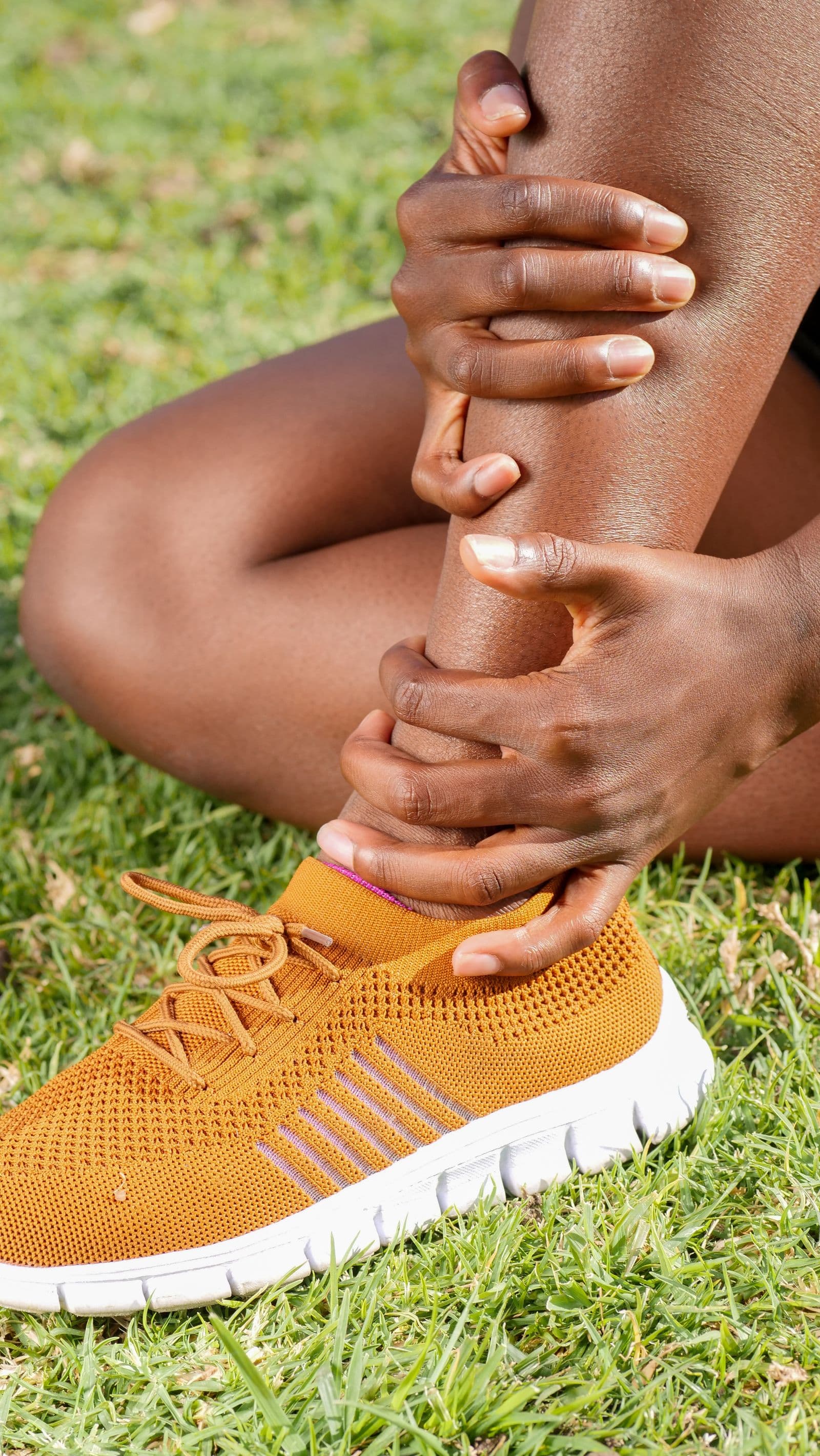
The conflict zone
Volleyball's most common injury has an address: the meter of court on either side of the net. A hitter lands from an approach, a blocker comes down from a press, and one foot finds the edge of someone else's — the ankle rolls before anyone has a choice in the matter. Research on volleyball ankle injuries keeps finding the same thing: it's the landing, usually on another player's foot, far more often than the open-court cut.
That matters for two reasons. First, it means ankle sprains are partly a traffic problem — where you jump from and land matters, and that's coachable. Second, it means every front-row player is in the exposure pool every single set, which is why the rehab-it-right-the-first-time rule below carries so much weight in this sport.
The first hour: the X-ray decision
Two questions sort the acute moment:
- Can you bear weight? Four full steps, even ugly ones.
- Is the bone tender? Press the knobs on both sides of the ankle and the outside edge of the midfoot. Sprains hurt in the soft tissue below and in front; fingertip tenderness on bone is different.
Trouble with either earns an X-ray conversation. Pass both, and you're very likely in sprain territory — swelling and a few weeks of color are normal, and a PT evaluation this week sets the plan. The full condition story lives in the ankle sprain guide.
The re-sprain spiral, and why volleyball feeds it
A sprain tears more than ligament fibers — it scrambles the ankle's position sense, the reflexes that catch a bad landing before you feel it. Rest lets pain fade; it doesn't restore the reflexes. Put that numbed-but-weak ankle back under the net, where volleyball retests it on every block, and the second sprain is less bad luck than arithmetic.
The exit is the rehab most players skip: progressive balance work (single-leg stands → unstable surfaces → hops), strengthening in every direction, and graded landing practice. The balance-board research that proved this out was done in volleyball — players who trained proprioception sprained less, especially those with a sprain history. The same work lives in volleyball strength and landing.
Braces: the honest answer
Volleyball is one of the sports where bracing has real evidence — particularly for players who have sprained before, where trials show braces reduce recurrence. If that's you, a lace-up or semi-rigid brace for practices and matches is a legitimate, evidence-backed choice, not a crutch. Two caveats: a brace protects the ankle it's on without doing the rehab for it, and fresh unbraced sprains still need the full balance-and-strength project so the ankle can protect itself the day you forget the brace.
Smarter traffic at the net
Because the mechanism is so specific, part of prevention is spatial: knowing where the center line is, jumping straight up rather than drifting on blocks, and talking with your middle about who takes which space. Coaches drill this as technique; your ankles experience it as risk management.
When to get help
Book an evaluation now if you can't bear weight, the bone is tender, or numbness shows up. Book this week for everything else — early rehab shortens the comeback and is what prevents the spiral. A cash-pay evaluation runs $125–$250 ($175–$275 in the Bay Area, what PT costs), a superbill often recovers part of it, and the return gates take you from hop tests back to the net. Basketball players roll ankles the same way — their guide is this page's sibling. Bay Area players can browse volleyball-friendly PTs by region, and how to find a volleyball PT covers the vetting.
Frequently asked questions
Sources (5)
- Verhagen E, et al. The effect of a proprioceptive balance board training program for the prevention of ankle sprains: a prospective controlled trial in volleyball. Am J Sports Med. 2004. — AJSM
- Doherty C, et al. The incidence and prevalence of ankle sprain injury: a systematic review and meta-analysis. Sports Med. 2014. — Sports Med
- Gribble PA, et al. Evidence review for the 2016 International Ankle Consortium consensus statement on ankle sprains. Br J Sports Med. 2016. — BJSM
- Janssen KW, et al. Bracing superior to neuromuscular training for the prevention of self-reported recurrent ankle sprains: a randomised controlled trial. Br J Sports Med. 2014. — BJSM
- AAOS OrthoInfo. Sprained ankle. — AAOS OrthoInfo
This article is for education only and isn't medical advice. Always talk to a licensed clinician about your specific situation.