
Ankle Sprains in Badminton: Do It Right the First Time
The landing-and-cut injury that becomes a career of re-sprains when it's rehabbed with a bag of ice
Updated October 20262 minute read
Badminton's constant direction changes and single-leg landings make the lateral ankle sprain one of its most common injuries — and the most commonly under-treated. The evidence is blunt: sprains rehabbed with rest-and-ice alone re-sprain at high rates, while early movement, progressive loading, and balance training cut the risk substantially. Bone tenderness or inability to bear weight after the roll goes to X-ray first; everything else starts rehab within days, not weeks.
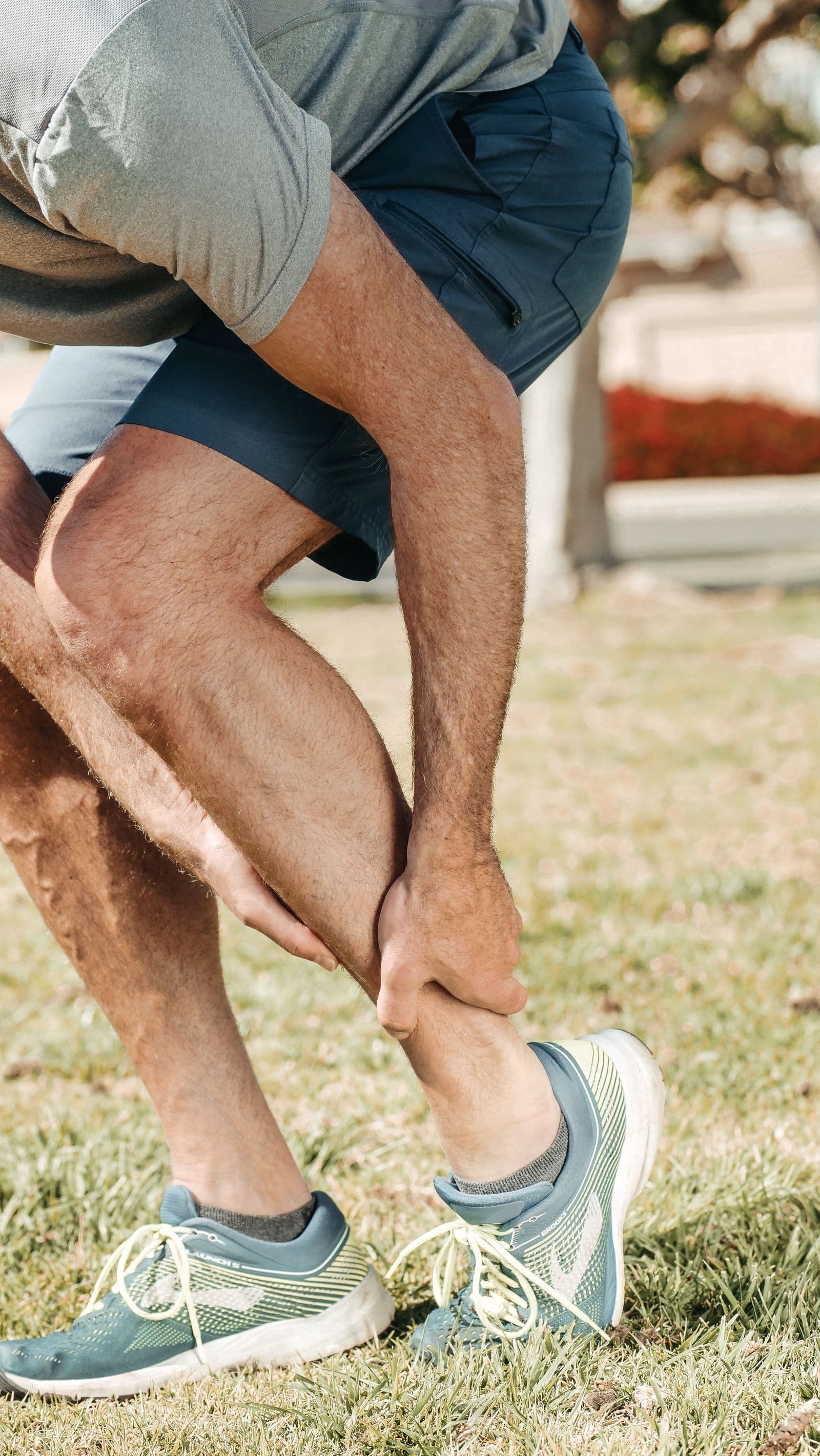
Why badminton rolls ankles
A badminton rally is a chain of explosive direction changes and single-leg landings on a small court — plant, cut, lunge, jump, land, repeat. The lateral ankle sprain (rolling over the outside of the foot) is among the most common injuries in all of sport and court games are its natural habitat: the classic badminton versions are the landing from a jump smash that drifts onto the foot's outer edge and the hard cut toward a corner that the ankle can't follow.
First hour: the X-ray question
Use the clinically validated screen (the Ottawa ankle rules, tested on tens of thousands of patients): X-ray first if you couldn't take four steps immediately and still can't, or if the bone itself is tender — the tips or back edges of either ankle knob, the outer midfoot bone, or the inner midfoot. Otherwise: it's very likely a sprain, compression and elevation for comfort, and crucially — you don't need to immobilize it for weeks.
Do it right the first time
The modern guideline is clear and most casual rehab ignores it:
- Move early. Protected weight-bearing and gentle range-of-motion work in the first days beats strict rest — immobilized ankles heal slower and stiffer.
- Load progressively. Calf raises, resisted ankle work, then single-leg strength, building week over week.
- Train balance. Single-leg balance progressing to unstable surfaces and hop-and-stick landings — this is the ingredient trials show cuts re-sprain risk, and the one bag-of-ice rehab skips.
- Return by criteria. Full pain-free range, symmetric single-leg balance, pain-free hopping and cutting — the gates in the return-to-badminton guide, not a date on a calendar.
- Brace or tape the comeback. For previously sprained ankles, bracing during the vulnerable months measurably reduces recurrence — worth it in a sport built from cuts. Pair it with court shoes that actually hold your foot.
Skipping the middle steps is how a two-week injury becomes a career-long pattern: chronic ankle instability — the every-few-months re-roll — is the single most predictable consequence of under-rehabbed first sprains.
Getting the right help
A badminton-literate PT screens the fracture question, grades the sprain, and runs the balance-and-loading progression that keeps this from becoming a repeat customer — here's how to find one, and Bay Area players can browse badminton-friendly PTs by region. Under California direct access you can book within days of the injury. Evaluations run $125–$250 cash-pay ($175–$275 in the Bay Area), most sprains need well under a dozen visits, and a superbill often recovers part of the cost (what PT costs).
Frequently asked questions
The clinically validated screen: get an X-ray if you can't take four steps on it right after the injury and now, or if pressing the bone itself (the tips and back edges of either ankle knob, the midfoot's outer bone, or the inner midfoot) is tender. No bone tenderness and you can hobble four steps — it's very likely a sprain, and rehab can start within days.
Sources (5)
- Doherty C, et al. The incidence and prevalence of ankle sprain injury: a systematic review and meta-analysis of prospective epidemiological studies. Sports Med. 2014. — Sports Med
- Vuurberg G, et al. Diagnosis, treatment and prevention of ankle sprains: update of an evidence-based clinical guideline. Br J Sports Med. 2018. — BJSM
- Bachmann LM, et al. Accuracy of Ottawa ankle rules to exclude fractures of the ankle and mid-foot: systematic review. BMJ. 2003. — BMJ
- Yeung MS, et al. An epidemiological survey on ankle sprain. Br J Sports Med. 1994. — BJSM
- ChoosePT (APTA). Physical therapy guide: ankle sprain. — ChoosePT
This article is for education only and isn't medical advice. Always talk to a licensed clinician about your specific situation.