
Can I Hit Through Shoulder Pain? The Rules Hitters Actually Use
A traffic-light system for the attacking shoulder — and the patterns that mean stop swinging today
Updated October 20263 minute read
Mild shoulder pain (0–3 out of 10) that warms up with your arm swing, doesn't change your mechanics, and settles by the next morning is generally workable with trimmed hitting volume. Pain above that, a visibly slower arm, or an arm swing you're reshaping to avoid pain means cut reps and start a loading program. Night pain, true weakness, numbness down the arm, or a specific-moment injury mid-swing means stop and get assessed now.
The traffic-light rules
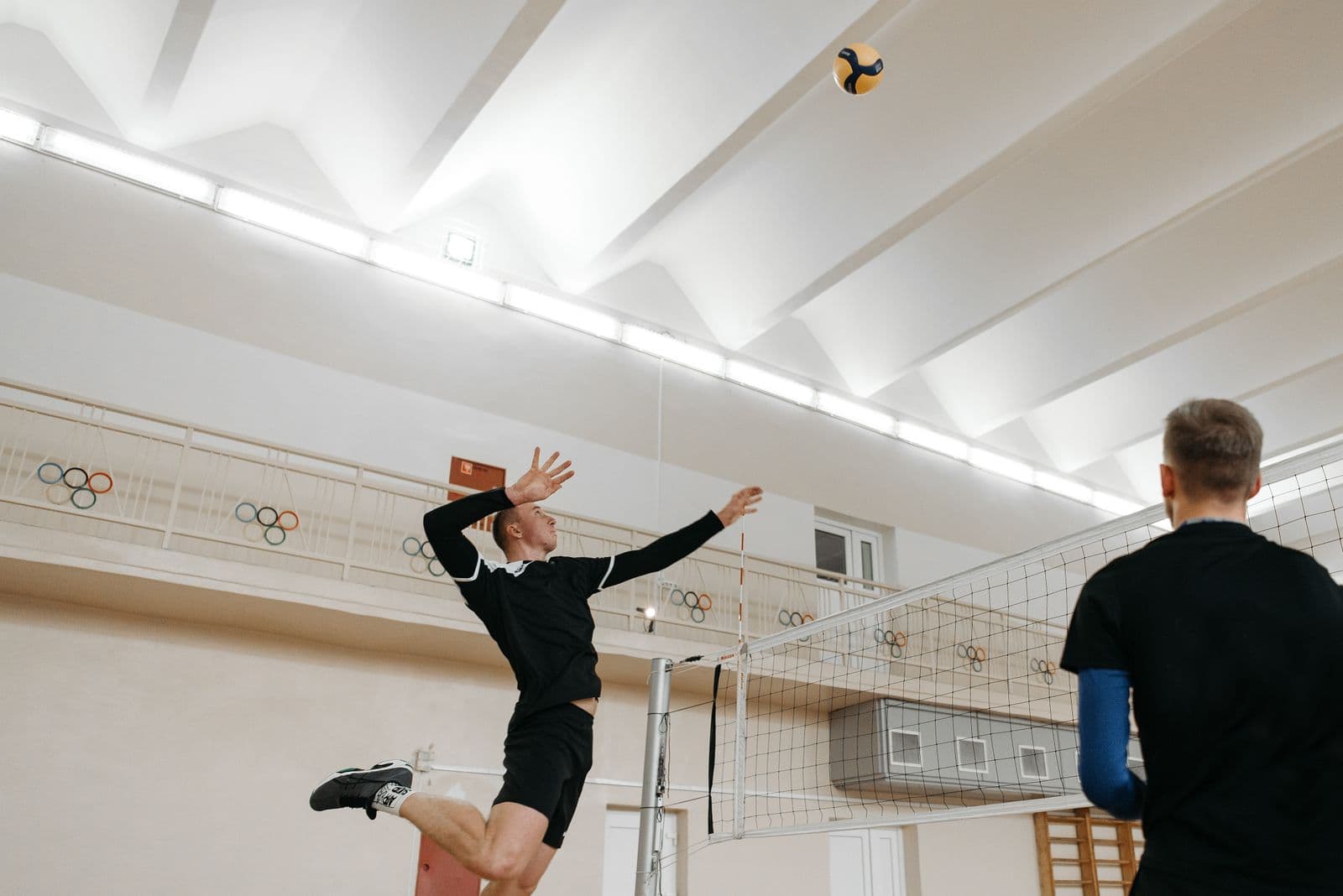
A spike is one of the fastest overhead motions in sports, and a hitter logs dozens of them per practice — so the question isn't whether your shoulder ever complains, it's which complaints are workable. Here's the system, on a 0–10 scale:
Green — keep swinging, watch it. Pain sits at 0–3, warms up as you hit, doesn't change your arm swing, and is back to baseline by the next morning. This level during training is generally acceptable — the pain-monitoring research behind the tendon rules shows athletes who kept training within these limits recovered as well as those who rested. Keep the modifications below in place anyway.
Yellow — modify now. Any of: pain above 3, pain building through practices, an arm swing you're visibly reshaping (dropping your elbow, shortening the follow-through), or hitting velocity your teammates can see is down. Cut hitting reps — often by half — switch jump serves to floats, and start the cuff and scapular loading in the strength guide. Two weeks of modification without progress: book the evaluation.
Red — stop swinging, get assessed. Night pain that wakes you, true weakness lifting the arm, numbness or tingling down the arm, or a specific moment mid-swing where something gave. These are the patterns from the shoulder sorting guide that need naming before anyone prescribes more hitting — "see how Saturday's tournament feels" is the wrong call here.
Count your swings like pitchers count pitches
Baseball figured this out decades ago: overhead athletes have a budget. Hitters don't count, which is how a club player logs 80 approach jumps and 60 full swings on a Tuesday without noticing. You don't need a spreadsheet — you need the concept: jumping and hitting volume are the currency, tournament weekends are spikes by definition, and a shoulder that's talking gets its swing count managed on purpose.
The detail that matters most: trend
One sore practice is information. Three practices where the ache arrived earlier each time — last set, then second set, then warm-up — is a trajectory, and trajectories don't fix themselves mid-season. Track when in the session the shoulder starts talking. Later each time usually means calming down; earlier each time means winding up.
What "modify" actually means on a volleyball court
Not the bench — smarter reps. Volleyball is generous to a sore hitting shoulder if you let it be:
- Float serves instead of jump serves — the single biggest swing off the budget.
- Trim hitting lines, keep approach footwork — jumps without full swings preserve timing while the cuff calms down.
- Tip-and-roll offense for a stretch — placement over power is a skill session disguised as rest.
- Lean into serve-receive and defense days — platform skills cost the shoulder almost nothing.
- Keep the loading program running — modification without cuff and scapular strength work is just waiting.
When to bring in a PT
Two weeks of yellow that isn't clearing, any red pattern, or a shoulder that complains every time you rebuild volume — those earn an evaluation. A volleyball-literate PT (here's how to find one) tests the cuff and scapula at real intensities, watches your arm swing, and usually ends visit one with a modified week, not a shutdown. Cash-pay evaluations run $125–$250 ($175–$275 in the Bay Area), a superbill often recovers part of the cost, and Bay Area players can browse volleyball-friendly PTs by region.
Frequently asked questions
Sources (5)
- Silbernagel KG, et al. Continued sports activity, using a pain-monitoring model, during rehabilitation in patients with Achilles tendinopathy. Am J Sports Med. 2007. — AJSM
- Reeser JC, et al. Upper limb biomechanics during the volleyball serve and spike. Sports Health. 2010. — Sports Health
- Reeser JC, et al. Strategies for the prevention of volleyball related injuries. Br J Sports Med. 2006. — BJSM
- Gabbett TJ. The training-injury prevention paradox: should athletes be training smarter and harder? Br J Sports Med. 2016. — BJSM
- MedlinePlus. Shoulder injuries and disorders. — MedlinePlus
This article is for education only and isn't medical advice. Always talk to a licensed clinician about your specific situation.