
Swimmer's Shoulder: Symptoms, Causes & How Physical Therapy Helps
The overuse pattern behind most pool shoulder pain — and why rest alone rarely fixes it
Updated October 20262 minute read
Swimmer's shoulder is an overload of the rotator cuff and the structures beneath the shoulder blade's bony roof, built from high stroke volume, technique quirks, and fatigue — not structural damage in most cases. Physical therapy resolves the majority in 6–12 weeks with scapular and cuff strengthening, load management, and stroke adjustments, usually without imaging or injections.
What swimmer's shoulder actually is
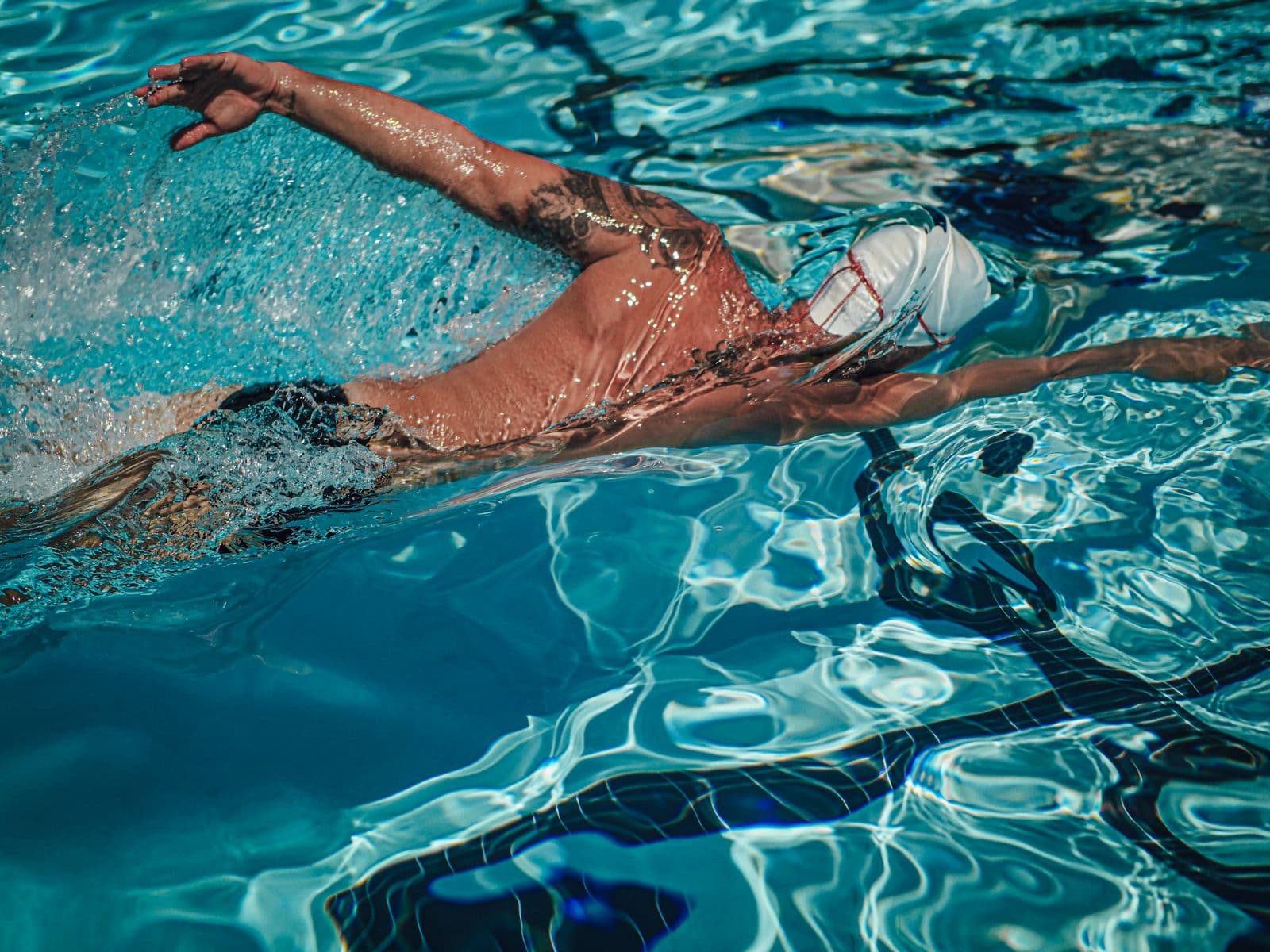
A competitive swimmer's shoulder rotates roughly a million times a year — more overhead repetitions than any throwing athlete accumulates. "Swimmer's shoulder" is the umbrella name for what happens when that volume outpaces the rotator cuff's capacity: the tendons and the cushioning tissue under the shoulder blade's bony roof get irritated and start complaining, usually at the front and outside of the shoulder.
The key fact: in most swimmers this is an overload problem, not a damage problem. The structures are cranky, not torn — which is exactly why it responds so well to rehab that rebuilds capacity rather than rest that just pauses the complaint.
Symptoms: how to know if you have it
- Pain at the front or outside of the shoulder during freestyle — classically at hand entry or the pull-through
- Worse with paddles, pull sets, and the days after high-yardage practices
- An arc of pain when raising the arm overhead on dry land
- Little or no pain at rest in early stages; grumbling after practice as it progresses
Different story worth sorting separately: pain that wakes you at night, started with a fall or a hard collision with the wall or another swimmer, or comes with real weakness turning the arm — that pattern points toward rotator cuff tendinopathy or a tear territory, and a stiff shoulder that's losing motion in every direction is its own problem (frozen shoulder). An evaluation sorts these in one visit — see do I need PT for shoulder pain?
What causes it
Almost always several small things stacking up:
- A yardage spike — the new season, a training trip, a jump in pull work. The single most common trigger.
- Technique quirks that concentrate load: a hand crossing the midline at entry, a dropped elbow in the pull, breathing to one side only (one shoulder does extra work every lap).
- Weak scapular stabilizers. The shoulder blade is the launchpad for every stroke; when the muscles that control it fatigue, the cuff takes the overflow.
- Equipment: paddles multiply load per stroke — great tool, terrible timing if the shoulder is already irritated.
How physical therapy treats it
The plan runs two tracks at once. Calm it down: trim yardage to a level the shoulder tolerates, park the paddles, substitute kick and tolerated strokes — managed load, not a shutdown. Build it up: progressive strengthening for the scapular muscles and rotator cuff (the same work as dryland done right), plus stroke adjustments worked out with your coach — small entry and breathing-pattern changes move real load off the cuff. Expect one or two visits a week with a home program carrying most of the work.
When to see someone
Book an evaluation if shoulder pain has lasted more than two to three weeks, is changing your stroke, or returns every time yardage ramps up. In most states you can see a PT directly without a referral; cash-pay evaluations run $125–$250, and a superbill often recovers part of the cost from out-of-network benefits — what PT costs has the numbers. Bay Area swimmers can browse swimming-savvy PTs by region, and the Bay Area swimmer's guide covers the local scene. Triathletes juggling three sports have their own playbook.
Frequently asked questions
Sources (5)
- Wanivenhaus F, et al. Epidemiology of injuries and prevention strategies in competitive swimmers. Sports Health. 2012. — Sports Health
- Sein ML, et al. Shoulder pain in elite swimmers: primarily due to swim-volume-induced supraspinatus tendinopathy. Br J Sports Med. 2010. — BJSM
- Yanai T, Hay JG. Shoulder impingement in front-crawl swimming: I. A method to identify impingement. Med Sci Sports Exerc. 2000. — MSSE
- Batalha N, et al. Does a land-based compensatory strength-training programme influence the rotator cuff balance of young competitive swimmers? Eur J Sport Sci. 2015. — EJSS
- American Physical Therapy Association. ChoosePT: Physical Therapy Guide to Shoulder Impingement Syndrome. — ChoosePT
This article is for education only and isn't medical advice. Always talk to a licensed clinician about your specific situation.