
The Triathlete's Guide to Physical Therapy
Three sports, one body — how injuries happen in triathlon and what a PT who gets it looks like
Updated October 20263 minute read
Most triathlon injuries come from the run, but the bike and swim shape them: saddle position feeds knee pain, run-off-the-bike loads the Achilles, and three sports compete for the same recovery budget. The right PT for a triathlete is comfortable across all three disciplines, thinks in total weekly load rather than run mileage alone, and can modify one sport while rehab continues through the others.
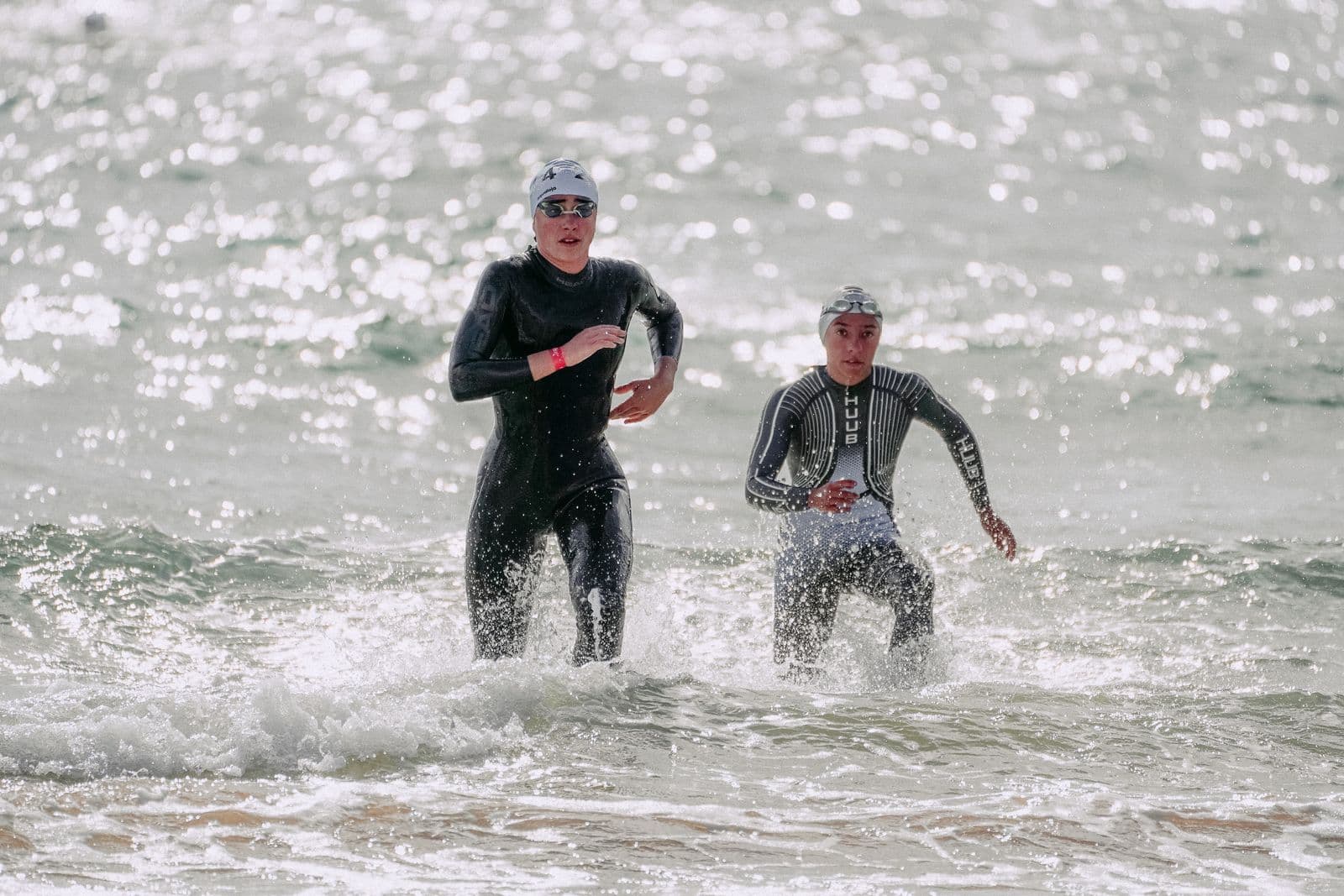
Triathlon's actual injury math
Triathlon markets itself as balanced — three sports, less repetition, fewer injuries. The reality is more specific: the run causes most triathlon injuries, because impact is the stressor tissues forgive least, and it lands on a body that's already spent its recovery budget twice that week. The bike and swim contribute their own patterns — knee and neck trouble from position on the bike, shoulder trouble from stroke volume in the pool — but their bigger role is shaping when and how the run injuries show up.
Two patterns a PT who treats triathletes sees constantly:
- Runner's knee with a bike signature. Kneecap pain (patellofemoral pain) that flares with run volume but traces partly to saddle position — too low or too far forward loads the same joint surface a few thousand extra times per ride.
- Achilles pain off the bike. The run-off-the-bike transition asks the calf to go from spinning to bouncing on pre-fatigued tissue. Brick sessions concentrate exactly the load progression Achilles tendons dislike when it arrives suddenly.
Why "just ride more" sometimes backfires
The classic triathlete response to a running injury — shift the hours onto the bike — is often right, and it's why triathletes rehab faster than pure runners: fitness survives while the injured tissue gets exactly the load it tolerates. But it backfires in two cases. If the problem is bone stress, more riding keeps the overall hormonal and recovery stress high while the bone is trying to rebuild. And if the problem is the kneecap, a big bike block can quietly feed the same irritation the run started — cross-training is a prescription, not a default, and the dosage matters.
The honest framework: count total weekly load across all three sports, not run mileage. A 10% run increase in a week where swim yardage and bike hours also jumped is a 30% week wearing a 10% costume — the same math as any mileage progression.
What to look for in a PT
Everything in how to find a running PT applies, plus three triathlon-specific tests:
- They ask about all three sports in the first conversation — and about your week's structure, not just your run log.
- Bike-fit literacy. They don't need to be a fitter, but they should reason about saddle height, reach, and cleat position as injury variables, and know when to send you for a professional fit.
- They plan around your race, not around the injury. An A-race in twelve weeks changes what "conservative" means. Expect a plan that names which discipline absorbs the volume while the injured one rebuilds.
Cash-pay makes this easier: you're choosing the one PT in your area who actually does multisport work rather than whoever's in a network. Bay Area triathletes have unusual depth to choose from — the running PT directory is the starting list, and the local race culture (Escape from Alcatraz, the Wildflower legacy courses) means "do you work with triathletes?" gets a yes more often here than almost anywhere.
The maintenance alternative
Plenty of triathletes use PT the way they use a bike mechanic: a pre-season movement check, a mid-build visit when something whispers, a gait analysis before marathon-pace work begins. At cash-pay prices that's a few hundred dollars a season to protect a few thousand dollars of race fees, travel, and gear — and to protect the training block itself, which is the thing you actually can't buy back.
Frequently asked questions
Sources (5)
- Willy RW, et al. Patellofemoral Pain: Clinical Practice Guidelines. J Orthop Sports Phys Ther. 2019. — JOSPT
- Gosling CM, et al. Triathlon related musculoskeletal injuries: the status of injury prevention knowledge. J Sci Med Sport. 2008. — J Sci Med Sport
- Wanivenhaus F, et al. Epidemiology of injuries and prevention strategies in competitive swimmers. Sports Health. 2012. — Sports Health
- Martin RL, et al. Achilles pain, stiffness, and muscle power deficits: midportion Achilles tendinopathy revision — clinical practice guidelines. J Orthop Sports Phys Ther. 2018. — JOSPT
- Lauersen JB, et al. The effectiveness of exercise interventions to prevent sports injuries: systematic review and meta-analysis. Br J Sports Med. 2014. — BJSM
This article is for education only and isn't medical advice. Always talk to a licensed clinician about your specific situation.