
Breaststroke Knee: Symptoms, Causes & How Physical Therapy Helps
Inner-knee pain from the whip kick — and why the fix usually starts at the hips
Updated October 20262 minute read
Breaststroke knee is irritation of the inner-knee structures loaded by the whip kick's outward sweep. It follows kick-volume spikes and technique asymmetries, and physical therapy resolves most cases in 4–8 weeks with hip strengthening, rotation mobility work, and kick modifications — usually without stopping breaststroke entirely.
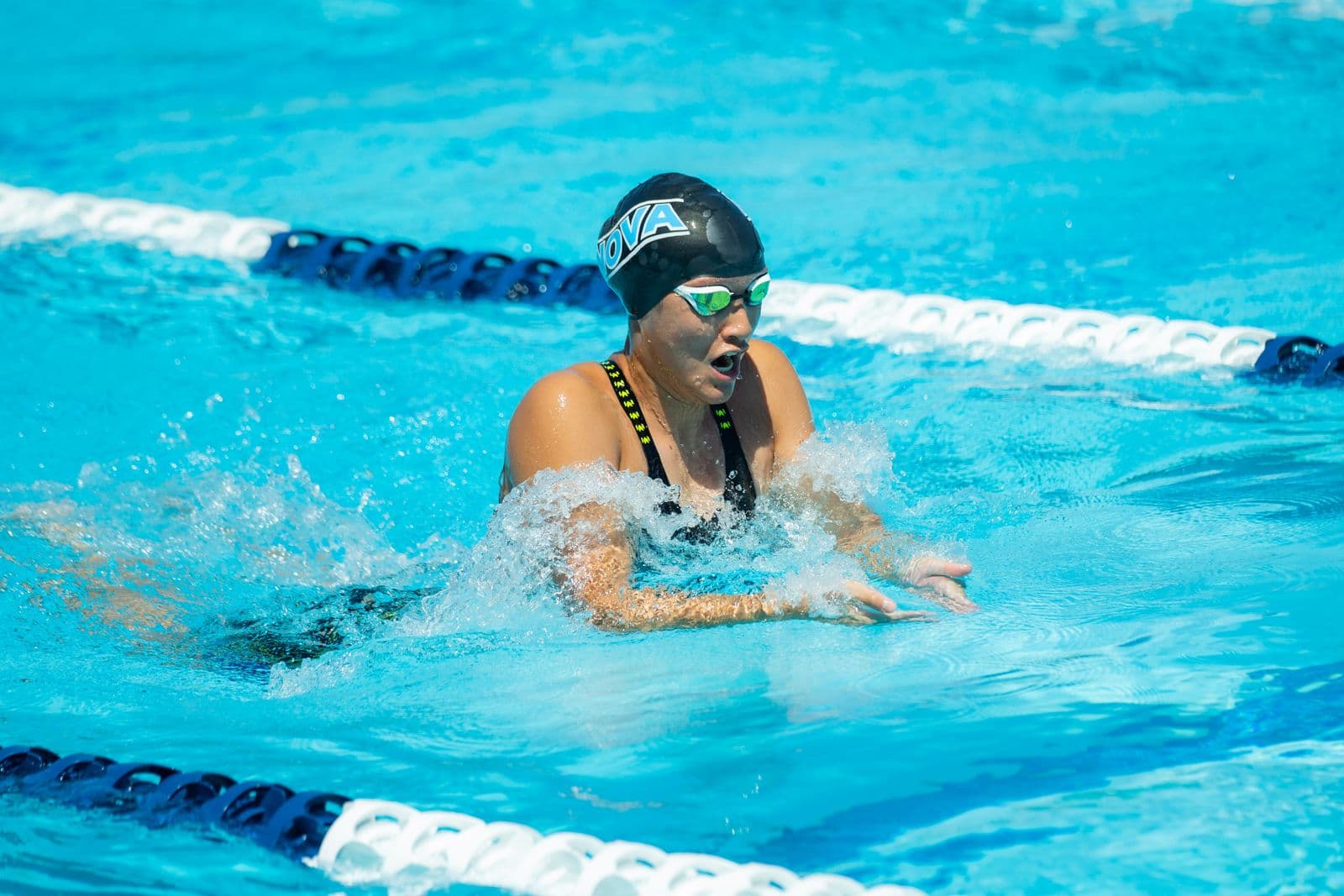
What breaststroke knee is
The whip kick is unique in sport: from a bent-knee position, the lower legs sweep outward and snap together against the water's resistance. That outward sweep puts a sideways (valgus) stress on the inner knee — the MCL and its neighboring tissues — on every single kick. At modest volume, tissue adapts. When kick volume spikes or technique concentrates the load, the inner knee gets irritated and starts filing complaints.
It's been in the sports-medicine literature for decades as "breaststroker's knee," and it remains the breaststroke specialist's signature problem — with IM trainees and water polo players (the eggbeater kick loads the same structures) close behind.
Symptoms: how to know if you have it
- Inner-knee pain during the whip kick — classically at the outward sweep or the snap together
- Tenderness along the inner joint line when you press it
- Grumbling after breaststroke-heavy practices; quiet during freestyle
- Little or no swelling — a swollen or locking knee is a different conversation
What causes it
Almost always load plus technique, stacking up:
- Kick volume spikes — a breaststroke-focused season, added kick sets, a new coach's IM program
- A wide or asymmetric kick — one leg sweeping wider than the other concentrates load on one knee (it's usually the wider leg that hurts)
- Stiff or weak hips — when hip rotation is limited, the knee supplies the missing motion; this is the most fixable driver and the one PTs find most often
- Growth — in age-group swimmers, a growth spurt changes kick mechanics faster than strength adapts
How physical therapy treats it
Two tracks, same as every overuse problem. Calm it down: trim breaststroke kick volume to a tolerable level — often just dropping kick board sets while keeping swim sets — and lean on freestyle and backstroke to hold fitness. Build it up: hip rotation mobility, hip rotator and adductor strengthening, and a kick-width conversation with your coach (video from the deck makes this concrete). The dryland guide covers the strength foundation; most plans run one or two visits a week with a home program doing the daily work.
How long recovery takes
Most cases settle in 4–8 weeks with load management and hip work — faster when caught early, slower when it's been pushed through a full season. The relapse insurance is keeping the hip strength after the pain leaves.
When to see someone
Book an evaluation if inner-knee pain has lasted more than two to three weeks, keeps returning when kick volume ramps, or is changing your kick — and promptly if there's swelling, locking, or giving way. California swimmers need no referral; evaluations run $125–$250 cash-pay ($175–$275 in the Bay Area), partially recoverable via superbill — what PT costs has the full numbers. Bay Area swimmers can browse swim-friendly PTs by region.
Frequently asked questions
Sources (5)
- Rovere GD, Nichols AW. Frequency, associated factors, and treatment of breaststroker's knee in competitive swimmers. Am J Sports Med. 1985. — AJSM
- Wanivenhaus F, et al. Epidemiology of injuries and prevention strategies in competitive swimmers. Sports Health. 2012. — Sports Health
- Kerr ZY, et al. Epidemiology of National Collegiate Athletic Association men's and women's swimming and diving injuries. Br J Sports Med. 2015. — BJSM
- Lauersen JB, et al. The effectiveness of exercise interventions to prevent sports injuries: systematic review and meta-analysis. Br J Sports Med. 2014. — BJSM
- Silbernagel KG, et al. Continued sports activity, using a pain-monitoring model, during rehabilitation in patients with Achilles tendinopathy. Am J Sports Med. 2007. — AJSM
This article is for education only and isn't medical advice. Always talk to a licensed clinician about your specific situation.