
Dryland Strength for Swimmers: What Actually Protects Your Shoulders
The essentials, the exercises to treat with care, and why pull power needs cuff work to match
Updated October 20263 minute read
Strength training is the best-supported injury-prevention tool in sports — meta-analysis evidence shows it roughly halves overuse injury risk — and for swimmers the priority is clear: balance the pulling power that moves you through water with the scapular and rotator cuff work that keeps the shoulder centered. Two 20–30 minute sessions a week covers it, loaded properly rather than burned out with endless band reps.
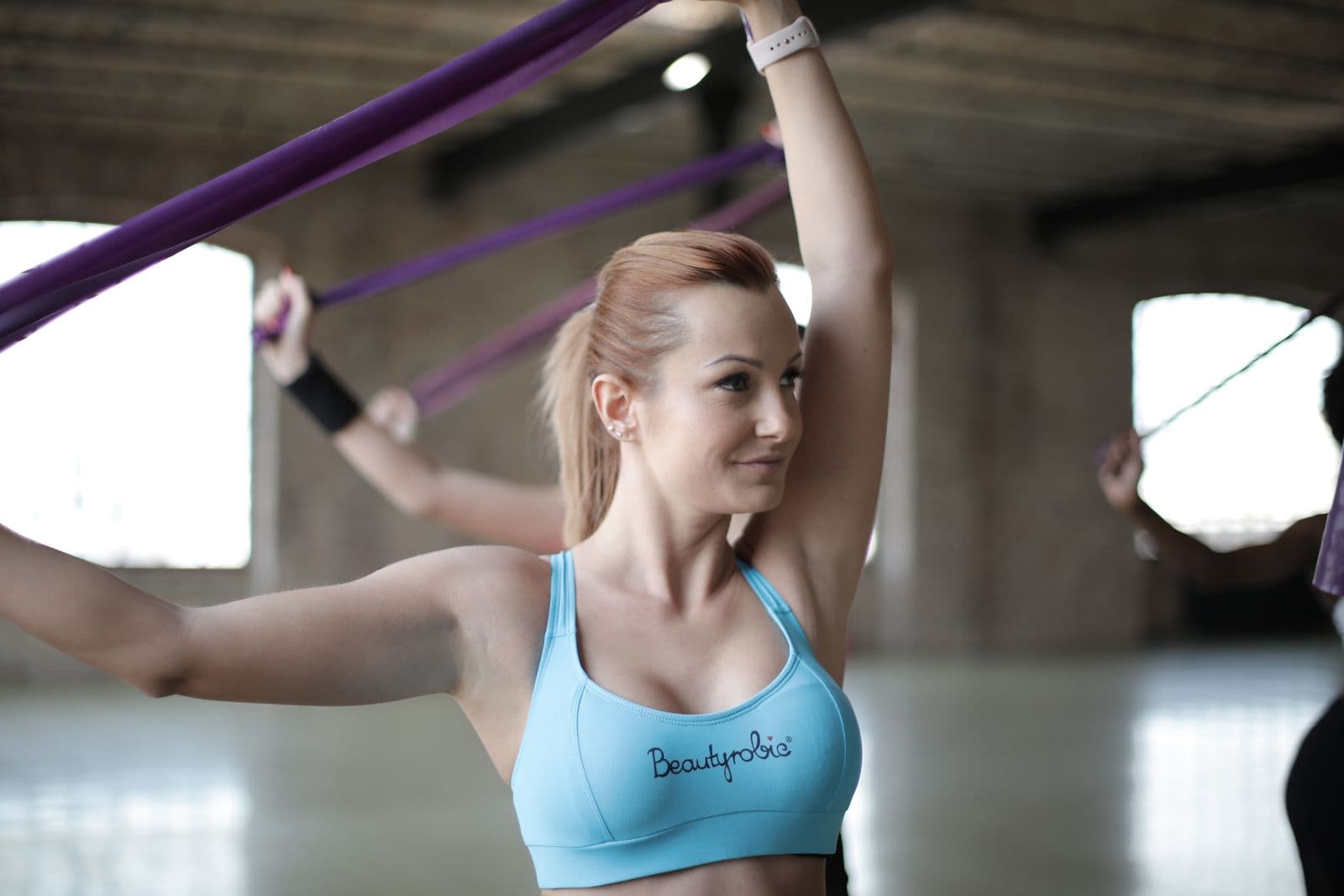
What dryland is actually for
Strip away the trends and dryland has two jobs: make the shoulder resilient enough for the yardage, and add power the water can't train efficiently. The evidence behind job one is the strongest in sports medicine — a large meta-analysis found structured strength training roughly halves overuse injury risk, a bigger effect than stretching or any equipment change has ever shown.
The swimmer-specific logic: every length of freestyle is another set of powerful internal-rotation pulls. Over a season that builds a lopsided shoulder — strong mirror muscles, under-trained scapular stabilizers and external rotators. Dryland done right is the counterweight.
The swimmer's essentials
Two sessions a week, 20–30 minutes, built around five movement families:
- Rows and Y-T-W raises — the scapular foundation. The shoulder blade is the launchpad of every stroke; these keep it strong and controlled.
- External rotation work — cable or dumbbell, progressing load over time. The direct counterweight to all that pulling.
- Pull-ups and lat work — yes, swimmers should pull heavy. Power in the water comes from here. The rule: pulling volume earns its place only when the cuff and scapular work above keeps pace with it.
- Anti-rotation core — planks with reach, cable chops, dead bugs. The body line that connects your pull to your kick.
- Pressing, chosen carefully — push-up variations and landmine presses train pressing through a shoulder-friendly path. They beat barbell bench for cranky shoulders.
Load matters: a weight you can move 8–12 times with effort, progressed over weeks, beats endless light reps. Tissue adapts to load, not to burning sensations.
Treat with care (or skip)
- Behind-the-neck pulldowns or presses — maximum impingement position under load, no benefit a normal-path version doesn't give you.
- Deep dips — the bottom position drives the shoulder forward into exactly the spot that's already irritated in most swimmers.
- Pre-practice band "cuff burnouts" — fatiguing your stabilizers right before asking them to protect you for 4,000 yards is backwards. Keep pre-swim work light and brief.
None of these are forbidden forever; they're poor value next to their alternatives, and poor timing when a shoulder is already grumbling.
Masters swimmers: this matters more, not less
Muscle and tendon capacity decline quietly with age — and masters swimmers often return to serious yardage with decades-old dryland habits or none at all. If you're over 40 and training for meets or open water, the two weekly sessions stop being optional insurance and become the thing that keeps the season alive. Start lighter, progress slower, skip nothing.
In-season vs. off-season
- Off-season: build. Progress load week over week; three sessions if you enjoy it.
- In-season: maintain. Two short sessions, loads held steady, nothing new in taper weeks. Strength is slow to gain and slow to lose.
- Never introduce a new heavy exercise the week of a meet or a big open-water swim.
When a PT should design it
A generic program serves a healthy swimmer fine. Get it designed around you when there's current pain (dosing around an irritated cuff is exactly where templates fail — start with swimmer's shoulder), a post-injury return, or a shoulder that grumbles every season. One or two visits usually covers a movement screen and a program — $125–$250 cash-pay (what PT costs), often partly reimbursable via superbill. Here's how to find a PT who works with swimmers — Bay Area swimmers can browse swimming-savvy PTs by region. Injured and worried about fitness? The cross-training logic works in reverse for swimmers, too — and triathletes should read the three-sport version.
Frequently asked questions
Sources (5)
- Lauersen JB, et al. The effectiveness of exercise interventions to prevent sports injuries: systematic review and meta-analysis. Br J Sports Med. 2014. — BJSM
- Batalha N, et al. Does a land-based compensatory strength-training programme influence the rotator cuff balance of young competitive swimmers? Eur J Sport Sci. 2015. — EJSS
- Wanivenhaus F, et al. Epidemiology of injuries and prevention strategies in competitive swimmers. Sports Health. 2012. — Sports Health
- Hibberd EE, et al. Comparison of upper extremity physical characteristics between adolescent competitive swimmers and nonoverhead athletes. J Athl Train. 2016. — J Athl Train
- Sein ML, et al. Shoulder pain in elite swimmers: primarily due to swim-volume-induced supraspinatus tendinopathy. Br J Sports Med. 2010. — BJSM
This article is for education only and isn't medical advice. Always talk to a licensed clinician about your specific situation.