
Shoulder Pain From Smashing: The Overhead Tax and How to Pay It Down
Why badminton shoulders ache from club courts to world tour — and why loading rehab beats resting it
Updated October 20262 minute read
The smash is one of the fastest overhead motions in sport, and the rotator cuff pays for every one of them. Research found shoulder pain in roughly half of elite badminton players and plenty of recreational ones too — almost always cuff overload from swing volume, not structural damage. It responds to progressive cuff and shoulder-blade strengthening plus smash-volume sense, not to rest alone. True weakness, night pain, or a dead arm are the signs that need assessment now.
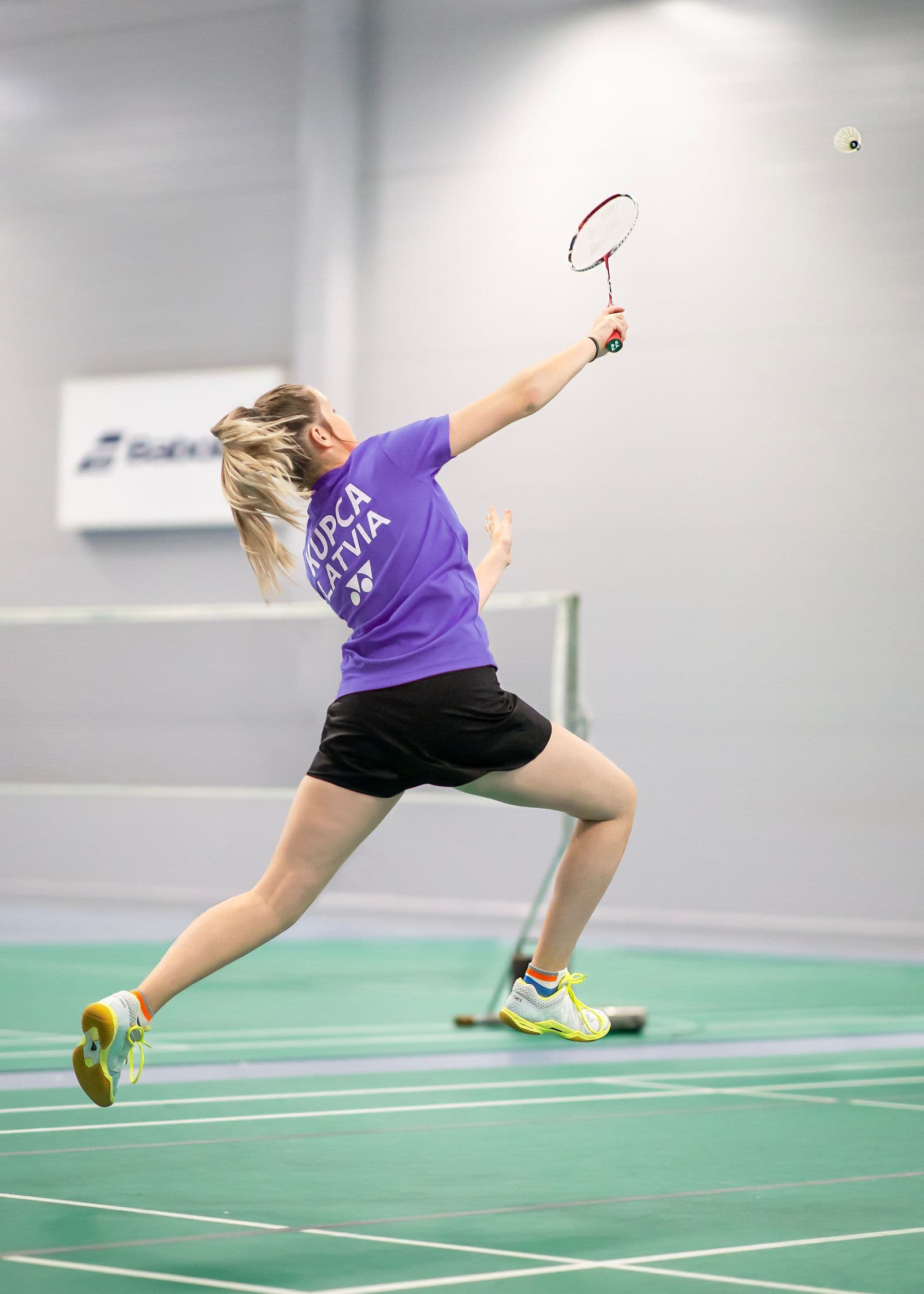
The overhead tax
A full smash accelerates the racket through one of the fastest overhead motions in sport, and the rotator cuff — the small muscle group that keeps the ball of the shoulder centered in its socket while the big muscles fire — both powers and brakes every repetition. Stack up club nights, and the tax collects: studies found shoulder pain in about half of world-class badminton players, and recreational players report plenty of it too, often alongside measurably reduced shoulder function they'd simply gotten used to.
The usual diagnosis label is cuff overload — irritated rotator cuff tendons (sometimes called impingement or cuff tendinopathy). The honest translation: your smash volume outran your cuff's capacity.
What actually fixes it
Not rest alone — rest settles the irritation and changes nothing about capacity. The evidence-based plan for overhead athletes is:
- Progressive cuff loading. External and internal rotation work, building from bands to weights, through the overhead ranges badminton uses.
- Shoulder-blade (scapular) strength and control. The cuff works from a platform; a platform that doesn't move well overloads it.
- The kinetic chain. Smash power is supposed to come up through legs and trunk rotation — strength work that makes the whole chain contribute takes direct load off the shoulder.
- Swing-volume sense. Count overheads honestly — smashes and clears, matches and multi-shuttle drills alike. Ramp them like training load, with the same week-to-week discipline you'd give running mileage.
Most cuff episodes rebuild over 6–12 weeks, and most players keep playing a modified game throughout — drops, drives, and footwork load the shoulder lightly; it's the overhead count that gets capped and then progressively restored, with criteria-based return gates rather than a calendar date.
When it's more than overload
See a clinician promptly for: true weakness (can't lift or rotate against light resistance, versus won't-because-it-hurts), night pain that reliably wakes you, a dead-arm sensation on smashes, numbness or tingling down the arm, or any shoulder pain after a fall. Those patterns can mean cuff tears or instability — different plans, sometimes imaging first.
Getting the right help
A badminton-literate PT measures your cuff strength and overhead mechanics, builds the loading program, and gives you a smash-count plan instead of a shrug — here's how to find one, and Bay Area players can browse badminton-friendly PTs by region. Evaluations run $125–$250 cash-pay ($175–$275 in the Bay Area), and a superbill often recovers part of the cost through out-of-network benefits (what PT costs).
Frequently asked questions
Sources (6)
- Fahlström M, et al. Shoulder pain — a common problem in world-class badminton players. Scand J Med Sci Sports. 2006. — Scand J Med Sci Sports
- Fahlström M, Söderman K. Decreased shoulder function and pain common in recreational badminton players. Scand J Med Sci Sports. 2007. — Scand J Med Sci Sports
- Cools AM, et al. Prevention of shoulder injuries in overhead athletes: a science-based approach. Braz J Phys Ther. 2015. — Braz J Phys Ther
- Couppé C, et al. Shoulder rotational profiles in young healthy elite female and male badminton players. Scand J Med Sci Sports. 2014. — Scand J Med Sci Sports
- AAOS OrthoInfo. Shoulder impingement / rotator cuff tendinitis. — OrthoInfo
- Asker M, et al. Risk factors for, and prevention of, shoulder injuries in overhead sports: a systematic review with best-evidence synthesis. Br J Sports Med. 2018. — BJSM
This article is for education only and isn't medical advice. Always talk to a licensed clinician about your specific situation.