
Badminton Load Management: The Weekend-Warrior Trap
Why the layoff-then-tournament pattern writes the sport's injury stories, and the boring rules that break it
Updated October 20262 minute read
Badminton's classic injury story isn't overtraining — it's the spike: weeks of little or no play, then a tournament weekend or a three-hour club night, landing on a calf and Achilles that lost their adaptation months ago. The protection is unglamorous: hold this week close to your recent normal, change one variable at a time, respect the year-round club calendar's lack of an off-season, and treat sleep and rest days as part of the sport.
The sport that punishes absence
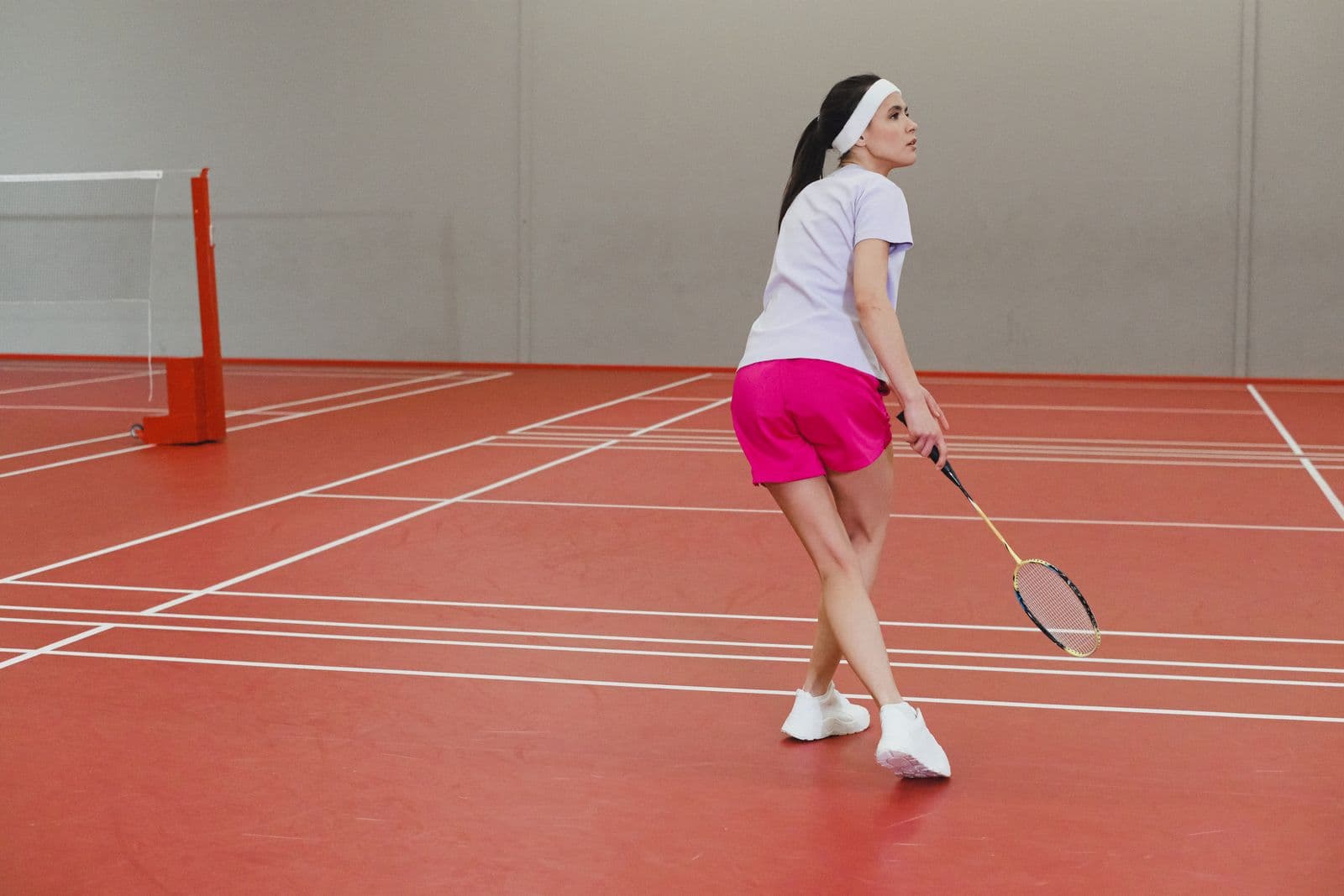
Badminton looks gentle from the bleachers and is brutal from the court: rallies of repeated explosive lunges, jumps, and direction changes, with the racquet disguising how athletic the legs' job is. The sports-science literature describes it bluntly — among the most demanding intermittent sports for the lower body, with the calf–Achilles complex doing the heaviest lifting.
Which is why badminton's injury pattern has a personality. It isn't the grind of overtraining that fills the case reports — it's the spike. The injury studies and the Achilles-rupture literature tell the same story on repeat: an adult player, often mid-30s to 40s, back from a layoff, playing a tournament or a marathon club night on a calf that quietly lost its adaptation months ago.
The spikes that write the stories
- The comeback weekend. Vacation, work crunch, or a mild injury keeps you off court for a month — then you return to your full old schedule in week one. Fitness decays faster than skill; the gap is the injury.
- The tournament day. Five matches in eight hours is a week's load in a day, on progressively more tired push-offs. Seed the weeks before with volume, and treat the Monday after as recovery, not another club night.
- The new league stack. Club night plus a new league plus a ladder — three "small" commitments arriving in the same month is a doubled training load wearing a social calendar's clothes.
- The singles conversion. Moving from doubles-mostly to singles-mostly roughly doubles the court you cover per rally. It's a load change even when the hours don't move.
The rules that do the protecting
This week versus your recent normal. The load-science consensus in one sentence: your tissues budget from what you've consistently done lately, and single big weeks — not big months — are where injuries cluster. Hold any week near your recent average; grow the average slowly.
One variable at a time. More sessions, more singles, a new league, or harder opponents — pick one per month. The calendar trick that breaks this rule ("it's all just badminton") is how three spikes stack unnoticed.
Respect the no-off-season problem. Year-round club play never forces recovery, so schedule it: a light week monthly, one genuinely reduced block yearly, and real rest days — the strength work lives on those days, and it's what raises the budget itself.
Sleep is load management. Late club nights are part of the culture; chronic short sleep on top of them is a known soft spot in every injury-risk model. The 11 p.m. finish is fine — the 1 a.m. scroll afterward isn't.
When the ledger complains anyway
Calf and Achilles first — use the traffic-light rules and take the sudden-pop red flag seriously. A niggle that outlasts two smart weeks earns a professional look: evaluations run $125–$250 cash-pay ($175–$275 Bay Area), most problems resolve in 6–12 visits, and out-of-network reimbursement usually recovers part of it. Here's how to find a PT who knows court sports — Bay Area players can go straight to the local badminton PT directory.
Frequently asked questions
Sources (6)
- Gabbett TJ. The training-injury prevention paradox: should athletes be training smarter and harder? Br J Sports Med. 2016. — BJSM
- Soligard T, et al. How much is too much? (Part 1) International Olympic Committee consensus statement on load in sport and risk of injury. Br J Sports Med. 2016. — BJSM
- Jørgensen U, Winge S. Injuries in badminton. Sports Med. 1990. — Sports Med
- Phomsoupha M, Laffaye G. The science of badminton: game characteristics, anthropometry, physiology, visual fitness and biomechanics. Sports Med. 2015. — Sports Med
- Fahlström M, et al. Acute badminton injuries. Scand J Med Sci Sports. 1998. — Scand J Med Sci Sports
- Griffin A, et al. The Association Between the Acute:Chronic Workload Ratio and Injury and its Application in Team Sports: A Systematic Review. Sports Med. 2020. — Sports Med
This article is for education only and isn't medical advice. Always talk to a licensed clinician about your specific situation.