
Can I Keep Playing Badminton Through Calf or Achilles Pain?
The traffic-light rules for the sport's signature region — and the one symptom that means stop today
Updated October 20263 minute read
Sometimes — it depends on what the pain does. Mild calf tightness or morning Achilles stiffness that warms up and doesn't build session-to-session is usually manageable with smart modification. Pain that changes your footwork, keeps taking longer to warm up, or trends worse is your cue to book a PT and cut volume now. And a sudden pop or "someone kicked me" feeling in the calf is badminton's classic Achilles rupture — stop immediately and get seen the same day.
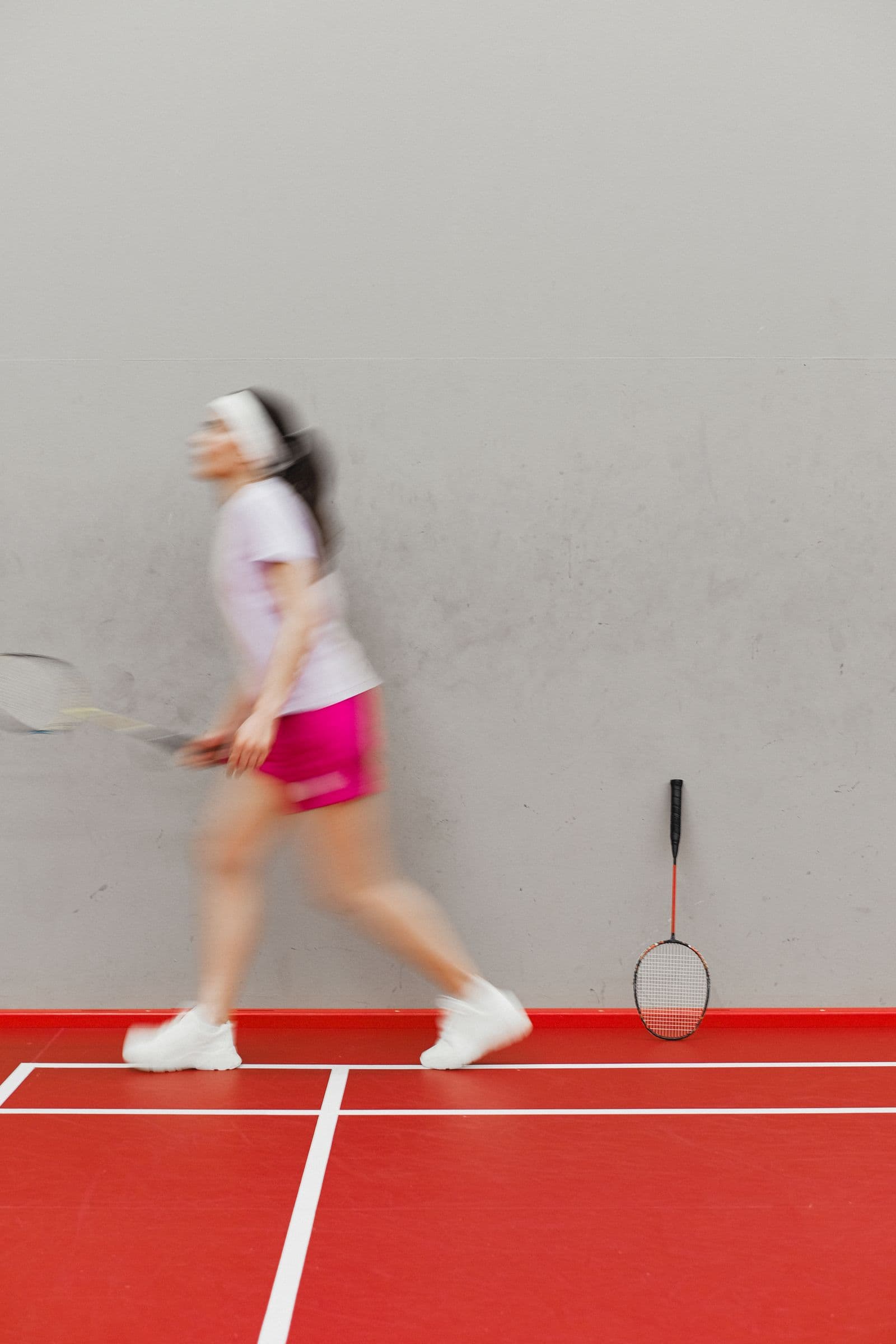
The region that owns this sport
Every sport has a tissue that keeps the ledger, and badminton's is the calf–Achilles complex. Lunges to the net, explosive push-offs, direction changes, jump smashes — the sport is practically an Achilles loading protocol, and the research has said so for decades: Achilles-region pain is one of the most common complaints in competitive players, and badminton is famous in sports medicine for its Achilles ruptures, clustered in players in their mid-30s and 40s.
So "can I play through it?" is the right question to ask carefully. Here are the honest rules.
Green light — play, with eyes open
- Mild calf tightness or Achilles stiffness that warms up within 10–15 minutes and doesn't build from session to session
- General post-session calf soreness that's gone within a day
- No focal, pressable tender spot that's getting worse
Keep playing — and treat the symptom as information. A tendon that speaks up occasionally is asking for the calf capacity work and a look at your session spacing before it asks louder.
Yellow light — modify and start the clock
- Pain that changes your footwork — you're protecting the leg on lunges or hesitating on push-offs
- Warm-up time that keeps getting longer week over week
- A tender, focal spot on the tendon, or stiffness that now follows you through the morning
- Tightness that comes back during sessions, not just after
This is the tendon losing the ledger battle. Cut volume (fewer games, doubles over singles, extra rest days), keep moving within comfort — the pain-monitoring approach used in Achilles research allows activity at low, stable pain levels — and give it two weeks. Not trending better? Book an evaluation ($125–$250 cash-pay, toward $175–$275 in the Bay Area — what PT costs). Under California direct access you don't need a referral.
Red light — stop today
- A sudden pop in the calf or heel — often with the eerie feeling that someone kicked you or your racquet partner hit you
- You can't do a single-leg heel raise, or the foot won't push off
- Rapid swelling, a palpable gap, or giving-way weakness
That story is the classic badminton Achilles rupture — and the strange part is it often doesn't hurt much after the first moment, which is exactly how players talk themselves into finishing the match. Don't. Same-day urgent care or ED, period. Early diagnosis shapes everything about the recovery.
The two traps worth naming
"It warmed up, so I kept playing." Warming up is what Achilles problems do — pain that eases mid-session while the tendon quietly worsens is the signature trap of this exact condition. Judge the trend across weeks, not the feeling in game three.
The over-35 comeback weekend. The sport's rupture literature is essentially a catalog of fit-feeling adults returning from a layoff straight into a tournament or a three-hour session. If that's your calendar, read the load-management guide first — it's cheaper than a boot.
If it's time for help
A PT who works with court athletes will grade the problem, load the calf progressively, and keep you on court as much as the tendon honestly allows — here's how to find one, and Bay Area players can browse badminton-friendly PTs by region. Most insurance plans with out-of-network benefits reimburse part of the cost via superbill.
Frequently asked questions
Sources (5)
- Fahlström M, et al. Painful conditions in the Achilles tendon region: a common problem in middle-aged competitive badminton players. Knee Surg Sports Traumatol Arthrosc. 2002. — KSSTA
- Fahlström M, et al. Acute Achilles tendon rupture in badminton players. Am J Sports Med. 1998. — AJSM
- Kaalund S, et al. Achilles tendon rupture in badminton. Br J Sports Med. 1989. — BJSM
- Silbernagel KG, et al. Continued sports activity, using a pain-monitoring model, during rehabilitation in patients with Achilles tendinopathy. Am J Sports Med. 2007. — AJSM
- AAOS OrthoInfo. Achilles tendon rupture (tear). — OrthoInfo
This article is for education only and isn't medical advice. Always talk to a licensed clinician about your specific situation.