
Load Management for Volleyball: Jump Density Is the Whole Game
Why tournament weekends, season overlaps, and new jump programs cause most volleyball injuries
Updated October 20262 minute read
Most volleyball overuse injuries follow a spike in jump density, not a total: the tournament weekend of eight sets, the months where club and school seasons overlap, the beach season that starts on unaccustomed sand. Research on jumper's knee points straight at jump frequency and training volume as the drivers — so the fixes are boring and effective: think this-week-versus-your-recent-normal, count jumps as their own budget, change one variable at a time, and treat rest days as tendon maintenance.
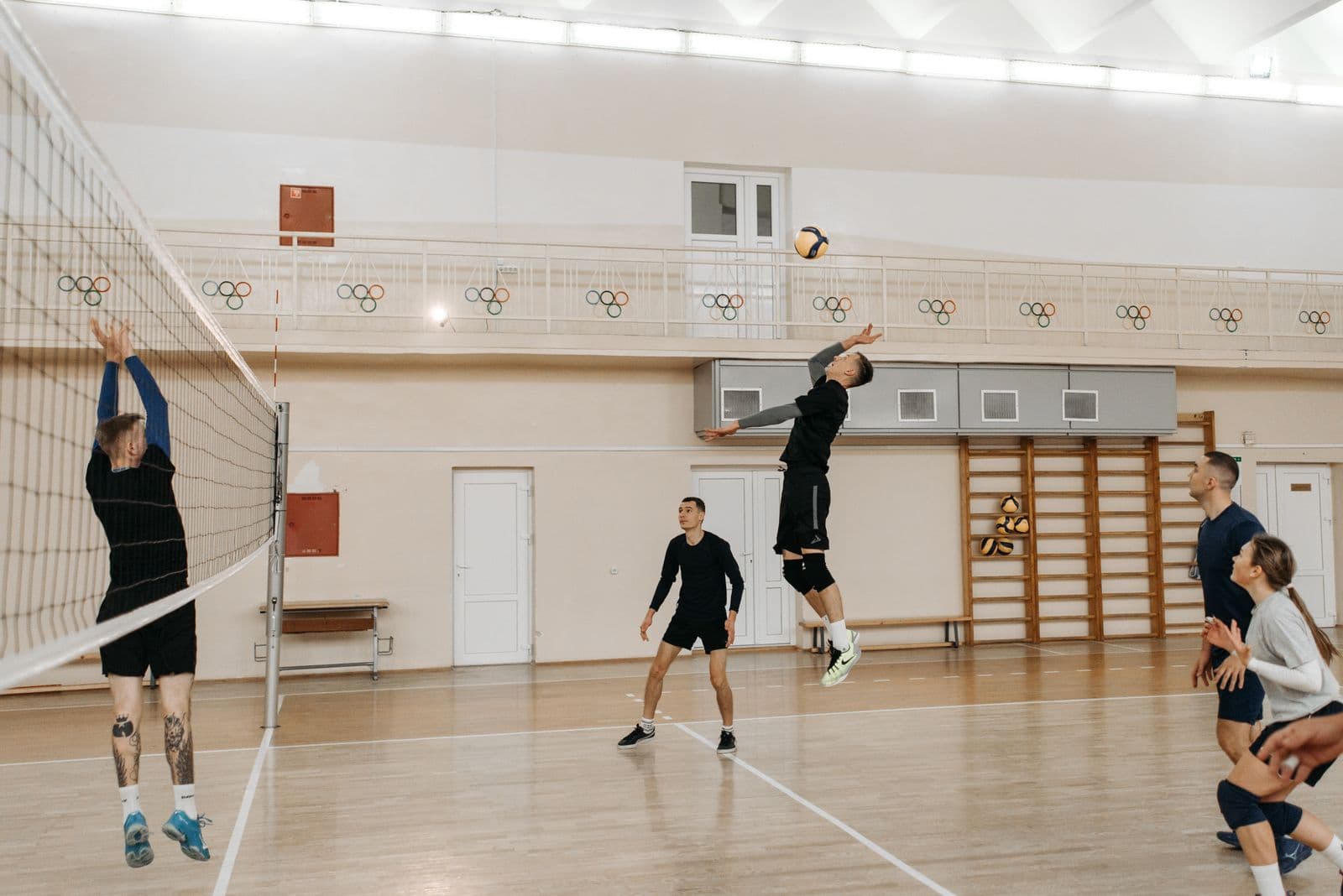
Jump density is the whole game
Volleyball's load problem hides in plain sight: a hitter or middle can log a hundred or more maximal jumps in a single practice — every approach, every block, every joust — and each one is a near-max effort for the calf and the patellar tendon. Video-analysis research in elite volleyball counted jumps directly and found what the sport's knees already knew: jump frequency itself tracks with jumper's knee risk, and training volume predicts who develops it. No sport is named in a diagnosis by accident.
The useful mental model is this week versus your recent normal: your tendons have a budget set by what you've consistently done the last month. Spend near budget and you adapt. Spend far over it and the bill arrives — usually at the knee, the shoulder, or the ankle.
The classic volleyball spikes
- Tournament weekends. Six to ten sets in a day is a load spike by definition. Build toward that density in the preceding weeks, and treat the following week as recovery.
- Season overlap. Club plus school, or indoor season bleeding into beach season — two schedules, double the jumps, and often nobody adding them up.
- The sand transition. Beach season's start loads calves and Achilles tendons in ways indoor legs aren't ready for — the beach-vs-indoor guide covers the ramp.
- The new jump program. Vertical-jump training is concentrated tendon load; adding it mid-season on top of full practice volume is the classic self-inflicted spike.
- The comeback week. First practices after a break deserve half volume — tendons detrain faster than enthusiasm.
The habits that do the protecting
- One variable at a time. Sessions per week, jump volume within sessions, sand vs court, or a new training program — change one.
- Position-aware budgets. Middles jump most and need the most deliberate management; liberos trade jump load for sprint-and-dive load, which has its own budget.
- Down weeks every 3–4 weeks. Trim volume 20–30% and let the slow tissues catch up — the same build-build-absorb rhythm as basketball's version of this page.
- Strength as the budget-raiser. The volleyball strength work is how you make next season's budget bigger than this one's.
When pain shows up mid-season
It usually whispers at the knee or shoulder first. Mild, stable, settles overnight — train on with care (the shoulder rules map it). Climbing, mechanics-changing, or morning-after pain — cut volume now, because two easy weeks early beats two lost months later. A niggle that survives two weeks of sensible modification earns an evaluation: cash-pay runs $125–$250 ($175–$275 in the Bay Area, what PT costs), a superbill often recovers part of it, and Bay Area players can browse volleyball-friendly PTs by region.
Frequently asked questions
Sources (6)
- Bahr MA, Bahr R. Jump frequency may contribute to risk of jumper's knee: a study of interindividual and sex differences in a total of 11,943 jumps video recorded during training and matches in young elite volleyball players. Br J Sports Med. 2014. — BJSM
- Visnes H, Bahr R. Training volume and body composition as risk factors for developing jumper's knee among young elite volleyball players. Scand J Med Sci Sports. 2013. — SJMSS
- Lian OB, et al. Prevalence of jumper's knee among elite athletes from different sports: a cross-sectional study. Am J Sports Med. 2005. — AJSM
- Soligard T, et al. How much is too much? (Part 1) International Olympic Committee consensus statement on load in sport and risk of injury. Br J Sports Med. 2016. — BJSM
- Gabbett TJ. The training-injury prevention paradox: should athletes be training smarter and harder? Br J Sports Med. 2016. — BJSM
- Griffin A, et al. The Association Between the Acute:Chronic Workload Ratio and Injury and its Application in Team Sports: A Systematic Review. Sports Med. 2020. — Sports Med
This article is for education only and isn't medical advice. Always talk to a licensed clinician about your specific situation.