
Knee Pain in Volleyball: The Sport That Named Jumper's Knee
Below-the-kneecap tendon pain, the volume behind it, and the one knee pattern that can't wait
Updated October 20262 minute read
Volleyball has the highest rate of jumper's knee in all of sport — pinpoint pain on the tendon below the kneecap that loves approach jumps and blocks is the sport's signature complaint, and it responds to loading programs, not rest. A duller kneecap ache that tracks session volume is its common cousin. The pattern that can't wait is different: a twist or landing with a pop, fast swelling, or a knee that gives way needs an urgent evaluation, not another tournament.
The sport that named it
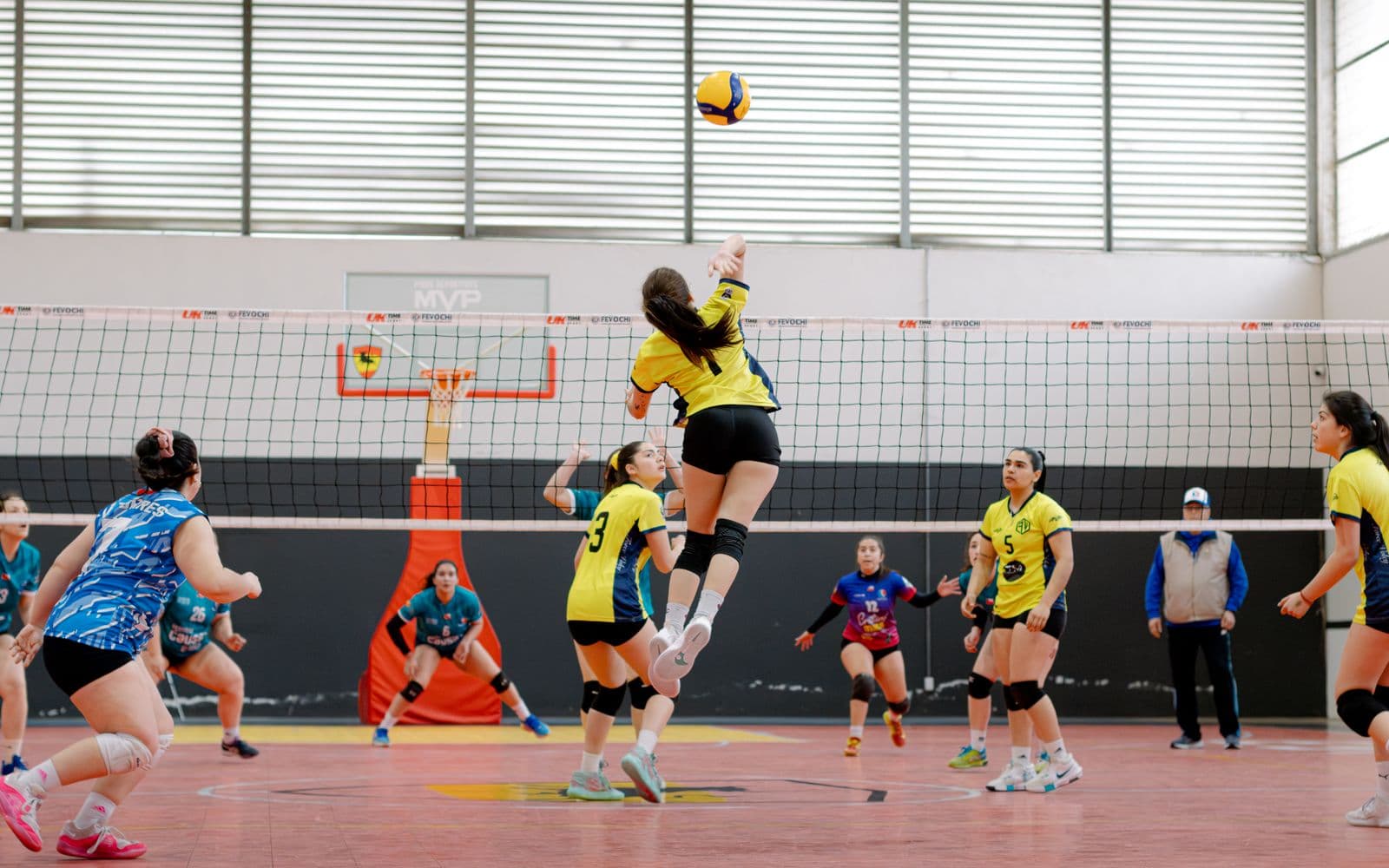
"Jumper's knee" got its name honestly: when researchers measured patellar tendinopathy across elite sports, volleyball topped the table — roughly four in ten elite men's players in the landmark prevalence study. An approach jump loads the patellar tendon with several times body weight, a block adds another rep, and a club week stacks hundreds of both. No other sport asks the tendon below the kneecap for more.
The encouraging flip side: this is the most-studied tendon problem in sports medicine, and the playbook is clear.
Match your pattern
Pinpoint pain on the tendon below the kneecap. Worst at the start of play, often "warms up" mid-session, aches after, stiff the next morning. That's jumper's knee — the sport's signature. The treatment evidence is unambiguous: tendons respond to progressive loading, not rest. Heavy, slow strength work (trials put it level with or ahead of injections at a year), isometric holds for in-season pain control, and a jumping budget managed on purpose. A tendon that's hurt for months still follows the same road; it's just longer.
A broader ache around or behind the kneecap. Less pinpoint, more "the whole front of the knee after long sessions" — the kneecap-overload pattern (runner's knee by its common name). Different tissue, same logic: hip and quad capacity plus managed volume.
A twist or landing with a pop, fast swelling, or giving way. The urgent lane. Volleyball's serious knee injuries are mostly non-contact landings — and swelling within hours is the alarm bell for ACL or meniscus injury. Physician and likely imaging this week; don't test it with another match. (The landing-mechanics training that lowers this risk lives in strength and landing.)
The jump-volume honesty
Players count swings; tendons count everything. Blocks, approach drills, jousts, even warm-up tip drills all draw on the same tendon budget — which is why jumper's knee so often arrives with a schedule change rather than a technique flaw: a second team, a beach season stacked on indoor, a new vertical-jump program. The load guide does the math, and volleyball injury-prevention research backs the boring conclusion: managed jumping volume is the lever.
When to get help
Book this week for the twist-pop-swelling pattern. Book soon for tendon pain that's lasted more than a few weeks, is rising week over week, or keeps returning each season — early loading programs beat late ones. A cash-pay evaluation runs $125–$250 ($175–$275 in the Bay Area, what PT costs), a superbill often recovers part of it, and a volleyball-literate PT will count your jumps before judging your knee — here's how to find one. Bay Area players can browse volleyball-friendly PTs by region.
Frequently asked questions
Sources (5)
- Lian OB, et al. Prevalence of jumper's knee among elite athletes from different sports: a cross-sectional study. Am J Sports Med. 2005. — AJSM
- Malliaras P, et al. Patellar tendinopathy: clinical diagnosis, load management, and advice for challenging case presentations. J Orthop Sports Phys Ther. 2015. — JOSPT
- Kongsgaard M, et al. Corticosteroid injections, eccentric decline squat training and heavy slow resistance training in patellar tendinopathy. Scand J Med Sci Sports. 2009. — SJMSS
- Reeser JC, et al. Strategies for the prevention of volleyball related injuries. Br J Sports Med. 2006. — BJSM
- AAOS OrthoInfo. Anterior cruciate ligament (ACL) injuries. — AAOS OrthoInfo
This article is for education only and isn't medical advice. Always talk to a licensed clinician about your specific situation.