
Knee Pain in Badminton: The Lunge-and-Jump Ledger
Patellar tendons, kneecap pain from deep lunges, and the one knee story that needs a physician first
Updated October 20262 minute read
Badminton knees live on deep lunges and jump smashes, and they complain in two main ways: patellar tendinopathy (pain at the tendon below the kneecap, loaded by jumping) and patellofemoral pain (a broader ache behind or around the kneecap, loaded by deep knee bends). Both are load-capacity problems that respond to progressive strengthening — not rest, not a strap alone. The exception that needs a physician first: a twist with a pop and swelling within hours.
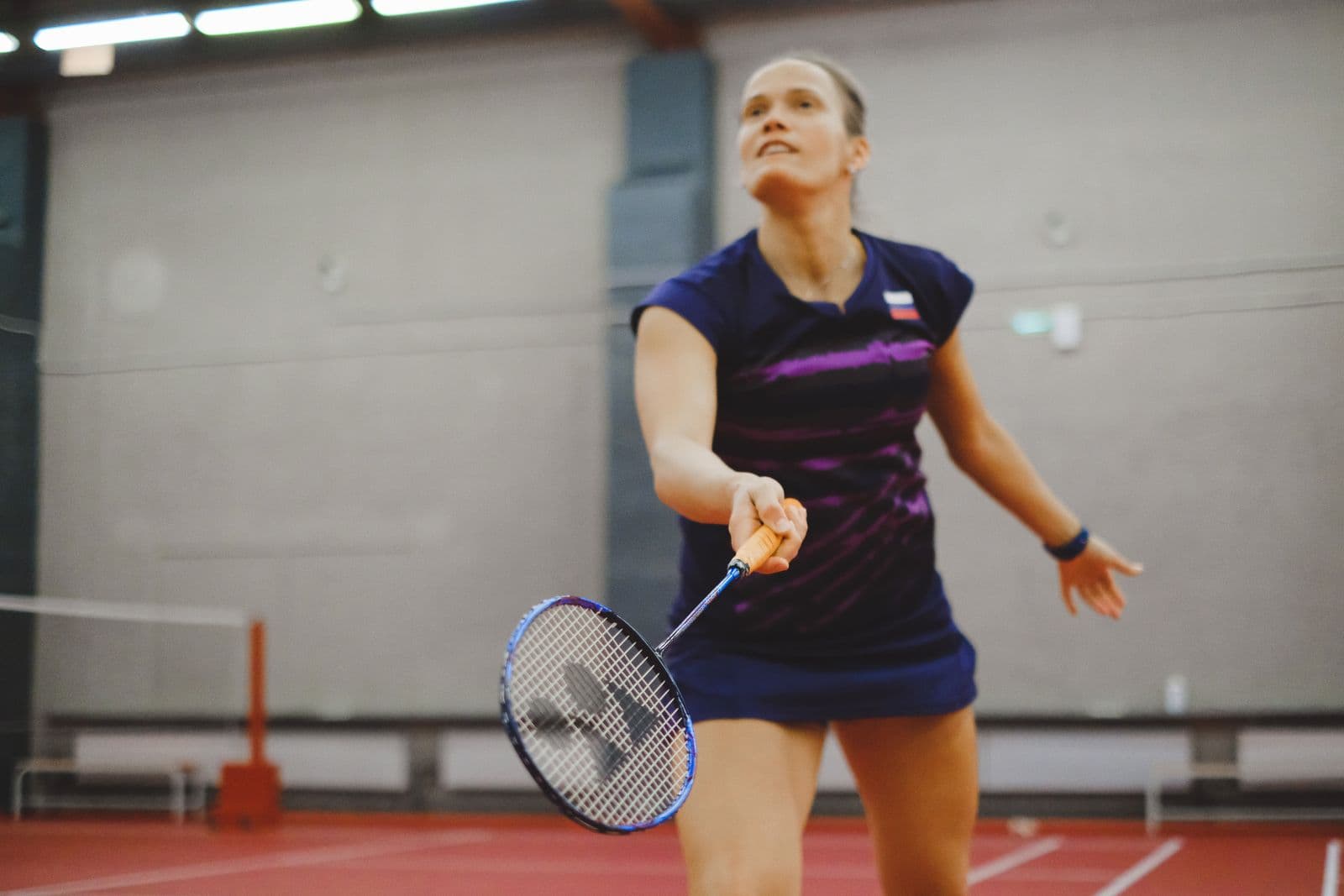
What badminton asks of a knee
Match analysis of badminton clocks hundreds of direction changes, lunges, and jumps per game — the net lunge takes the knee into deep flexion under braking load, and the jump smash lands on one leg with the quadriceps and patellar tendon absorbing the fall. Two structures collect most of the complaints.
Patellar tendinopathy — the jumper's tax
Pain at the tendon just below the kneecap, loaded by jump smashes and explosive push-offs, warm-up-better-ache-later in its early stages. This is the jumper's-knee family — the same tendinopathy documented at the highest rates in jumping sports — and the treatment is the same everywhere: progressive tendon loading. Heavy, slow leg strength work (squats, split squats, leg press) builds the tendon's capacity over 8–12 weeks while jump and match volume is managed, then jumping is rebuilt on top. Rest alone rewinds the clock without changing the tendon; straps and ice are comfort, not treatment.
Patellofemoral pain — the lunge's tax
A broader, harder-to-point-at ache behind or around the kneecap, provoked by deep lunges, stairs, and long sitting. Badminton's net lunge is among the deepest knee bends in sport, so the kneecap's joint sees compression few other games produce. The international consensus on this condition is unambiguous: exercise therapy is the treatment — hip and quadriceps strengthening, with lunge depth and volume temporarily trimmed and then progressively restored. Footwork and strength work that spreads load across hips and ankles is both rehab and prevention.
The exception: twist, pop, swelling
One knee story skips the loading plan and goes to a physician first: a twisting moment with a pop and swelling within hours, sometimes with the knee giving way or locking afterward. That pattern can mean ligament or meniscus injury and deserves examination and usually imaging before rehab decisions. Worth knowing on the other side: research on degenerative meniscus changes shows surgery is rarely the answer for gradual-onset knee pain in adults — well-run rehab is the first-line even for many confirmed meniscus findings.
Getting the right help
A badminton-literate PT separates tendon from kneecap from needs-a-physician, measures your leg strength instead of guessing, and keeps you on court through rehab wherever the knee allows — here's how to find one, and Bay Area players can browse badminton-friendly PTs by region. Under California direct access you can book directly. Evaluations run $125–$250 cash-pay ($175–$275 in the Bay Area), most loading-knee episodes resolve in 6–12 visits, and HSA/FSA funds apply (what PT costs).
Frequently asked questions
Sources (5)
- Lian OB, et al. Prevalence of jumper's knee among elite athletes from different sports: a cross-sectional study. Am J Sports Med. 2005. — AJSM
- Crossley KM, et al. 2016 Patellofemoral pain consensus statement from the 4th International Patellofemoral Pain Research Retreat. Br J Sports Med. 2016. — BJSM
- Thorlund JB, et al. Arthroscopic surgery for degenerative knee: systematic review and meta-analysis of benefits and harms. BMJ. 2015. — BMJ
- Phomsoupha M, Laffaye G. The science of badminton: game characteristics, anthropometry, physiology, visual fitness and biomechanics. Sports Med. 2015. — Sports Med
- AAOS OrthoInfo. Patellofemoral pain syndrome. — OrthoInfo
This article is for education only and isn't medical advice. Always talk to a licensed clinician about your specific situation.