
Beach vs. Indoor Volleyball: What Each Surface Does to Your Body
Sand's gifts and taxes, indoor's jump density, and the switch rule that prevents most transition injuries
Updated October 20262 minute read
Beach and indoor volleyball are two different sports wearing one name: sand softens every landing but taxes calves, Achilles tendons, and hips enormously, while indoor offers predictable footing at the price of jump density and hard landings — including the under-the-net ankle zone. Professional beach volleyball actually shows notably low injury rates, but the dangerous weeks are the transitions: treat every surface switch as a load change and ramp over two to three weeks.
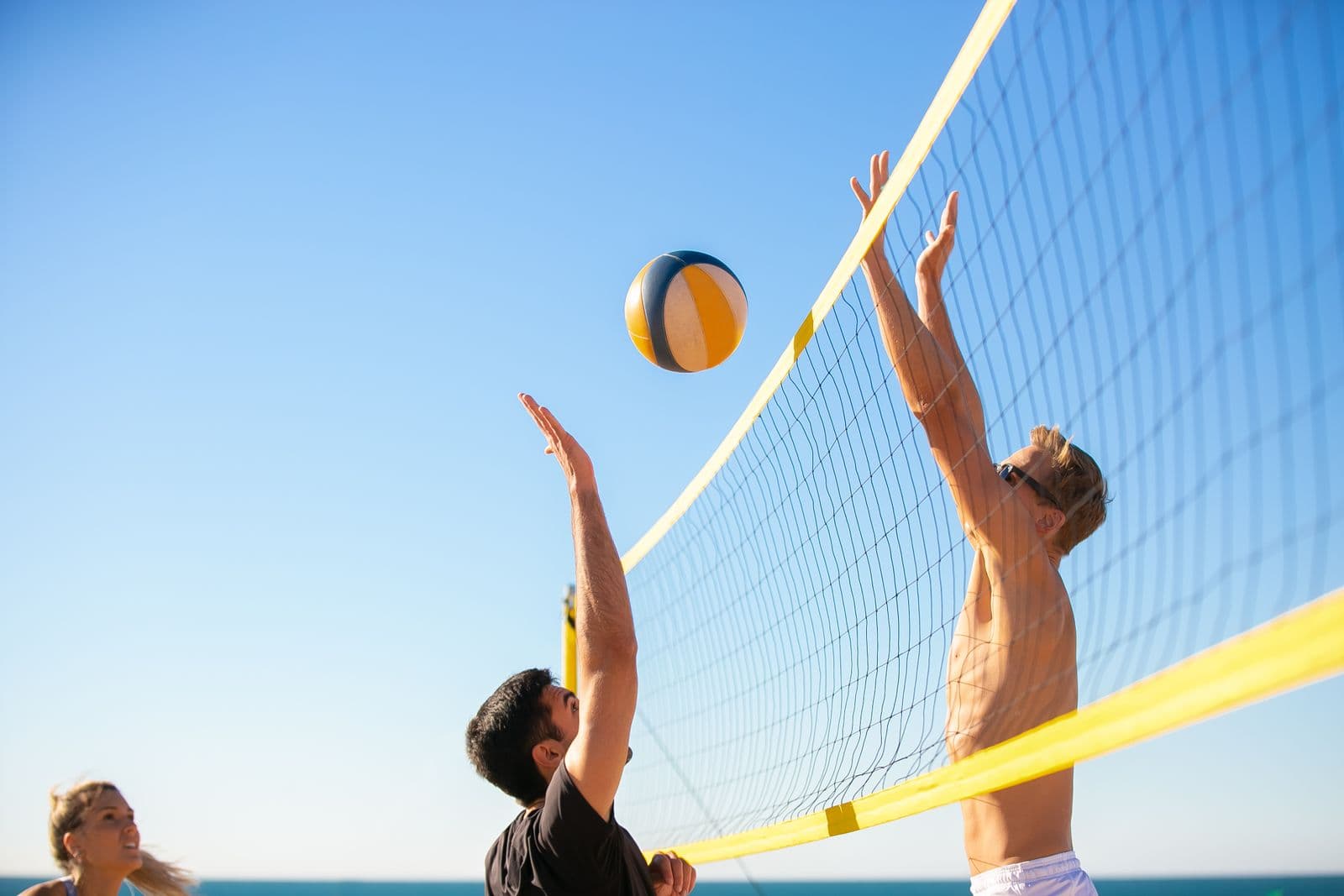
Two sports, one name
Beach and indoor share a net and a scoring system and almost nothing about what they ask of a body. Players who move between them — which in the Bay Area's year-round sand scene is most players — get the benefits of both and the injuries of neither, if they respect the one rule this page exists for: a surface switch is a load change.
Sand's gifts and taxes
The gifts. Sand absorbs landings — impact per jump drops dramatically, which is why sand blocks and digs are kind to knees and why beach training shows up in rehab programs. The surveillance data on professional beach players found strikingly low injury rates for a jumping sport. Sand is also a strength coach that never unloads: every step trains calves, hips, and balance.
The taxes. The same sinking surface that saves your knees sends the bill to the calf and Achilles — push-off demand rises sharply, and sand-training research documents the higher energy cost per stride. The classic transition injury is the indoor player's second week of beach season: calves that never complained indoors suddenly grabbing, Achilles tendons stiff every morning. Jumping feels stolen because it is — that's the training effect arriving before the adaptation.
Indoor's gifts and taxes
The gifts. Predictable footing, true verticals, and the fast six-player game that makes jump training pay off.
The taxes. Jump density on hard landings — the patellar tendon's season-long bill — and the under-the-net ankle zone, where landing on a blocker's foot remains the sport's signature acute injury. Players with a sprain history carry brace evidence on their side when they return indoors.
The switch rule
Both transitions deserve a two-to-three-week ramp:
- Indoor → beach: halve your session count the first two weeks; expect calves and Achilles to grumble mildly (morning stiffness that fades is adaptation; focal pain that builds is a warning — same logic, different tendon). Front-load calf raises before the season starts, not after it bites.
- Beach → indoor: your engine is bigger than your tendons' hard-landing tolerance; the jumps feel gloriously easy, which is the trap. Ramp jump volume like it's new, wear court shoes from day one, and brace the previously sprained ankle for the first weeks of net play.
- Playing both at once: count the combined week — one jump budget, two surfaces.
When the transition already bit
A calf that grabbed, an Achilles that's stiff every morning for two weeks, or an ankle rolled at the net — get it assessed rather than playing the other surface around it. Cash-pay evaluations run $125–$250 ($175–$275 in the Bay Area, what PT costs), a superbill often recovers part of the cost, and Bay Area players can browse volleyball-friendly PTs by region — here's how to vet one.
Frequently asked questions
Sources (5)
- Bahr R, Reeser JC. Injuries among world-class professional beach volleyball players: the Fédération Internationale de Volleyball beach volleyball injury study. Am J Sports Med. 2003. — AJSM
- Binnie MJ, et al. Sand training: a review of current research and practical applications. J Sports Sci. 2014. — J Sports Sci
- Reeser JC, et al. Strategies for the prevention of volleyball related injuries. Br J Sports Med. 2006. — BJSM
- Janssen KW, et al. Bracing superior to neuromuscular training for the prevention of self-reported recurrent ankle sprains: a three-arm randomised controlled trial. Br J Sports Med. 2014. — BJSM
- AAOS OrthoInfo. Sprained ankle. — AAOS OrthoInfo
This article is for education only and isn't medical advice. Always talk to a licensed clinician about your specific situation.