
Junior Tennis Injuries: A Parent's Guide
Growth plates, one-sided bodies, and how to keep a season — and a kid — intact
Updated October 20263 minute read
Junior tennis combines year-round training, tournament travel, and a one-sided sport with a growing body — which gives young players their own injury patterns: growth-plate irritations at the heel and knee, and overuse in the serving shoulder and elbow. Most are very fixable; the difference between a two-week fix and a lost season is how early someone looks. Pain your junior can point to with one finger deserves attention this week, not after the next tournament.
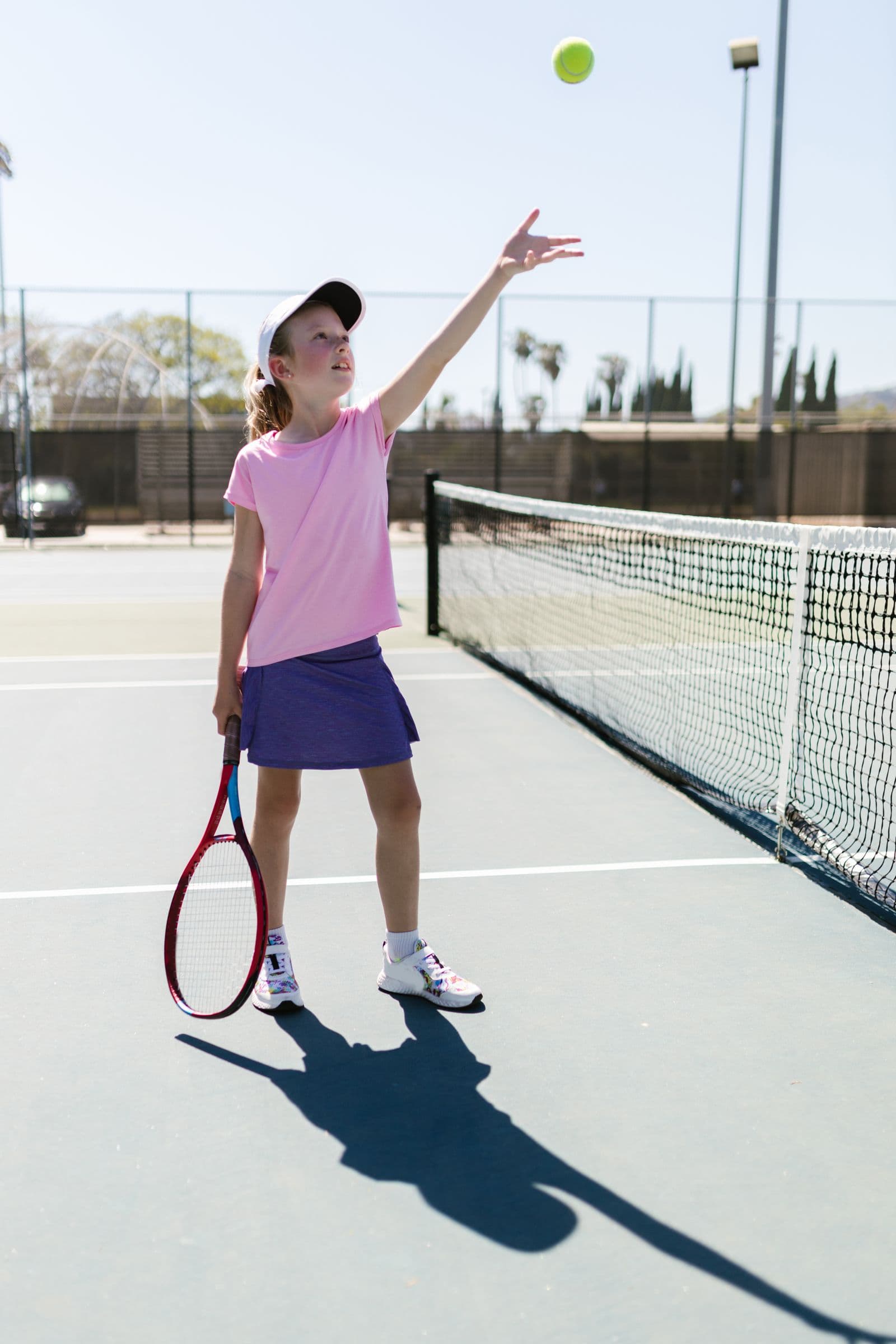
Why junior tennis is its own category
Three things stack up. First, tennis has become a year-round, early-specialization sport — academies, ladders, and tournament calendars leave no natural off-season, and sports-medicine consensus statements flag exactly that pattern as the overuse-injury driver in youth athletes. Second, growth plates — the soft zones near the ends of growing bones — are weaker than the tendons pulling on them, so kids get growth-plate irritation where adults would get tendon pain. Third, tennis is gloriously one-sided: one arm serves thousands of balls while the other tosses, and growth spurts keep moving the target.
None of this makes tennis unsafe. It makes the warning signs worth knowing.
The injuries that matter, by site
Heel pain in a 9–13-year-old who's running and jumping on hard courts is usually Sever's disease — growth-plate irritation where the Achilles pulls on the heel. Sounds alarming, responds well to load management and calf work, resolves as the plate matures.
Pain at the bump below the kneecap is Osgood-Schlatter — the same story at the knee, common through growth spurts.
The serving shoulder and elbow are the tennis-specific worry in high-volume juniors. Baseball calls its version "Little League shoulder" — growth-plate stress from repeated violent rotation — and the serve is tennis's equivalent load. A junior whose serving shoulder or inner elbow hurts during or after big serving days needs volume looked at now; in an older teen the same pattern shades toward tennis elbow or golfer's elbow territory. The elbow sorting guide maps the adult patterns; in a still-growing player, bias toward early evaluation rather than self-diagnosis.
Sore vs. hurt — teach the difference at dinner
Sore is both legs, after hard weekends, gone in a day or two. Hurt is one spot, most practices, sticking around next morning, or changing the serve. Sore is training; hurt is information.
Then name the quiet part: juniors hide pain. Rankings, academy spots, travel teams, and a coach's attention all reward silence — kids know it long before parents do. Saying out loud that telling us early is how you protect your season is half the prevention. (Our cross country and club swimming guides tell the same story — it's a youth-sports pattern, not a tennis one.)
The season-saving timeline
An elbow or heel niggle mentioned in the first weeks of a season is usually a two-to-three-week fix with modified training — the season survives. The same niggle pushed through months of tournaments becomes a shutdown. The math is consistent across youth sports: early evaluation costs a week of modified practice; late evaluation costs the sectionals.
A useful home screen for lower-body pain: ten single-leg hops on the sore side. Sharp, localized pain = same-week evaluation, not "see how Sunday's match goes."
What to expect from PT for a minor
A parent attends and consents. Expect questions about training hours, tournament schedule, recent growth, sleep, and eating alongside the movement exam — in juniors those answers matter as much as any test. On fueling: the conversation is about eating enough for the training load — it is never about weight — and energy shortfall quietly raises injury risk in growing athletes of every body type. Treatment plans lean on modified training, not shutdown: most juniors keep hitting in some form, which matters more than adults realize.
Good coaches want this information early — a PT's note that says "two weeks of reduced serving plus strength work, then graded return" keeps the player in the program and the coach in the loop. If you're local, browse Bay Area tennis PTs and ask specifically about experience with junior athletes — here's how to vet anyone you find.
Frequently asked questions
Sources (5)
- DiFiori JP, et al. Overuse injuries and burnout in youth sports: a position statement from the American Medical Society for Sports Medicine. Clin J Sport Med. 2014. — Clin J Sport Med
- Mountjoy M, et al. The IOC consensus statement: beyond the Female Athlete Triad — Relative Energy Deficiency in Sport (RED-S). Br J Sports Med. 2014. — BJSM
- Pluim BM, et al. Tennis injuries: occurrence, aetiology, and prevention. Br J Sports Med. 2006. — BJSM
- Abrams GD, et al. Epidemiology of musculoskeletal injury in the tennis player. Br J Sports Med. 2012. — BJSM
- Lauersen JB, et al. The effectiveness of exercise interventions to prevent sports injuries: systematic review and meta-analysis. Br J Sports Med. 2014. — BJSM
This article is for education only and isn't medical advice. Always talk to a licensed clinician about your specific situation.