
High School Cross Country Injuries: A Parent's Guide
Why teen runners get hurt differently, which aches matter, and how to save the season
Updated October 20263 minute read
Teen runners aren't small adults: open growth plates, growth spurts, and big summer-to-season mileage jumps give them their own injury patterns. Most are very fixable — the difference between a two-week fix and a lost season is usually how early someone looks at it. Shin or foot pain that's pinpointable on bone deserves attention now, not after the next meet.
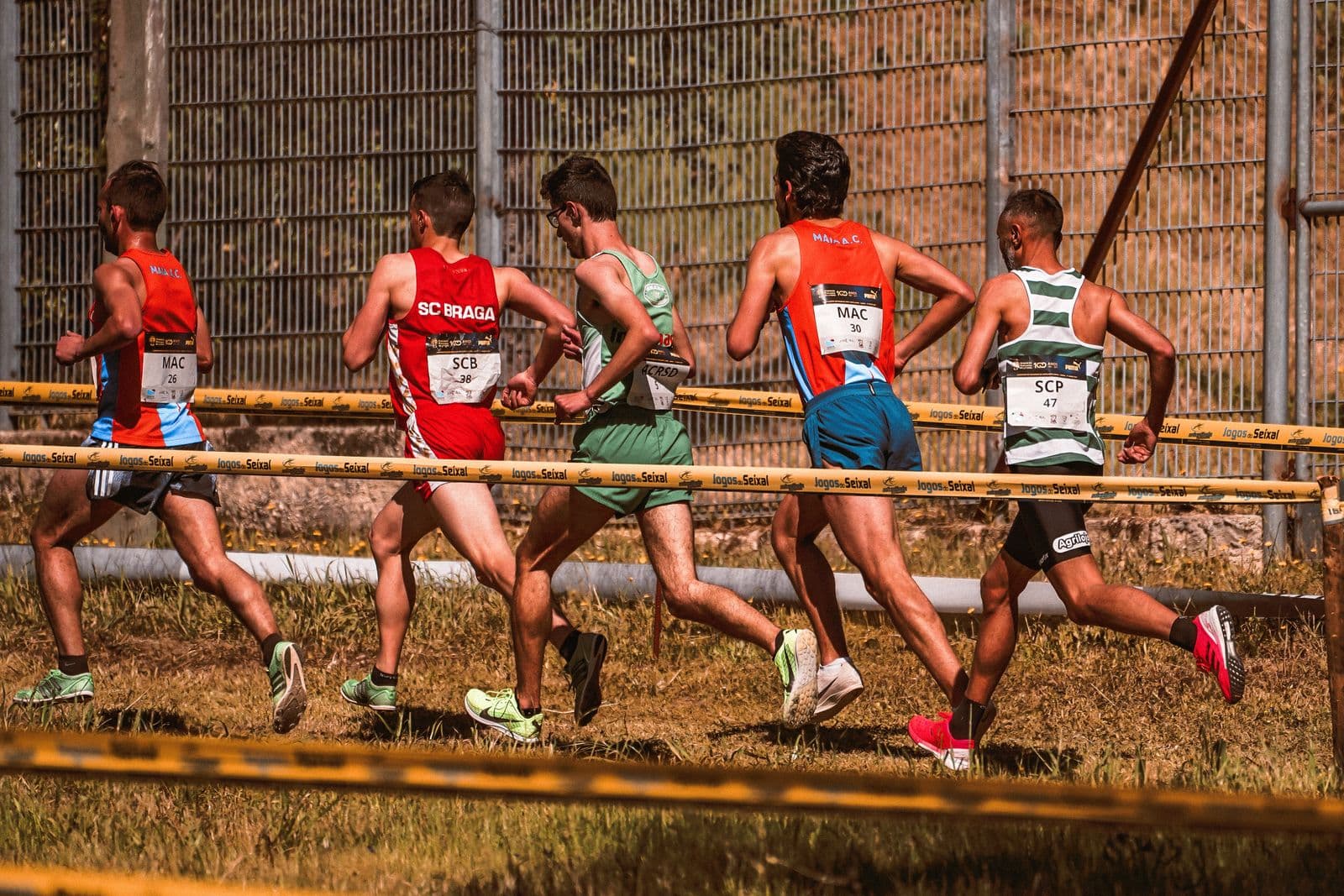
Why teen runners get hurt differently
Three things separate a 15-year-old's injury risk from a 35-year-old's. First, growth plates — the soft zones near the ends of growing bones — are weaker than the tendons that pull on them, so teens get growth-plate irritation where adults would get tendon pain. Second, growth spurts change the math mid-season: a few inches of height shifts mechanics and flexibility faster than training can adapt. Third, the cross country calendar practically invents load spikes — a quiet summer, then two weeks of doubles in August heat.
None of this makes running unsafe for teens. Cross country remains one of the best things a teenager can do. It just means the warning signs are worth knowing.
The injuries that matter, by age
Younger teens (roughly 11–14): heel pain with running and jumping is usually Sever's disease (growth-plate irritation at the heel), and pain at the bump below the kneecap is Osgood-Schlatter. Both sound alarming, both are growth-plate conditions that respond well to load management and calf/quad work, and both typically resolve as the growth plate matures.
Older teens (roughly 14–18): the patterns start to look adult — shin pain, runner's knee, ankle and foot problems. The one to take most seriously is bone stress: shin or foot pain that's pinpointable with one finger, hurts with hopping, or aches after runs. Teen stress injuries deserve prompt attention — especially in girls, where bone stress can signal the athlete isn't fueling enough for the training load (what sports medicine calls RED-S, or relative energy deficiency in sport). That conversation is about eating enough to perform — it is never about weight — and a sports PT or physician who works with teen endurance athletes will handle it that way.
The season-saving timeline
Cross country seasons are short, and this is where timing decides outcomes. A shin niggle mentioned in early September is usually a two-to-three-week fix with modified training — the season survives. The same niggle pushed through until late October is often a bone stress injury that ends the season and bleeds into track. The math is brutally consistent: early evaluation costs a week of modified practice; late evaluation costs the postseason.
A useful home screen: ask your teen to hop ten times on the sore leg. Sharp, localized pain is a same-week evaluation, not a "see how Saturday's meet goes."
What to expect from PT for a minor
A parent or guardian attends the evaluation and consents to care. Expect the PT to ask about training history, growth (recent height changes), sleep, and fueling alongside the usual movement exam — with teen runners, those answers matter as much as the hop test. Treatment plans lean on modified training rather than shutdown: most teens keep practicing with the team in some form, which matters more than adults tend to realize.
If you're local, Bay Area cross country culture is deep — big invitationals, hilly courses like Crystal Springs — and so is the bench of PTs who work with teen runners: start with the Bay Area running PT directory, and ask specifically about experience with adolescent athletes (here's how to vet a running PT).
Talking to the coach
Good coaches want the information early. A PT's note that says "two weeks of cross-training plus strides, then graded return" keeps the athlete in the program and the coach in the loop — cross-training options let a teen hold fitness through almost any modified block. What doesn't work is the silent middle path where the athlete hides pain to protect their varsity spot; naming that dynamic out loud at home is half the prevention.
Frequently asked questions
Sources (6)
- DiFiori JP, et al. Overuse injuries and burnout in youth sports: a position statement from the American Medical Society for Sports Medicine. Clin J Sport Med. 2014. — Clin J Sport Med
- Mountjoy M, et al. The IOC consensus statement: beyond the Female Athlete Triad — Relative Energy Deficiency in Sport (RED-S). Br J Sports Med. 2014. — BJSM
- Wu AC, et al. Running-related injuries in middle school cross-country runners: prevalence and characteristics. PM R. 2022. — PM R
- Warden SJ, et al. Management and prevention of bone stress injuries in long-distance runners. J Orthop Sports Phys Ther. 2014. — JOSPT
- Luedke LE, et al. The Running Readiness Scale and injury in collegiate track and field and cross country athletes. J Athl Train. 2025. — J Athl Train
- Wright AA, et al. Risk factors associated with lower extremity stress fractures in runners: a systematic review with meta-analysis. Br J Sports Med. 2015. — Br J Sports Med
This article is for education only and isn't medical advice. Always talk to a licensed clinician about your specific situation.