
Stress Fractures in Runners: Signs, High-Risk Sites & Recovery
When bone can't keep up with training — and why this is the injury you don't negotiate with
Updated October 20263 minute read
A stress fracture is bone failing under repetitive load, and it announces itself as focal pain — one spot you can point to — that worsens the longer you run. Suspected stress fractures need a physician and imaging, not a wait-and-see plan: most heal in 6–12 weeks with proper offloading, and physical therapy's job is keeping you fit through it and rebuilding your running afterward.
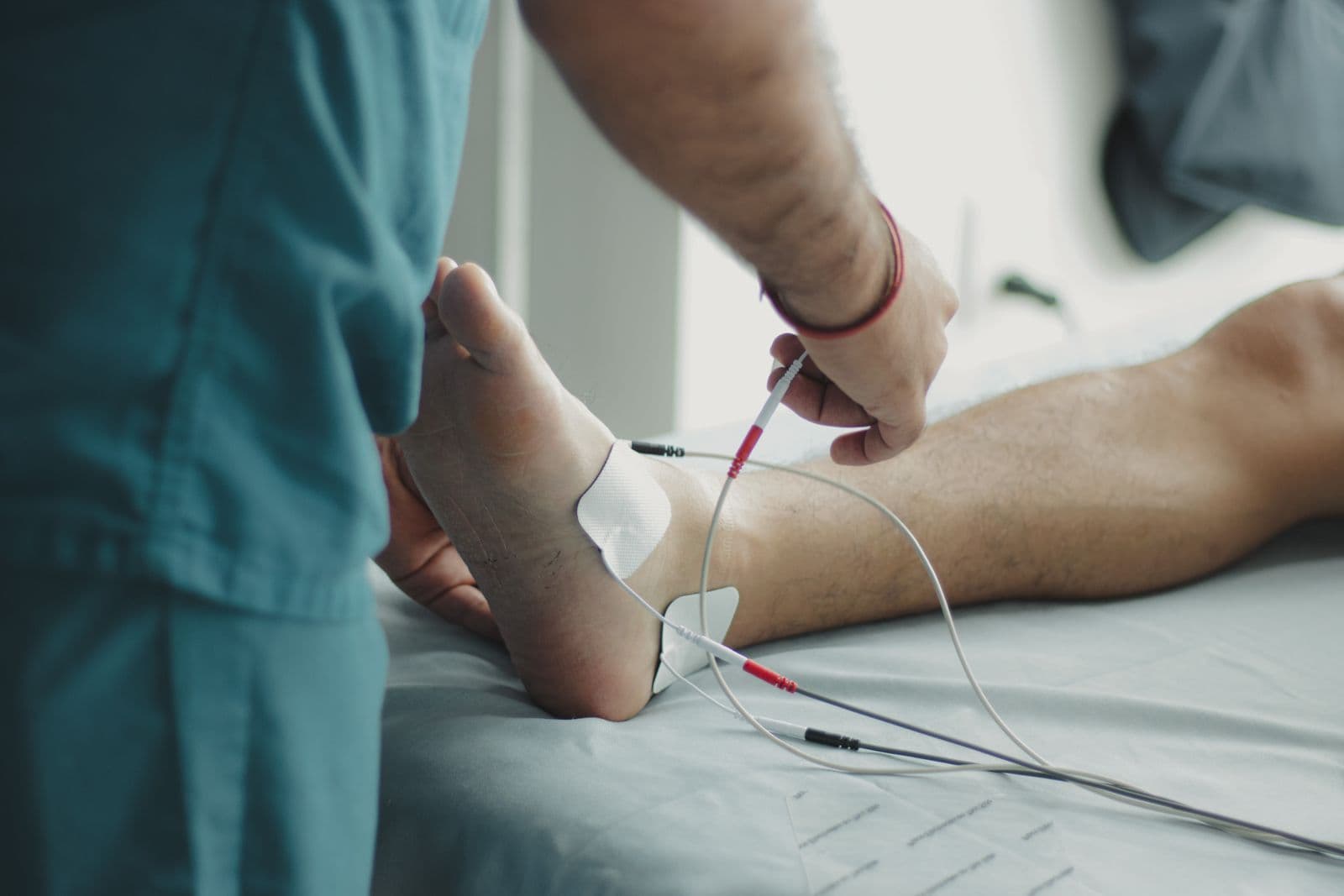
What a stress fracture is
Bone is living tissue that constantly remodels itself to match the load you put through it. Training stresses bone; recovery rebuilds it stronger. When loading outpaces rebuilding for long enough, the bone develops a stress reaction — irritation and swelling within the bone — and if the loading continues, that progresses to a stress fracture: an actual crack. It's a continuum, which is exactly why catching it early matters so much. A stress reaction caught this week is a 3–6 week problem. The same injury pushed through for another month can become a 3–6 month problem.
Runners are the textbook population: the shin, the metatarsals of the foot, the heel, the femur, and the pelvis carry the repetitive impact.
The pattern that should raise your suspicion
- Focal pain — one spot you can cover with a fingertip, usually on bone
- Pain that gets worse the longer you run, with no warm-up effect
- Hurts with hopping on that leg; eventually hurts walking
- In later stages: aching at rest or at night
Compare that with the diffuse, warms-up-as-you-go ache of shin splints — the shin pain guide maps the two side by side. Any focal-bone-pain pattern means stop running and get assessed now — this is the one running injury where "see how next week feels" is the wrong call.
Why this one goes to a physician first
Suspected stress fractures need imaging — usually MRI, because early injuries don't show on X-ray — and a physician managing the medical side. Two sites make this urgent rather than just prompt: the femoral neck (groin or deep hip pain with impact) and the navicular (midfoot), where delayed or displaced healing can have lasting consequences. Front-of-shin cortical fractures join that high-risk list. Low-risk sites — most inner shins and metatarsals — still need diagnosis, but typically heal predictably with offloading. How to decide between a PT and a doctor covers this triage — and a good running PT who suspects bone will send you for imaging at visit one, not treat through it.
Why it happened — the question worth answering
A stress fracture is a signal, not bad luck. The usual drivers, often in combination: a training spike (volume, intensity, or surface change), under-fueling relative to training load — eating too little for how much you run, which quietly degrades bone in runners of every body type and both sexes (the RED-S picture; missed periods are one flag worth telling a clinician about) — plus low bone density, and sometimes biomechanics. First-time fracture with an obvious training spike? Fix the training. Any repeat fracture, or one with no clear spike, deserves the fuller workup: fueling, hormones, bone density.
Recovery: what the 6–12 weeks look like
The medical side sets the healing window — often a boot or reduced weight-bearing for foot and shin sites. PT's job runs in parallel:
- Keep the engine running. Deep-water running, cycling, swimming — whatever loads the heart without loading the crack. Cross-training for injured runners maps the options.
- Rebuild capacity. Progressive calf, foot, and hip strength once the bone tolerates it — the tissue insurance against round two.
- Return to running on tests, not dates. Pain-free walking, hopping, and loading milestones gate each step; then a graded run-walk build. Return to running after injury shows the progression.
Finding the right help
For the comeback phase, you want a PT who treats runners weekly and builds the return around your race calendar — here's how to vet one, and Bay Area runners can browse running-focused PTs by region. Cash-pay evaluations run $125–$250, and a superbill often recovers part of the cost from out-of-network benefits.
Frequently asked questions
Sources (6)
- Warden SJ, et al. Management and prevention of bone stress injuries in long-distance runners. J Orthop Sports Phys Ther. 2014. — JOSPT
- Mountjoy M, et al. The IOC consensus statement on Relative Energy Deficiency in Sport (RED-S). Br J Sports Med. 2014. — BJSM
- Matheson GO, et al. Stress fractures in athletes: a study of 320 cases. Am J Sports Med. 1987. — AJSM
- AAOS OrthoInfo. Stress Fractures. — AAOS OrthoInfo
- Nielsen RO, et al. Training errors and running related injuries: a systematic review. Int J Sports Phys Ther. 2012. — IJSPT
- Wright AA, et al. Risk factors associated with lower extremity stress fractures in runners: a systematic review with meta-analysis. Br J Sports Med. 2015. — Br J Sports Med
This article is for education only and isn't medical advice. Always talk to a licensed clinician about your specific situation.