
PT or Doctor First for a Running Injury? How to Decide
Most running pain goes straight to a PT — here are the exceptions that don't
Updated October 20262 minute read
For gradual-onset running pain — the aching knee, the tight Achilles, the sore shin — a physical therapist is usually the right first stop: no referral needed in most states, same-week availability, and treatment starts at visit one. Go to a doctor first for trauma, suspected stress fracture, numbness, or night pain that doesn't change with position.
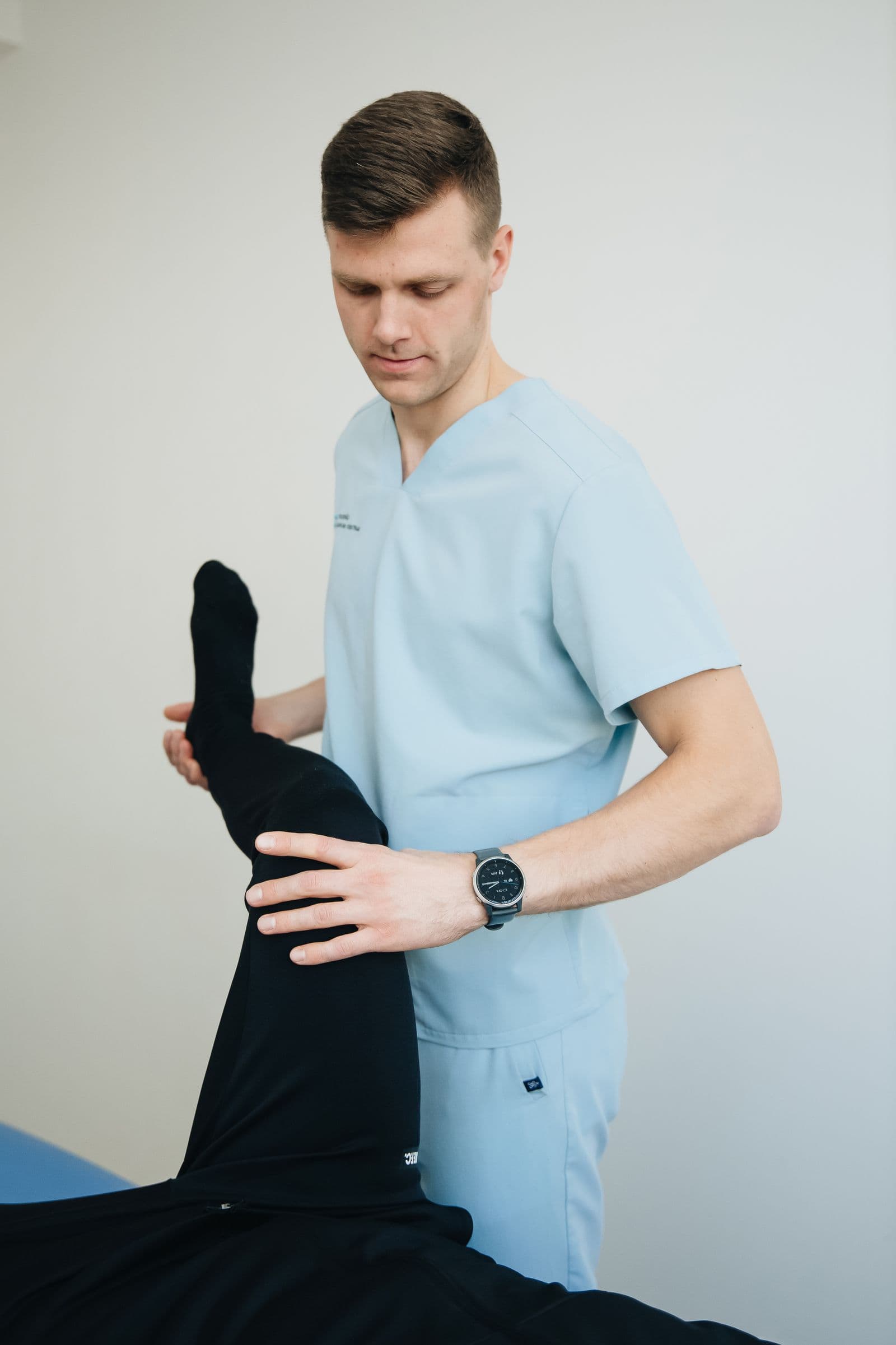
The short version
Running injuries split cleanly into two groups. Gradual-onset pain — it crept in over days or weeks of training — is almost always a load problem: runner's knee, Achilles tendinopathy, shin splints, IT band pain. These are exactly what physical therapists treat all day, no physician required first.
Red-flag pain is the second group, and it needs a doctor before anyone loads it. The list is short. Memorize it.
Go to a doctor first if any of these are true
- A single traumatic moment caused it — a fall, a rolled ankle with real swelling, a pop followed by trouble bearing weight
- Focal bone pain — one fingertip-sized spot on your shin, foot, or hip that hurts to press and hurts with every step. That's the stress fracture pattern, and it needs imaging before anyone tells you to run on it
- Numbness, tingling, or weakness running down a limb
- Night pain that doesn't change when you change position
- Systemic signs — fever, unexplained weight loss, a joint that's hot and swollen without injury
None of those? The PT lane is open.
Why PT-first works for everything else
In most states, direct access lets you book a PT evaluation with no referral — in California, care can run 45 days or 12 visits before a physician needs to be involved, which covers most running injuries entirely. The evaluation doubles as a screen: PTs are trained to spot the red flags above and refer out when something doesn't fit the overuse pattern.
The practical advantages stack up:
- Speed. Days to a PT evaluation vs. weeks to a sports-medicine appointment — while the injury compounds with every run.
- Treatment starts immediately. You leave visit one with a working diagnosis, a modified training plan, and exercises — not an imaging order and a follow-up in three weeks.
- Cost. A cash-pay PT evaluation runs $125–$250 ($175–$275 in the Bay Area). A specialist visit plus imaging, then PT anyway, costs more and starts later. What PT costs breaks down the numbers, and a superbill can recover part of it.
The three lanes, plainly
Urgent care / ER: trauma you can't walk on, a joint that's visibly deformed or rapidly swelling, or any red flag that scares you. Get the X-ray, rule out the fracture.
Sports-medicine physician: focal bone pain, injuries that haven't responded to a real course of rehab, or anything needing imaging, injections, or surgical opinions.
Physical therapist: everything else — which, for runners, is most things. If you're unsure which lane you're in, a PT evaluation is a safe and useful sorting visit; triage is part of the job.
Picking the right PT matters as much as the decision
A generalist clinic and a running-focused practice are different experiences — the guide to finding a running PT covers what separates them. If pain is changing how you run right now, the pain rules will tell you whether to keep training while you wait for the appointment. And if you're in the Bay Area, start with the directory of running-focused PTs — every listing is cash-pay and bookable without a referral.
Frequently asked questions
Sources (6)
- APTA. Direct Access by State: physical therapist direct access laws summary. — APTA
- Physical Therapy Board of California. Direct access to physical therapist services (Business and Professions Code §2620.1). — PTBC
- MedlinePlus (National Library of Medicine). Sports Injuries. — MedlinePlus
- AAOS OrthoInfo. Stress Fractures. — AAOS OrthoInfo
- Matheson GO, et al. Stress fractures in athletes: a study of 320 cases. Am J Sports Med. 1987. — AJSM
- Demont A, et al. The impact of direct access physiotherapy compared to primary care physician led usual care for patients with musculoskeletal disorders: a systematic review of the literature. Disabil Rehabil. 2021. — Disabil Rehabil
This article is for education only and isn't medical advice. Always talk to a licensed clinician about your specific situation.