
Returning to Tennis After an Injury: A Criteria-Based Plan
Milestones, not dates — and why serves come back last
Updated October 20263 minute read
Good return-to-tennis plans run on criteria, not calendars: pain-free daily life, then strength work at real intensity, then shadow swings and short-court rallying, then graded live hitting, then point play — with serves and overheads last, because they're the biggest ask in the sport. Each step is judged by the 24-hour rule: no worse the next morning, the step stands. Players who skip steps don't return faster; they return twice.
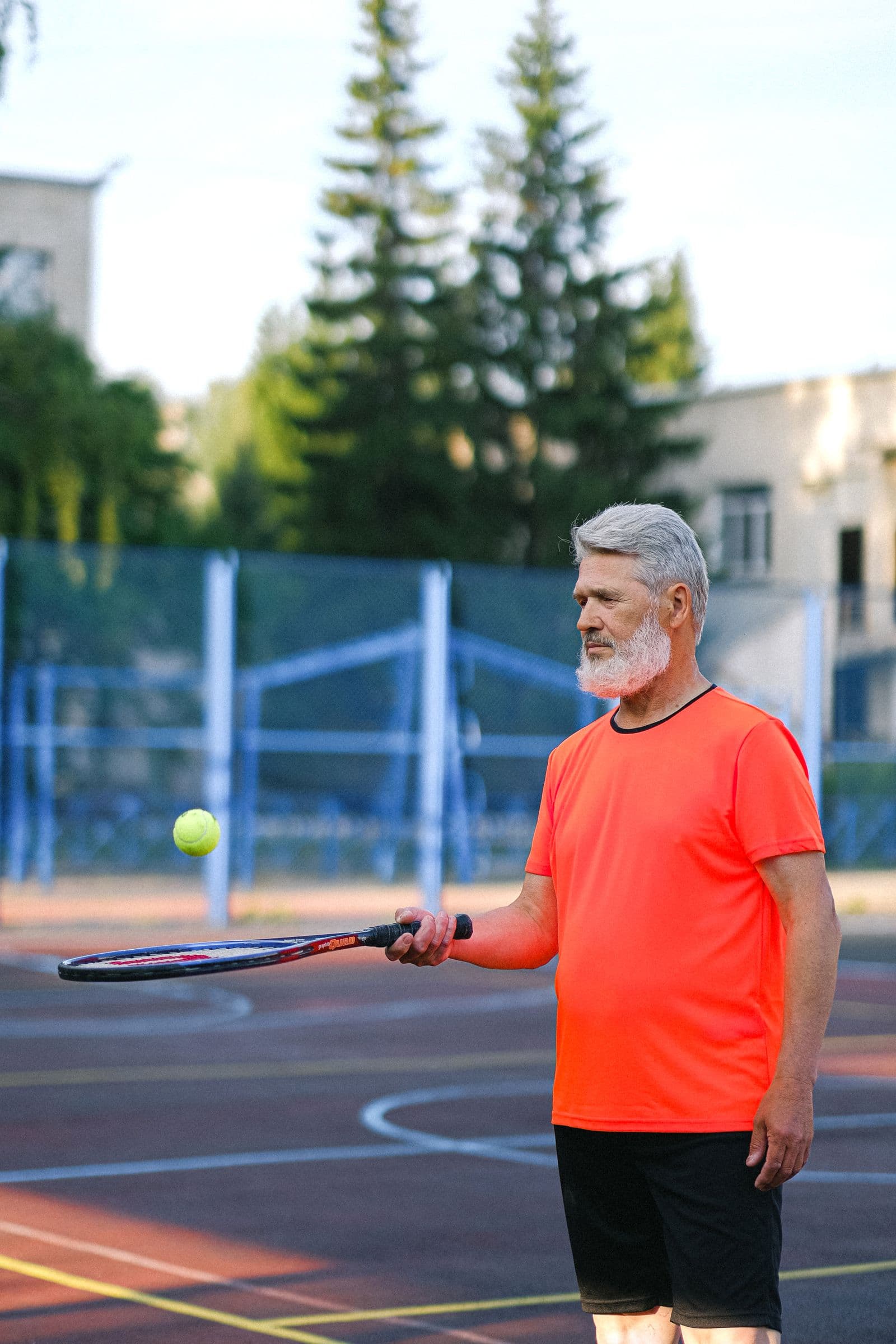
Criteria, not calendars
"Six weeks off, then see how it feels at the club" is how most tennis re-injuries get manufactured. Time heals tissue only if load comes back in order — and in tennis the load ladder is steep: walking, swinging, sprinting, and serving are four different sports as far as your tissues are concerned. A criteria-based return means each stage unlocks the next, and the date takes care of itself. (Runners use the exact same philosophy — compare the running version.)
The milestones, in order
- Pain-free daily life. Stairs, carrying groceries, a full workday — quiet. Until ordinary life is silent, the court isn't a conversation.
- Strength work at meaningful load. The injured tissue tolerates real resistance — not red-band waving — through full range, pain settling within a day. This is where the strength program is the rehab, not an add-on.
- Shadow swings, then short-court. Full-speed swings with no ball, then easy mini-tennis from the service line. Low load, full movement patterns, honest information.
- Graded live hitting. Baseline groundstrokes at building intensity — cooperative rallying, not competition. Add court coverage (volleys, sprints to the net, recovery steps) only after clean baseline sessions.
- Point play. Sets against a hitting partner before league matches. Competition adds the loads no drill reproduces: lunges you didn't plan and the refusal to give up on a ball.
- Serves and overheads last. Start at half pace in short blocks (10–15 serves), build count before building speed, and only then return to full match play.
The 24-hour rule
Every step gets the same referee: how is it the next morning? Mild effort soreness that's gone by morning — the step stands. Symptoms equal or worse 24 hours later — the step was too big; repeat the previous level. Tissues announce overload on a delay, which is why mid-session judgment alone isn't enough.
Injury-specific wrinkles
- Tennis elbow: your budget is grip time under tension — total swings matter more than minutes on court. Before full-volume return, get the racquet setup checked: grip size, string tension, and racquet stiffness all change what each ball does to the tendon. The playing-through guide covers what's safe meanwhile.
- Tennis leg (calf): pass a single-leg hop test pain-free before any live hitting, and treat explosive first steps and serves — both are calf launches — as the last unlock. Full detail in tennis leg.
- Serving shoulder: rally volume and serve volume are separate budgets. Many players rally comfortably for weeks while the serve is still rebuilding — that's normal, not a setback. See shoulder pain on the serve.
When it flares
It probably will once — that's finding the tissue's current ceiling, not a catastrophe. The protocol: drop back two steps, not to zero. Hold the lower level until the 24-hour rule passes twice, then climb again. A flare-up every week, though, means the plan or the diagnosis needs professional eyes.
Getting help
A PT who treats racquet athletes turns this template into your plan — which milestone you're really at, the loading that fixes the cause, and what's realistic before your league season. Evaluations run $125–$250 cash-pay ($175–$275 in the Bay Area; what PT costs, often partly reimbursable via superbill). Here's how to vet one — Bay Area players can go straight to the tennis PT directory.
Frequently asked questions
Sources (5)
- Silbernagel KG, et al. Continued sports activity, using a pain-monitoring model, during rehabilitation in patients with Achilles tendinopathy. Am J Sports Med. 2007. — AJSM
- Ardern CL, et al. 2016 Consensus statement on return to sport from the First World Congress in Sports Physical Therapy, Bern. Br J Sports Med. 2016. — BJSM
- Pluim BM, et al. Tennis injuries: occurrence, aetiology, and prevention. Br J Sports Med. 2006. — BJSM
- Lauersen JB, et al. The effectiveness of exercise interventions to prevent sports injuries: systematic review and meta-analysis. Br J Sports Med. 2014. — BJSM
- Delgado GJ, et al. Tennis leg: clinical US study of 141 patients and anatomic investigation of four cadavers with MR imaging and US. Radiology. 2002. — Radiology
This article is for education only and isn't medical advice. Always talk to a licensed clinician about your specific situation.