
Shoulder Pain When Serving: What's Going On and What to Do
The serve is tennis's overhead event — here's how to read a shoulder that complains about it
Updated October 20262 minute read
Shoulder pain that tracks with serve and overhead volume is usually rotator cuff overload — a capacity problem that physical therapy treats well while you keep playing. Night pain, real weakness, or a traumatic start point toward a tear conversation; a shoulder stiffening in every direction suggests frozen shoulder; and pain that moves with your neck position needs a different workup entirely.
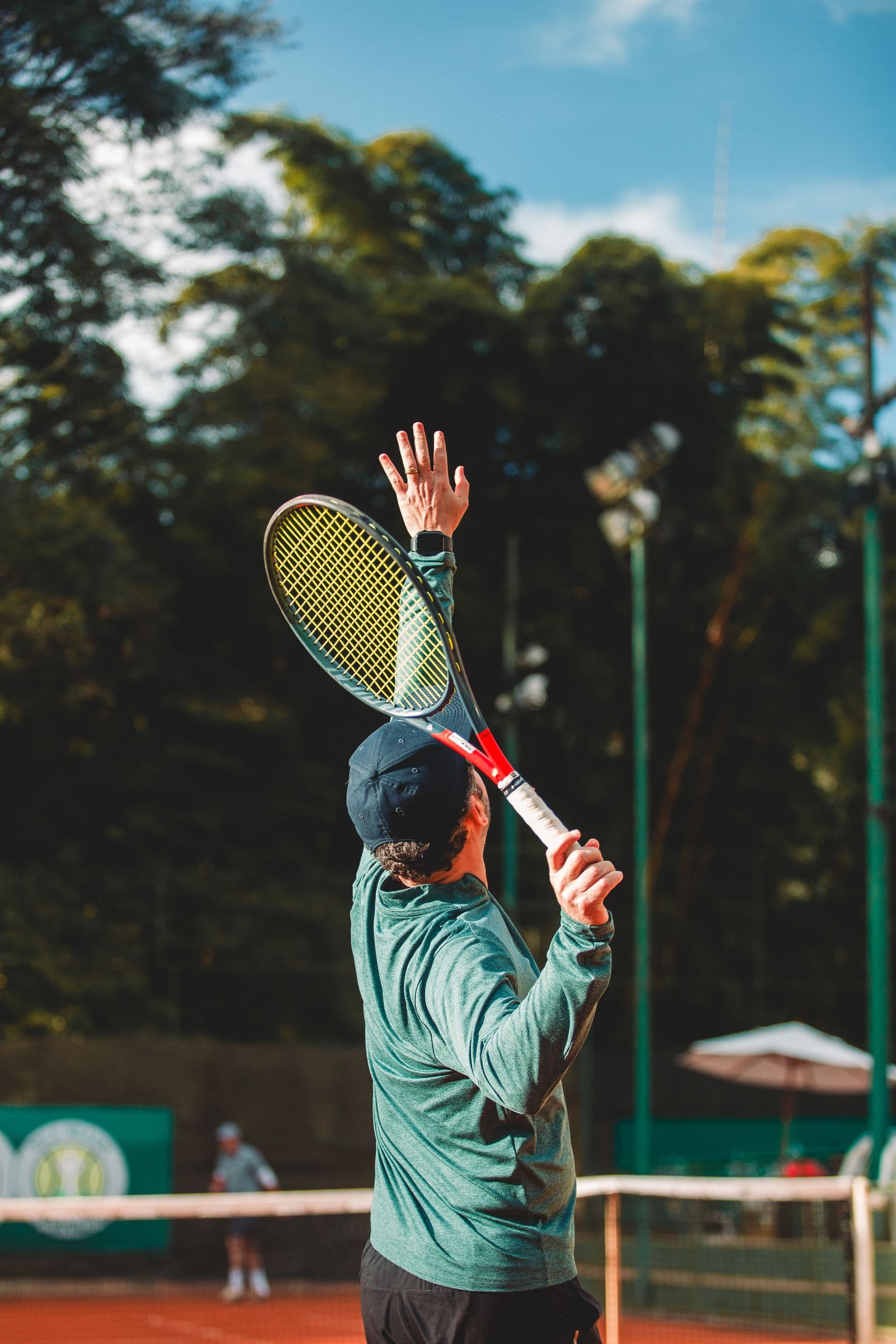
The serve is an overhead sport hiding inside tennis
Count what a shoulder does in a casual two-set singles match: 60–100+ serves and overheads, each one taking the arm through its most extreme range at the fastest speed you can generate. That's throwing-athlete load on players who never think of themselves as overhead athletes — and it's why the shoulder is tennis's most common upper-body complaint after the elbow.
Match your pattern below; they diverge sharply in what to do next.
Pain that tracks with serve volume: cuff overload
An ache at the front or outside of the shoulder during serves and overheads — worse the day after a serve-heavy session, fine during most rallying. This is the classic rotator cuff tendinopathy pattern: the cuff's capacity fell behind the load. It's the most common and most fixable version — progressive cuff and shoulder-blade strengthening, a serve-volume trim while it calms, and a graded return to full-intent serving.
One kinetic-chain note worth taking seriously: serve power starts in the legs and trunk. A stiff hip, a cranky back, or a core that fatigues late in matches quietly sends the power bill to the shoulder — which is why a good evaluation looks below the belt line, and why strength work for tennis is shoulder insurance.
Night pain, weakness, or a traumatic start: the tear conversation
Pain that wakes you when you roll onto that side, genuine weakness lifting the arm, or pain that started with a fall or a violent mis-hit — that pattern deserves a prompt evaluation rather than a wait-and-see block. It doesn't automatically mean surgery; even many confirmed rotator cuff tears do well with rehab. But it needs naming first.
Stiffening in every direction: frozen shoulder
If the real problem is that the shoulder is losing motion — reaching back for the ball toss, fastening a seatbelt, reaching behind your back — and pain is spreading beyond serving, think frozen shoulder. It's notably common in the 40–60 range and follows its own long timeline; the earlier it's identified, the better the plan.
Pain that moves with your neck: look up the chain
Shoulder-area pain with tingling into the arm, or that changes when you turn or tilt your head — especially after long hours at a desk between matches — is often referred from the neck, not the shoulder at all. A PT screens this in one visit; do I need PT for shoulder pain? covers the sorting.
What to do this month
For the volume-tracking pattern: trim serve-heavy sessions for two weeks (keep rallying), swap some flat serves for slice, start basic cuff and shoulder-blade work, and manage the overall load math. No progress in two weeks — or any night pain, weakness, or stiffness pattern — means book the evaluation: $125–$250 cash-pay ($175–$275 in the Bay Area), no referral needed in most states, and a superbill often recovers part of it. How to find a tennis-literate PT covers the vetting; Bay Area players can browse tennis PTs by region. When you're cleared to build back, return to tennis after injury maps the progression.
Frequently asked questions
Often yes, with the serve dialed down — slice serves over flat bombs, fewer overheads, doubles over singles for a few weeks. Ground strokes usually stay comfortable long after serves complain, which is exactly the kind of modified plan a PT builds with you.
Sources (5)
- Abrams GD, et al. Epidemiology of musculoskeletal injury in the tennis player. Br J Sports Med. 2012. — BJSM
- Pluim BM, et al. Tennis injuries: occurrence, aetiology, and prevention. Br J Sports Med. 2006. — BJSM
- AAOS OrthoInfo. Rotator Cuff Tears. — AAOS OrthoInfo
- Silbernagel KG, et al. Continued sports activity, using a pain-monitoring model, during rehabilitation in patients with Achilles tendinopathy. Am J Sports Med. 2007. — AJSM
- Ardern CL, et al. 2016 Consensus statement on return to sport from the First World Congress in Sports Physical Therapy, Bern. Br J Sports Med. 2016. — BJSM
This article is for education only and isn't medical advice. Always talk to a licensed clinician about your specific situation.