
How to Find a Physical Therapist Who Actually Works With Tennis Players
The credentials, questions, and red flags that separate a racquet-sport PT from a generalist
Updated October 20262 minute read
A tennis-focused PT treats racquet athletes regularly, asks about your strokes, grips, and string setup — not just your pain — and builds plans around your league or tournament calendar instead of telling you to stop playing. You can book one directly in most states, and cash-pay means you pick the specialist rather than whoever is in-network.
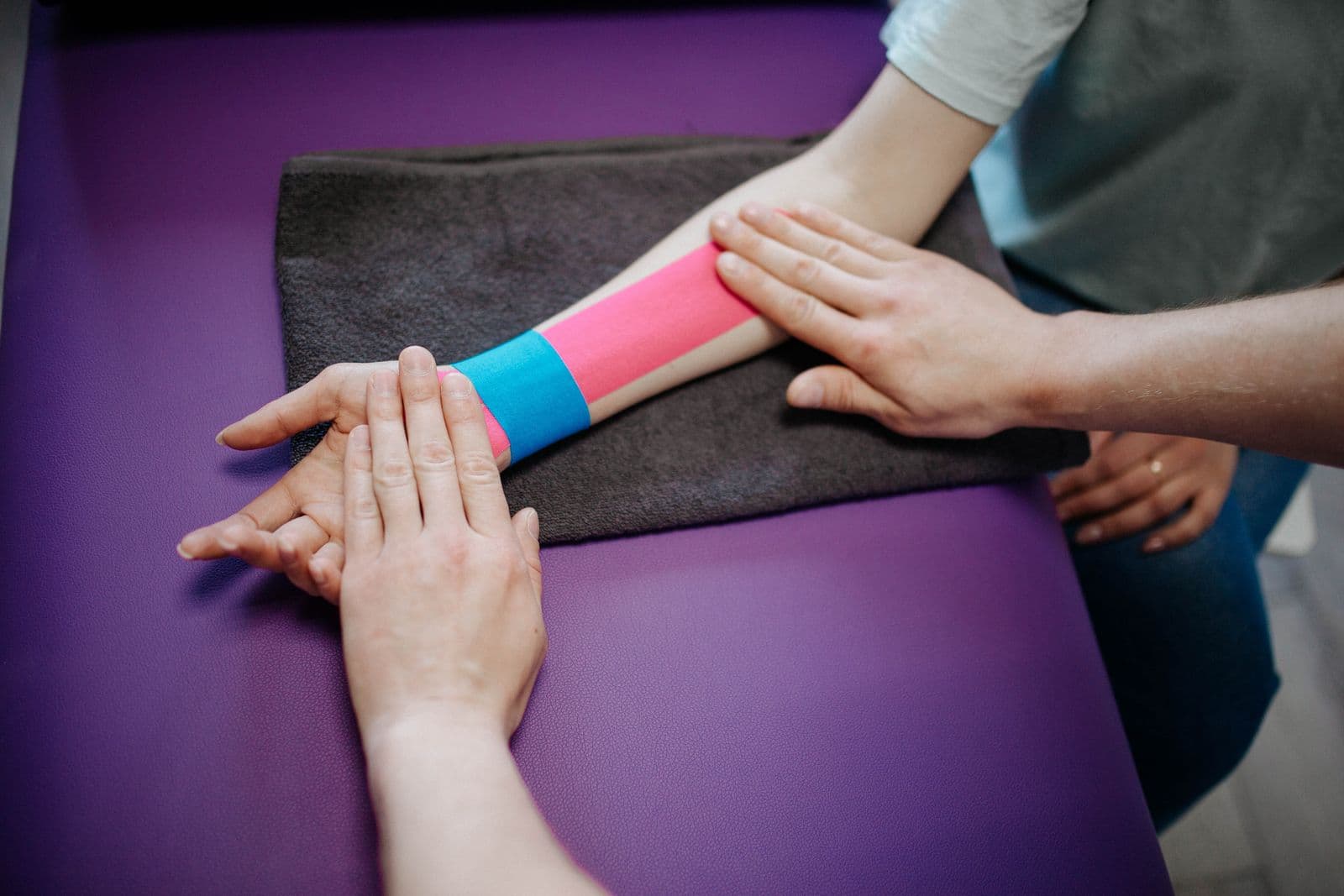
Why "tennis PT" is a real niche
Any licensed PT can treat an elbow. But tennis players present differently: the injuries are one-sided overuse patterns driven by stroke volume and equipment, the goal is a league season or club ladder rather than just "pain-free," and the fix usually touches the racquet, the training week, and the body at once. A PT who treats racquet athletes knows the difference between tennis elbow and its mimics, and knows that "stop playing for six weeks" mostly produces deconditioned players with the same elbow.
The practical test: do they ask about your game before your pain? A tennis-literate evaluation wants your weekly court hours, your strokes and grips, your string setup, and when in the stroke it hurts. If none of that comes up, you're in the wrong clinic.
What to look for
- Caseload, not just credentials. Ask "how many tennis or racquet athletes do you treat in a typical month?" The answer tells you more than any certificate.
- Credentials that signal investment: SCS or OCS — see PT credentials decoded — plus overhead athlete or racquet-sport history.
- Equipment literacy. They should reason fluently about grip size, string stiffness, and racquet weight as load variables — and know when the next stop is a racquet technician, not another exercise.
- A keep-you-playing philosophy. Good answer: "we'll find the court time and stroke mix your arm tolerates and build from there." Bad answer: "stop playing until it stops hurting."
Questions to ask before booking
- How many tennis or racquet-sport athletes do you treat?
- Will you look at my strokes — video or a live swing check?
- Can I keep playing during rehab, and will you plan around my league or tournament calendar?
- Do you address equipment — grip, strings, racquet — as part of an elbow or wrist evaluation?
- What does a typical plan look like for my problem — visits, cost, timeline — and do you provide a superbill?
Red flags
- A blanket "stop playing" before any exam or training history
- No interest in your racquet, strings, or grip for an elbow problem
- Passive-only care — ultrasound, massage, a brace — with no loading program attached
- Identical exercise sheets for every elbow regardless of diagnosis
Already seen a doctor, or have imaging? Request a match — free.
If a doctor has checked you out and physical therapy is an option, tell us where you are. We'll send you cash-pay PTs nearby who treat this, with their prices and first openings — bring your results to the first visit. You choose; we don't give medical advice.
We check two or three cash-pay PTs near you. We reply within 1 business day with next steps.
Why cash-pay works in your favor here
Insurance networks assign you a PT by contract, not by specialty. Paying directly means choosing the clinician who actually treats racquet athletes — and in most states you can book without a referral. Many plans still reimburse part of the cost via superbill.
Playing in the Bay Area? The local tennis guide covers prices and the court scene, and you can browse tennis-friendly PTs across the region when you're ready to compare.
Frequently asked questions
In most states, no — direct access laws let you book a PT evaluation directly. California allows direct access for 45 days or 12 visits before a physician needs to be involved, which covers most tennis elbow and shoulder episodes start to finish.
Sources (6)
- APTA. Direct Access by State: physical therapist direct access laws summary. — APTA
- Physical Therapy Board of California. Direct access to physical therapist services (Business and Professions Code §2620.1). — PTBC
- Ardern CL, et al. 2016 Consensus statement on return to sport from the First World Congress in Sports Physical Therapy, Bern. Br J Sports Med. 2016. — BJSM
- Pluim BM, et al. Tennis injuries: occurrence, aetiology, and prevention. Br J Sports Med. 2006. — BJSM
- APTA ChoosePT. Physical Therapy Guide to Tennis Elbow (Lateral Epicondylitis). — ChoosePT
- Karanasios S, et al. Exercise interventions in lateral elbow tendinopathy have better outcomes than passive interventions, but the effects are small: a systematic review and meta-analysis of 2123 subjects in 30 trials. Br J Sports Med. 2021. — Br J Sports Med
This article is for education only and isn't medical advice. Always talk to a licensed clinician about your specific situation.