
The Warm-Up That Prevents Soccer Injuries: FIFA 11+ Explained
Soccer's rare gift — a standardized, trial-tested warm-up that cuts injuries by about a third
Updated October 20262 minute read
Soccer is the rare sport with a standardized warm-up that's been tested in a large randomized trial: the FIFA 11+, a roughly 20-minute routine of running, strength, balance, jumping, and progressive sprints that cut injuries by about a third in young players. It works because it's a strength-and-landing program disguised as a warm-up — and a condensed version done consistently still beats the jog-and-stretch ritual it replaced.
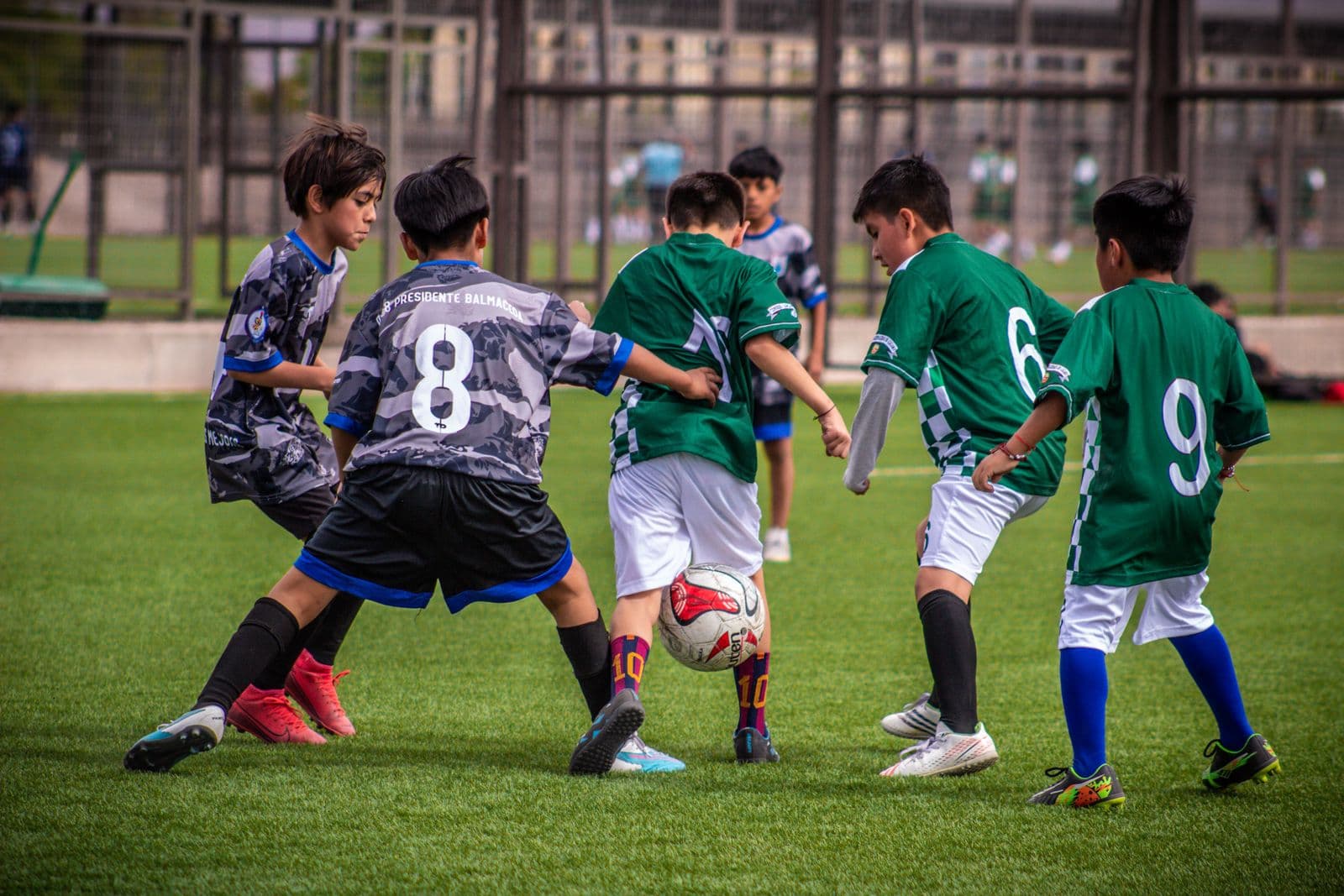
Soccer's unfair advantage
Most sports guess at injury prevention. Soccer wrote it down, gave it a name, and tested it in a cluster-randomized trial of nearly two thousand young players: teams running the FIFA 11+ warm-up had roughly a third fewer injuries than teams warming up the usual way. Few findings in sports medicine are that clean, that cheap, and that ignored by the amateur game.
What's actually in it
The 11+ runs about twenty minutes in three parts:
- Running and activation — straight-line jogging, hip-out and hip-in movements, partner weaves, shoulder contact, quick forward-and-back runs. Eight minutes of raising temperature while rehearsing the movements matches are made of.
- Strength, balance, and jumping — the disguised gym session: Nordic hamstring curls, single-leg balance work, side and stabilizing planks, squats and lunges, and jumping with controlled landings. Three levels of progression per exercise, so the routine grows with the team.
- Progressive running — across-the-pitch runs building through bounding and cutting to near-maximal sprints, so the first all-out sprint of the day happens in the warm-up, prepared — not in the ninth minute, cold.
Why it works
Strip the branding and the 11+ is a strength-and-landing program smuggled into the one time slot every team already has. The Nordics load the hamstrings that matches tear; the balance and landing work trains the knee control that ACL prevention depends on; the progressive sprints solve the cold-start problem that fills Monday PT schedules. Consistency is the active ingredient — the trial teams did it at every training session.
The honest amateur adaptation
Twenty minutes before every session is the evidence-backed dose — and more than most adult teams will sustain. The defensible compromise, if you must cut:
- Keep: Nordics (even 2×4), single-leg balance, a few deliberate jump-and-stick landings, and progressive sprints last — finish the warm-up at match speed, never meet match speed cold.
- Cut first: some running variations and plank time.
- Never: the lap-around-the-pitch-plus-static-stretching ritual as the whole plan. Static stretching alone prepares a hamstring for a yoga class, not a sprint duel.
Ten consistent minutes beat twenty occasional ones — the same consistency math every sport's warm-up page on this site keeps arriving at.
The players who need it most
The trial ran in teenagers; the logic bites hardest in the over-40 league and the once-a-week player whose weekly load math is already stacked against them. If your hamstrings have been complaining, the warm-up plus the traffic-light rules are the self-management plan — and a niggle that survives two weeks of both earns an evaluation ($125–$250 cash-pay, what PT costs). Here's how to find a PT who knows the sport; Bay Area players can browse soccer-friendly PTs by region.
Frequently asked questions
Sources (5)
- Soligard T, et al. Comprehensive warm-up programme to prevent injuries in young female footballers: cluster randomised controlled trial. BMJ. 2008. — BMJ
- Thorborg K, et al. Effect of specific exercise-based football injury prevention programmes on the overall injury rate in football: a systematic review and meta-analysis of the FIFA 11 and 11+ programmes. Br J Sports Med. 2017. — BJSM
- Silvers-Granelli H, et al. Efficacy of the FIFA 11+ Injury Prevention Program in the Collegiate Male Soccer Player. Am J Sports Med. 2015. — AJSM
- Emery CA, Meeuwisse WH. The effectiveness of a neuromuscular prevention strategy to reduce injuries in youth soccer: a cluster-randomised controlled trial. Br J Sports Med. 2010. — BJSM
- Hammes D, et al. Injury prevention in male veteran football players — a randomised controlled trial using 'FIFA 11+'. J Sports Sci. 2015. — J Sports Sci
This article is for education only and isn't medical advice. Always talk to a licensed clinician about your specific situation.