
The Pickleball Warm-Up Nobody Does (And Why Your Calves Want It)
Six to eight minutes between the parking lot and your first real game — the cheapest injury prevention in the sport
Updated October 20262 minute read
The standard pickleball warm-up — walk from the car, start playing — asks cold calves to produce explosive first steps, and early-session injuries are a well-known pattern in court sports. The fix takes six to eight minutes: a brisk walk or light jog, calf raises and ankle circles, leg swings, progressive side-steps and split-steps, then a few easy dinks before the first real game. Re-warm briefly after long sits between open-play games.
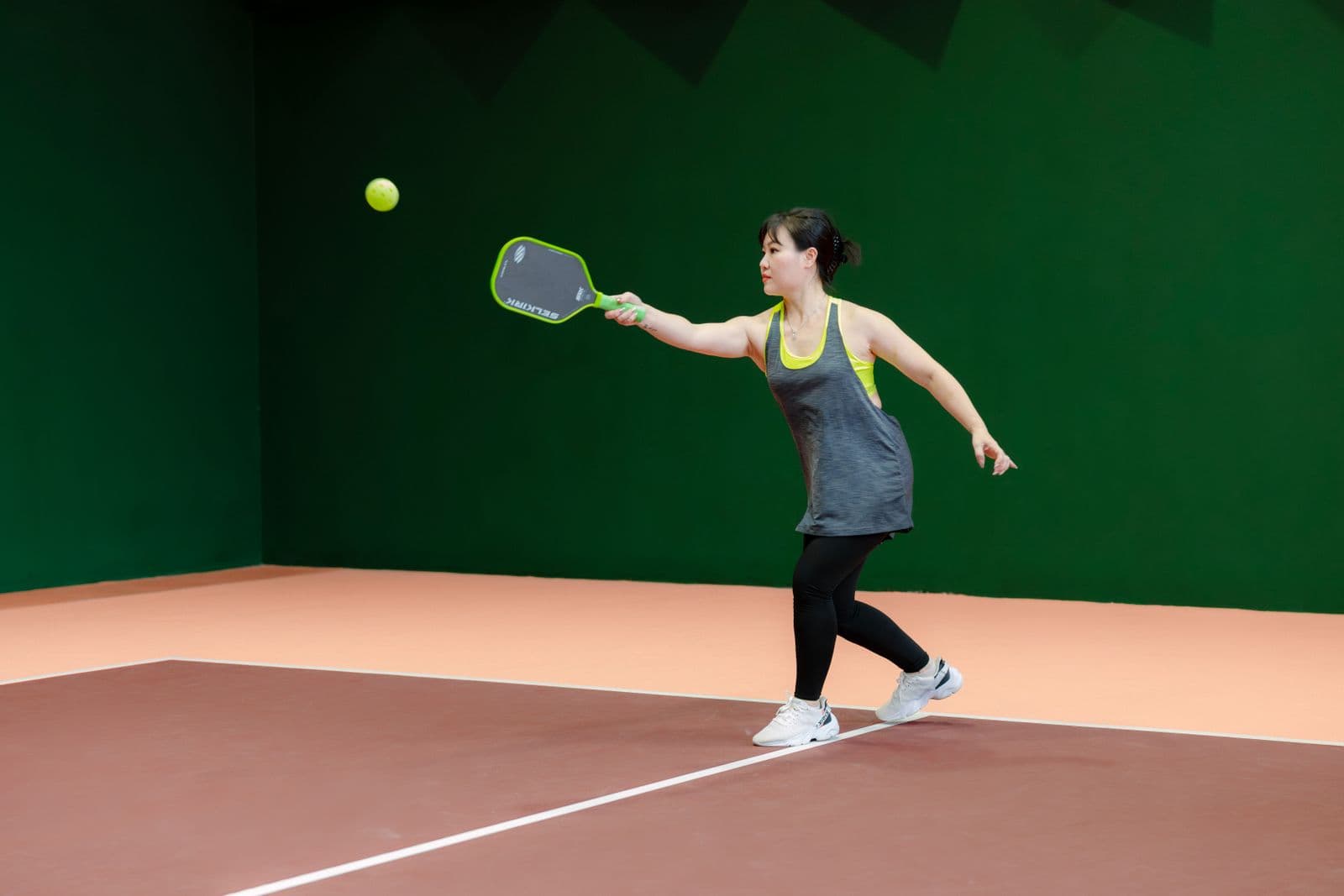
The most-skipped warm-up in sports
Pickleball's culture is wonderfully casual: park, walk on, wave at the regulars, play. Which means the single most demanding thing the sport asks of your body — an explosive first step toward a drop shot — happens on calves that were operating a brake pedal four minutes earlier.
Early-session injuries are a known pattern in court sports, and pickleball's signature injuries — calf strains and Achilles trouble, ankle rolls — are exactly the kind that cold tissue serves up. The warm-up below is six to eight minutes. Nothing else on this site buys as much protection for as little effort.
The six-to-eight minutes that matter
Work from general to specific, gentle to explosive:
- Two minutes of brisk walking or light jogging — around the courts, not from the car. Raise the body temperature first.
- Calf raises and ankle circles — 15–20 slow calf raises (the tissue about to do the most work gets warmed the most), then ankle circles each way.
- Leg swings — 10 per leg, front-to-back and side-to-side, holding the fence. Hips and hamstrings wake up.
- Progressive side-steps and split-steps — start at half speed, finish with a few honest ones. This is the rehearsal for the real movements of the game.
- Easy dinks and a few soft drives — two or three minutes, building pace, before anyone keeps score. Finish with a couple of three-quarter-speed first steps.
The pattern matters more than the exact menu: end with graduated intensity, so the first explosive move of the day happens on purpose, at 80%, instead of by surprise at 100%.
Cold mornings and the dawn patrol
The 7am crowd plays the riskiest session of the day: cold air, cold court, car-stiff calves, and often the week's most enthusiastic players. On cold mornings, double the walking and the calf raises, and keep the first game genuinely easy. Your load budget is also smallest early in a stiff morning — the warm-up is how you buy it back.
The open-play restart problem
Open play isn't one session; it's six small sessions separated by cooldowns. You warm up once, then sit between games while the calves quietly clock out — and every restart is a cold start wearing a warm shirt. The habit that fixes it: thirty seconds before every game — calf raises, leg swings, two side-steps each way. The regulars will tease you about it right up until they start copying it.
What a warm-up can't do
It prepares tissue; it doesn't build it. A warm calf with no strength underneath is still an under-built calf, which is why this page and strength training are a pair — the warm-up protects today's session, the strength work raises what every session can ask. And if something already hurts going into the warm-up, that's not a warm-up problem: check the traffic-light rules, and if it's been more than two weeks, a cash-pay evaluation runs $125–$250 (what PT costs). Bay Area players can browse the local pickleball PT directory.
Frequently asked questions
Sources (5)
- Fradkin AJ, et al. Does warming up prevent injury in sport? The evidence from randomised controlled trials. J Sci Med Sport. 2006. — J Sci Med Sport
- Lauersen JB, et al. The effectiveness of exercise interventions to prevent sports injuries: systematic review and meta-analysis. Br J Sports Med. 2014. — BJSM
- Forrester MB. Pickleball-related injuries treated in emergency departments. J Emerg Med. 2020. — J Emerg Med
- Alfredson H, et al. Heavy-load eccentric calf muscle training for the treatment of chronic Achilles tendinosis. Am J Sports Med. 1998. — AJSM
- ChoosePT (American Physical Therapy Association). Physical Therapy Guide to Achilles Tendon Injuries (Tendinopathy). — ChoosePT
This article is for education only and isn't medical advice. Always talk to a licensed clinician about your specific situation.