
Rolled Your Ankle Playing Pickleball? What to Do Now and Next
The first-day decisions, why pickleball ankles keep re-spraining, and the rehab that breaks the cycle
Updated October 20262 minute read
Pickleball's lateral lunges and split-steps roll ankles — usually in running shoes that were never built for sideways movement. First decision: if you can't bear weight for four steps or there's marked swelling and bone tenderness, that's an X-ray conversation. After that, the trap to avoid is "waiting until it feels fine": an unrehabbed sprain is the strongest predictor of the next one, and balance-and-strength rehab is what breaks the cycle.
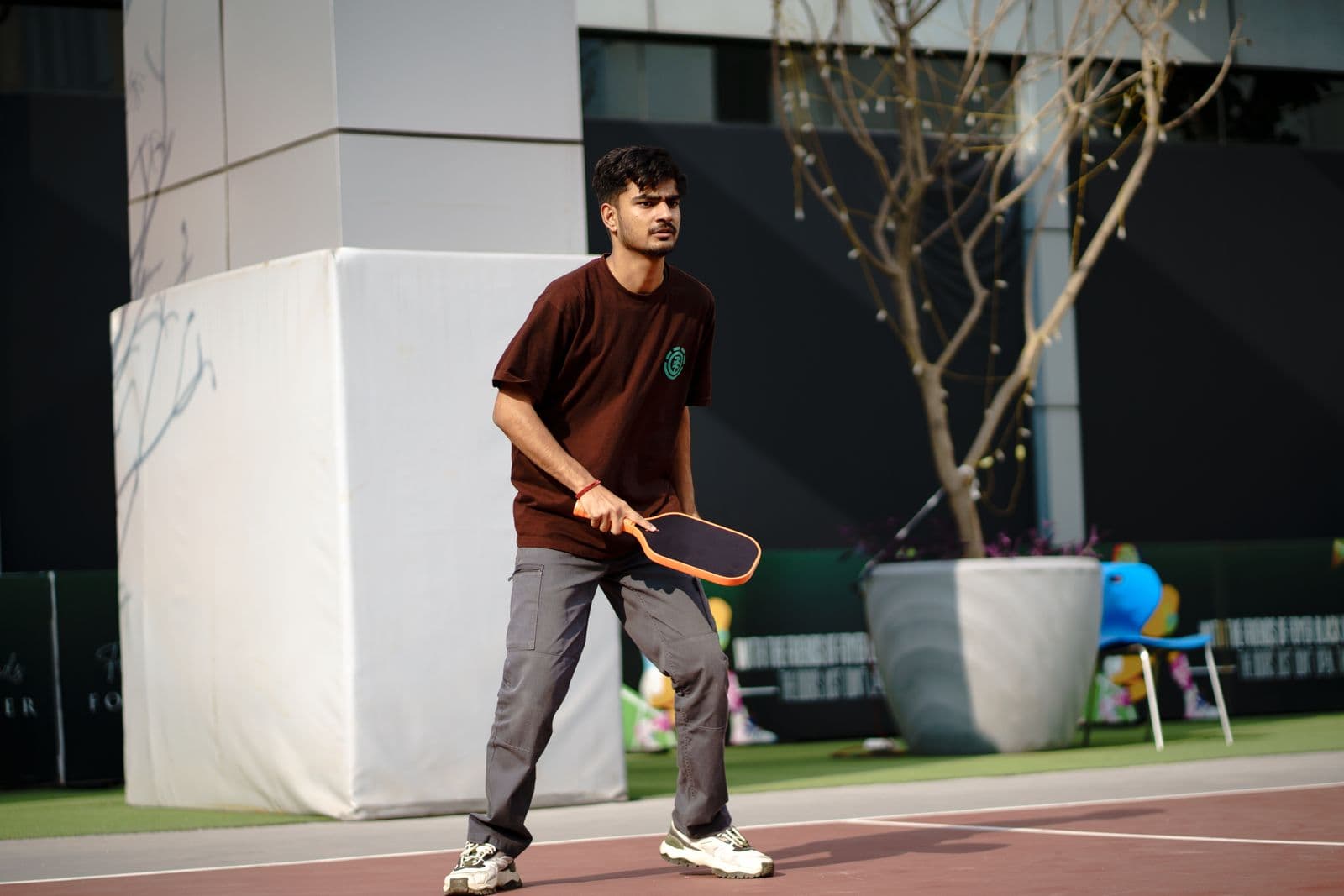
The pickleball ankle moment
It's almost always the same story: a wide dink pulls you sideways, you split-step onto the outside of your foot — or land on a ball that rolled in — and the ankle gives. Pickleball concentrates exactly the movements ankles hate most: reactive lateral lunges, quick direction changes, and crowded courts. Add the sport's most common equipment mistake — running shoes, built for straight lines and happy to roll sideways — and the only surprise is that it doesn't happen more.
First decisions: the day it happens
Two questions sort the serious from the sore:
- Can you bear weight? If you can't take four steps without the leg buckling, or there's immediate marked swelling with tenderness when you press on the ankle bones themselves, that combination earns an X-ray before anything else — fractures and bad sprains share a costume.
- Did it pop with instant bruising? Significant bruising spreading into the foot over a day or two suggests more tissue damage — not an emergency by itself, but a reason to get evaluated this week rather than self-manage.
Neither pattern? You're likely in classic ankle sprain territory: sore, swollen, walkable. Early movement beats strict rest — gentle ankle circles and comfortable walking from the first days, with compression for the swelling.
The trap: "I'll play when it feels fine"
Pain fades in one to three weeks. Balance and strength don't come back on their own — and that gap is why the best predictor of an ankle sprain is a previous one. The ligament's position sensors get knocked offline by the injury; until they're retrained, your ankle is slower to catch the next bad landing, which is how one rolled ankle becomes an annual event.
Breaking the cycle is unglamorous and reliable:
- Strength: calf raises progressing to single-leg, plus the outer hip — the same work that prevents falls.
- Balance: daily single-leg standing, progressing to eyes-closed, then to catching and reaching while balanced.
- Hops and cuts: before full play, the ankle has to prove it tolerates hopping, side-shuffles, and quick direction changes — pain-free and without that guarding hesitation.
Getting back on court
Pickleball hands you a built-in rehab ladder: dinking games load the ankle gently, skinny singles adds controlled movement, social doubles adds the real thing. Gate each step with the 24-hour rule and the hop tests — the full ladder is in the return-to-pickleball guide.
If this is sprain number two or more, if the ankle still feels wobbly a month out, or if swelling keeps returning after play — that's exactly what a PT evaluation is for ($125–$250 cash-pay, $175–$275 in the Bay Area, often partly reimbursable). One visit usually produces the graded program; Bay Area players can browse court-sport PTs by region, and what PT costs covers the money side.
Frequently asked questions
Sources (5)
- Doherty C, et al. The incidence and prevalence of ankle sprain injury: a systematic review and meta-analysis. Sports Med. 2014. — Sports Med
- Gribble PA, et al. Evidence review for the 2016 International Ankle Consortium consensus statement on the prevalence, impact and long-term consequences of lateral ankle sprains. Br J Sports Med. 2016. — BJSM
- Janssen KW, et al. Bracing superior to neuromuscular training for the prevention of self-reported recurrent ankle sprains. Br J Sports Med. 2014. — BJSM
- American Academy of Orthopaedic Surgeons (OrthoInfo). Sprained Ankle. — AAOS OrthoInfo
- Forrester MB. Pickleball-related injuries treated in emergency departments. J Emerg Med. 2020. — J Emerg Med
This article is for education only and isn't medical advice. Always talk to a licensed clinician about your specific situation.