
Calf and Achilles Pain From Pickleball: The Sport's Signature Injury
The sudden mid-game calf strain, the grumbling Achilles — and the one pop that goes straight to a doctor
Updated October 20263 minute read
Calf and Achilles trouble is pickleball's signature injury: a sudden sharp calf pain mid-lunge is usually a calf muscle strain, a stiff aching tendon above the heel that tracks daily play is Achilles overload, and a loud pop with inability to push off needs urgent medical assessment for a possible Achilles rupture. The first two respond well to progressive loading over weeks; all three trace back to explosive starts on tendons that weren't prepared for them.
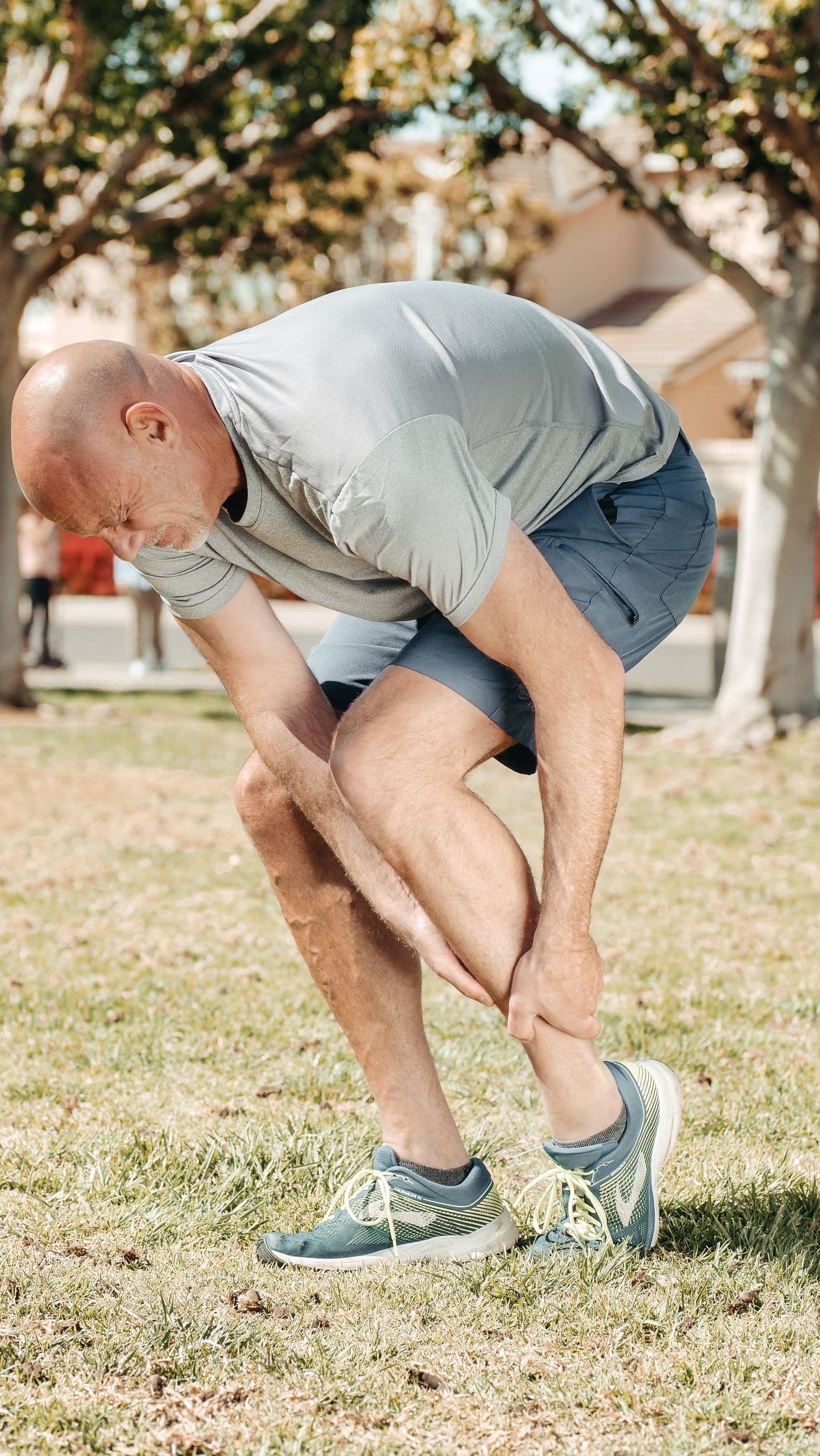
Three patterns, three different answers
The calf and Achilles file most of pickleball's complaints, and the three patterns diverge sharply. The sorting questions: was there one sudden moment, or did it build up? And can you push off that leg at all?
The sudden one: a calf muscle strain
Mid-game, pushing off for a lob or lunging at the kitchen line, you feel a sharp pain deep in the calf — players routinely swear an opponent hit them with a paddle or a ball. That's the classic medial calf strain, the same injury tennis players know as tennis leg — the full condition story, grading, and timelines live on that page, and every word of it applies to pickleball, which has arguably taken over as the injury's leading supplier.
The short version: it's a muscle tear, it's rarely dangerous, early management is simple (relative rest, a heel lift, gentle motion early), and progressive loading — not waiting — is the treatment. One important caveat: significant swelling in a painful calf deserves a clinician's look promptly, because a blood clot needs ruling out before anyone calls it a muscle strain. That's a same-week medical conversation, not a wait-and-see.
The gradual one: Achilles overload
A stiff, aching tendon above the heel — worst with the first steps in the morning and the first points of a session, warming up as you play, then grumbling afterward. That's Achilles tendinopathy, and pickleball's schedule is practically designed to produce it: daily play, no off-season, and load spikes every time open play runs long. Tendons like load and hate spikes — the fix is a progressive heavy-slow loading program alongside managed court time, not total rest (which mostly produces a deconditioned tendon with the same complaint).
The emergency: a pop you can't push off from
A loud pop or snap at the back of the ankle — often with the feeling of being kicked — followed by weak or impossible push-off is a possible Achilles rupture, and it goes to urgent medical assessment the same day. Not a PT-first problem, not a see-how-tomorrow-feels problem: rupture management decisions (surgical or not) are time-sensitive, and a physician with imaging makes them. Emergency-department research on pickleball injuries confirms what every clinic near a pickleball complex sees: lower-leg injuries cluster hard in players over 50, and the explosive-start mechanism is the common thread.
Why pickleball, specifically
- Standing starts. Every point begins from a dead stop; the first explosive step is the calf's hardest job.
- Cold starts. Rec-center culture is "walk on, start playing" — the five-minute warm-up that prevents this injury is the most skipped warm-up in sports.
- No off-season, no rest days. The sport is fun enough that three-hours-daily is normal — a load pattern tendons never get ahead of.
- The comeback demographic. Many players are returning to explosive movement after years away; the engine remembers, the tendons don't.
When to see someone
A sudden calf strain, an Achilles that's been stiff for more than two weeks, or any pattern that keeps returning when you ramp back up earns an evaluation — in most states you can book a PT directly with no referral, and Bay Area players can browse pickleball-friendly PTs by region. Expect a graded calf-loading plan you can start the same day, and a criteria-based path back to the court — usually through modified play, not away from it.
Frequently asked questions
Sources (7)
- Forrester MB. Pickleball-related injuries treated in emergency departments. J Emerg Med. 2020. — J Emerg Med
- Delgado GJ, et al. Tennis leg: clinical US study of 141 patients and anatomic investigation of four cadavers. Radiology. 2002. — Radiology
- Lantto I, et al. Epidemiology of Achilles tendon ruptures: increasing incidence over a 33-year period. Scand J Med Sci Sports. 2015. — SJMSS
- Alfredson H, et al. Heavy-load eccentric calf muscle training for the treatment of chronic Achilles tendinosis. Am J Sports Med. 1998. — AJSM
- Green B, et al. Return to play and recurrence after calf muscle strain injuries in elite Australian football players. Am J Sports Med. 2020. — AJSM
- American Academy of Orthopaedic Surgeons (OrthoInfo). Achilles Tendinitis. — AAOS OrthoInfo
- Ochen Y, et al. Operative treatment versus nonoperative treatment of Achilles tendon ruptures: systematic review and meta-analysis. BMJ. 2019. — BMJ
This article is for education only and isn't medical advice. Always talk to a licensed clinician about your specific situation.