
How to Find a Physical Therapist Who Actually Works With Soccer Players
The questions, the red flags, and why sprint-based rehab is the thing to insist on
Updated October 20262 minute read
A soccer-literate PT treats field athletes regularly, asks about your league schedule and position before judging your body, tests hamstrings and landing control at real intensities, and rebuilds you to sprinting and cutting — not just to pain-free jogging. You can book directly in most states, and cash-pay means you pick the specialist rather than whoever is in-network.
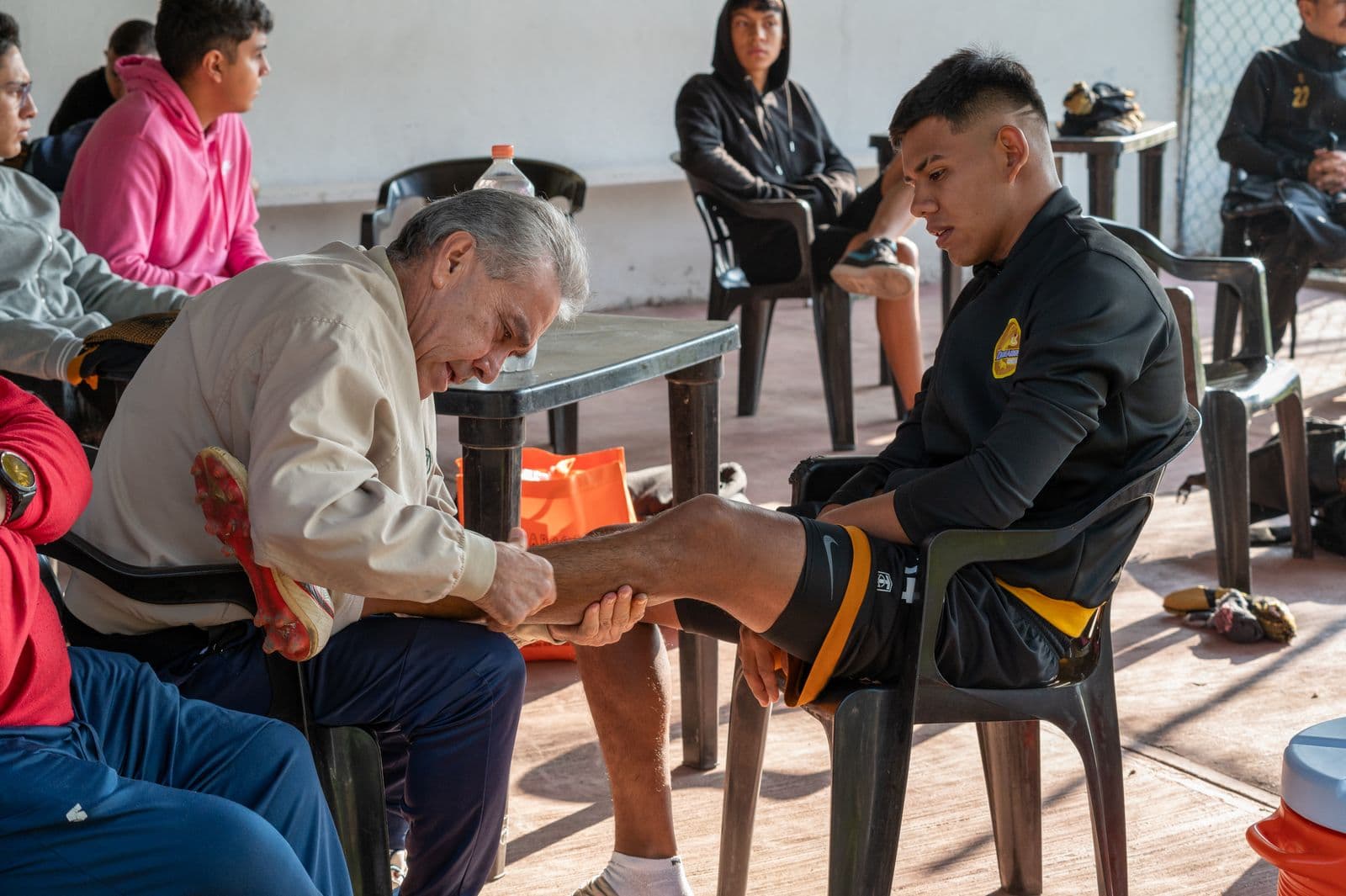
Why "soccer PT" is a real niche
Any licensed PT can treat a hamstring. But soccer players present differently: the injuries happen at sprint speed and mid-cut, the schedule is league-shaped (one match a week, maybe a tournament weekend), the sport has the best-evidenced prevention programs in sports medicine — and a clinician who knows them changes your odds. A soccer-literate PT tests hamstring strength at real intensities, watches you land and cut, and treats the FIFA 11+ as standard equipment rather than trivia.
The practical test: do they ask about your game before your pain? A soccer-literate evaluation wants your league and training schedule, your position (wingers and fullbacks sprint; keepers land and dive), surface and cleats, and — for any leg injury — a plan that ends in sprinting, not just jogging.
What to look for
- Caseload, not just credentials. Ask "how many soccer or field-sport athletes do you treat in a typical month?"
- Credentials that signal investment: SCS or OCS board certifications (credentials decoded), plus any club, college, or academy team experience.
- A testing habit. Hamstring strength measured, single-leg control watched, hop tests used as gates — numbers, not vibes (why that matters for returns).
- A keep-you-playing philosophy. Good answer: "we'll find the minutes and training load your leg tolerates and build from there." Bad answer: "no soccer until it's totally pain-free."
Questions to ask before booking
- How many soccer or field-sport athletes do you treat?
- Does your lower-body rehab include a progressive sprinting and cutting phase?
- Can I keep training during rehab, and what would a modified week look like?
- Do you run or prescribe prevention programs like the FIFA 11+, Nordics, and Copenhagens?
- What does a typical plan look like — visits, cost, timeline — and do you provide a superbill?
Red flags
- Rehab plans that end at "pain-free jogging" for sprint injuries
- No interest in your league schedule, position, surface, or cleats
- "Stop playing" as the entire plan, with no return pathway attached
- Passive-only care — heat, ultrasound, massage — with no loading program
Why cash-pay works in your favor here
Insurance networks assign you a PT by contract, not by specialty. Paying directly means choosing the clinician who actually rebuilds sprinters — and in most states you can book without a referral. Many plans still reimburse part of the cost via superbill.
Playing in the Bay Area? The local soccer guide covers prices and the league scene, and you can browse soccer-friendly PTs across the region when you're ready to compare.
Frequently asked questions
Sources (5)
- APTA. Direct Access by State: physical therapist direct access laws summary. — APTA
- Physical Therapy Board of California. Direct access to physical therapist services (Business and Professions Code §2620.1). — PTBC
- Grindem H, et al. Simple decision rules can reduce reinjury risk by 84% after ACL reconstruction: the Delaware-Oslo ACL cohort study. Br J Sports Med. 2016. — BJSM
- Thorborg K, et al. Effect of specific exercise-based football injury prevention programmes on the overall injury rate in football: a systematic review and meta-analysis of the FIFA 11 and 11+ programmes. Br J Sports Med. 2017. — BJSM
- Askling CM, et al. Acute hamstring injuries in Swedish elite football: a prospective randomised controlled clinical trial comparing two rehabilitation protocols. Br J Sports Med. 2013. — BJSM
This article is for education only and isn't medical advice. Always talk to a licensed clinician about your specific situation.