
Knee Pain in Soccer: What the Story of the Injury Is Telling You
A pop with swelling is a different conversation than an ache after training — here's how to sort them
Updated October 20262 minute read
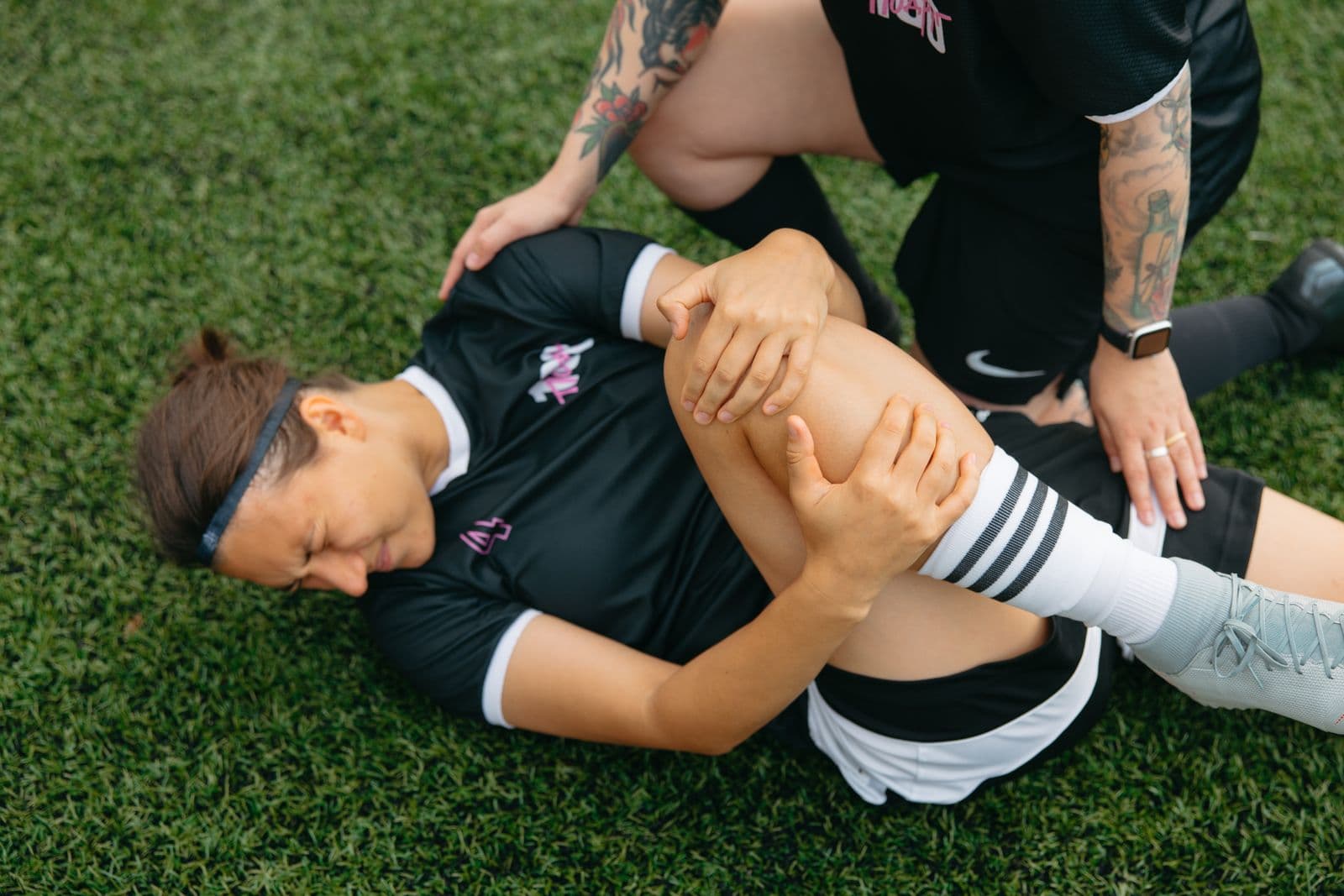
How your soccer knee pain started is the best first clue: a twist or landing with a pop, swelling within hours, or a knee that gives way points to the ACL/meniscus conversation and needs evaluation this week; a blow to the outside of the knee that strains the inner side is the MCL pattern; and aches that build with training volume — around the kneecap or below it — are load problems physical therapy treats well.
Start with the story, not the spot
Soccer knees get hurt two ways: in a single bad moment, or by accumulation. The single-moment injuries — twists, landings, tackles — can involve the structures that keep the knee stable, and they earn prompt evaluation. The accumulation aches are load problems that respond to smarter training and strength work. Sorting yourself takes one honest question: did this start with a moment, or sneak up over weeks?
The pattern that goes to the front of the line
A plant-and-twist, an awkward landing, or a collision — followed by any of: a pop you felt or heard, swelling within hours, or the knee giving way afterward. That combination is the ACL and meniscus conversation, and it needs a real examination this week — not because panic helps, but because the first giving-way episode in an unstable knee can damage cartilage you'd rather keep. A knee that locks or catches points the same direction. Soccer's cutting and pivoting make it one of the highest-ACL sports, which is why the ACL guide covers the decision tree — and the prevention programs that genuinely lower the risk.
A knee that swells without any injury moment is its own category — worth sorting separately.
The contact pattern: inside of the knee
A blow to the outside of the knee — a tackle, a collision — that strains the inside is the classic MCL sprain: tenderness along the inner joint line, pain opening up sideways, usually no dramatic swelling. Good news: most MCL sprains heal without surgery, and guided loading brings them back reliably. The return-to-soccer plan applies once the ligament calms.
The accumulation aches
- Around or behind the kneecap, worse with volume, stairs, and after sitting: the runner's knee pattern — soccer's training-load version. Responds to hip/quad strength and managed minutes.
- A fingertip spot below the kneecap, worst at the start of training and after shooting or jumping sessions: jumper's knee — a tendon that wants progressive loading, not rest.
Both tolerate modified play while rehab runs — the strength program is where the fix lives, and load management is why it stops coming back.
What to do this week
Moment-injuries: stop playing on it, and book an evaluation — a sports PT can test ligament stability at visit one and route you to a physician or imaging when the exam calls for it. Accumulation aches: trim volume by a third, add the strength basics, and give it two honest weeks — persistent or worsening pain earns the evaluation. Cash-pay, that's $125–$250 ($175–$275 in the Bay Area, what PT costs), no referral needed in most states. Bay Area players can browse soccer-friendly PTs by region — here's how to vet them.
Frequently asked questions
Sources (6)
- American Academy of Orthopaedic Surgeons, OrthoInfo. Meniscus Tears. — AAOS OrthoInfo
- American Academy of Orthopaedic Surgeons, OrthoInfo. Collateral Ligament Injuries. — AAOS OrthoInfo
- American Academy of Orthopaedic Surgeons, OrthoInfo. Anterior Cruciate Ligament (ACL) Injuries. — AAOS OrthoInfo
- Agel J, et al. Anterior cruciate ligament injury in National Collegiate Athletic Association basketball and soccer: a 13-year review. Am J Sports Med. 2005. — AJSM
- Willy RW, et al. Patellofemoral Pain: Clinical Practice Guidelines. J Orthop Sports Phys Ther. 2019. — JOSPT
- van der Heijden RA, et al. Exercise for treating patellofemoral pain syndrome. Cochrane Database Syst Rev. 2015. — Cochrane Database Syst Rev
This article is for education only and isn't medical advice. Always talk to a licensed clinician about your specific situation.