
Ankle Sprains in Soccer: The Roll, the Rehab, and the Re-Sprain Spiral
Soccer's most common injury — and why "waiting for the swelling to go down" is how ankles stay fragile
Updated October 20262 minute read
The rolled ankle is soccer's most common injury: a tackle, a bad landing, or a divot in the pitch. The acute questions are whether you can bear weight and whether the bone itself is tender — those decide the X-ray conversation. The career question is different: ankles that only rest and never rebuild balance and strength re-sprain in soccer's cutting chaos, and breaking that spiral is what rehab is actually for.
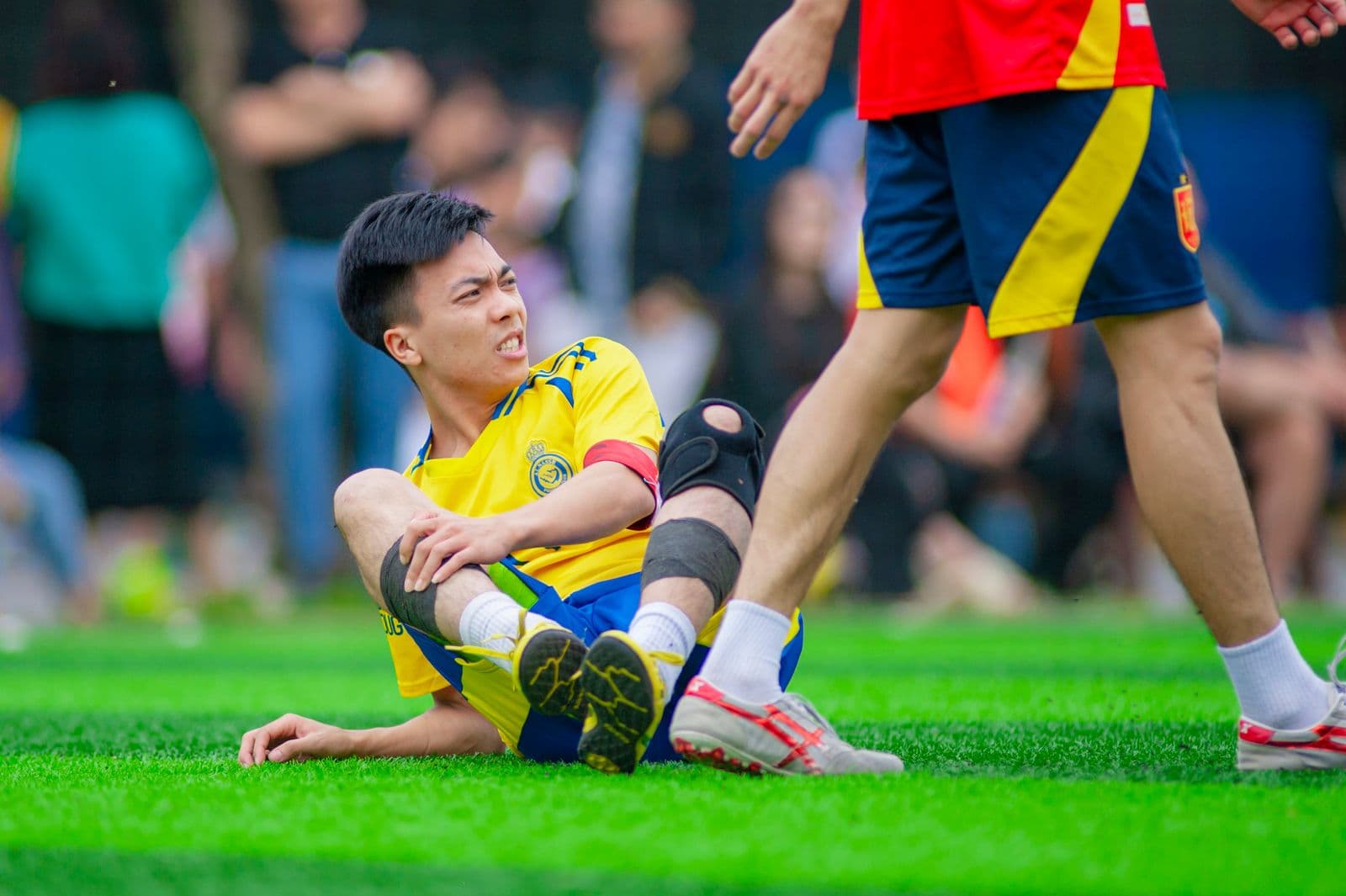
Soccer's most common injury
Every pitch tells the same story: a tackle arrives mid-plant, a landing finds someone else's boot, a cut finds the one divot in the field — and the ankle rolls under. Lateral ankle sprains lead soccer's injury counts at every level, and the sport's cutting-and-contact reality means most players will meet one eventually. What separates a two-week nuisance from a career-long fragile ankle isn't the sprain — it's what happens in the month after.
The first hour: two questions
- Can you bear weight? Four steps, even limping ones, is a good sign. Inability to take weight is an X-ray conversation.
- Is the bone tender? Press the ankle bones themselves and the outside edge of the foot. Soft-tissue tenderness below the ankle knob is the sprain talking; tenderness on bone keeps a fracture in the conversation.
Either red answer — or massive immediate swelling, numbness, or a foot that looks wrong — means imaging before anything else. Otherwise: early protection, gentle motion within comfort, and the full condition story in the ankle sprain guide. Rest alone is not a plan — it's the first chapter of the re-sprain spiral.
The re-sprain spiral (and how to exit it)
Here's the pattern rehab exists to break: sprain → rest until the swelling fades → return when it "feels okay" → the balance system and peroneal muscles never actually recover → the next cut on uneven turf rolls it again, easier this time. Soccer is the worst possible sport for an unrehabbed ankle — constant cutting, contested landings, unpredictable surfaces.
Exiting the spiral is unglamorous and reliable: progressive balance work (single-leg stands → unstable surfaces → eyes-busy drills, because in soccer your eyes are on the ball, not your foot), strength for the muscles that guard the ankle, and graded return to cutting. The soccer strength program builds it in, and cleat and surface choices remove the cheap contributors.
Brace, tape, or neither?
Honest answer: for the first few months back from a real sprain, the evidence supports bracing or taping to cut re-sprain risk — and it does not weaken the ankle when strength work runs alongside. Treat it as a bridge, not a lifestyle: the goal is an ankle that protects itself, with the brace retiring as the test results below arrive.
Return gates, not return dates
Before full training: pain-free single-leg hops (forward and side-to-side) matching the other leg, confident cutting drills at building speed, and clean landings. Before matches: a full training week without reaction or swelling. The return-to-soccer plan sequences it, and the traffic-light rules cover the judgment calls in between.
When to bring in a PT
Any sprain that keeps you from training for more than a few days, any second sprain on the same ankle, or an ankle that still feels untrustworthy at week three. One or two visits often sets the whole progression. Cash-pay evaluations run $125–$250 ($175–$275 in the Bay Area, what PT costs), with superbill reimbursement often recovering part — and Bay Area players can browse soccer-friendly PTs by region.
Frequently asked questions
Sources (5)
- Vuurberg G, et al. Diagnosis, treatment and prevention of ankle sprains: update of an evidence-based clinical guideline. Br J Sports Med. 2018. — BJSM
- Verhagen E, et al. The effect of a proprioceptive balance board training program for the prevention of ankle sprains: a prospective controlled trial. Am J Sports Med. 2004. — AJSM
- American Academy of Orthopaedic Surgeons, OrthoInfo. Sprained Ankle. — AAOS OrthoInfo
- Soligard T, et al. Comprehensive warm-up programme to prevent injuries in young female footballers: cluster randomised controlled trial. BMJ. 2008. — BMJ
- Thorborg K, et al. Effect of specific exercise-based football injury prevention programmes on the overall injury rate in football: a systematic review and meta-analysis of the FIFA 11 and 11+ programmes. Br J Sports Med. 2017. — BJSM
This article is for education only and isn't medical advice. Always talk to a licensed clinician about your specific situation.