
Turf, Grass, and Cleats: What Soccer Surfaces Ask of Your Body
The honest turf story, why stud patterns matter more than brand names, and the footwear mistakes PTs see weekly
Updated October 20262 minute read
No soccer surface is simply dangerous — but switching surfaces is a load change, and footwear that fights the surface multiplies it. The rules that matter: match your stud pattern to the ground (molded firm-ground studs for most conditions, turf or AG shoes on artificial — never long studs on turf), buy cleats that fit rather than flatter, and treat a new surface like new mileage: gradually.
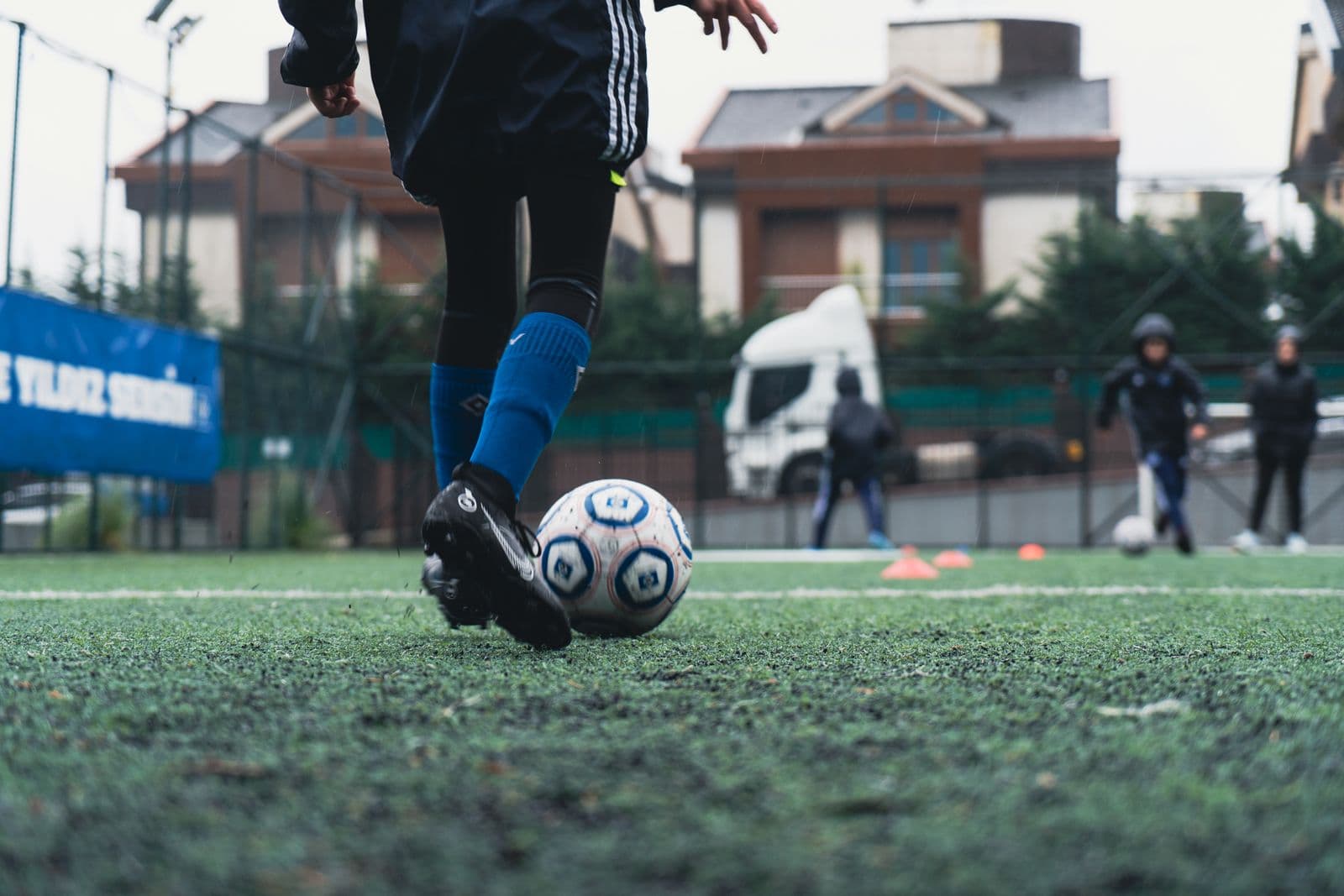
Surfaces are a load variable, not a verdict
Bay Area soccer lives on everything: winter-soaked grass, bone-dry summer grass, and artificial turf that hosts half the region's matches and nearly all its weeknight leagues. None of these surfaces is a verdict on your joints. What generates injuries is the combination — the wrong shoe for the ground, or a sudden switch your tissues haven't trained for.
The switch rule: going from a grass season to a turf league (or the reverse) is a load change, exactly like adding training volume. Turf plays faster, the ball moves quicker, traction is higher, and your calves, ankles, and knees absorb the difference. Give a surface switch the same respect you'd give a mileage jump: a lighter first week or two, not three matches in five days.
The same logic runs across sports — the court-surfaces guide tells the racquet-sport version — but soccer adds the variable those sports don't have: studs.
Stud patterns, decoded
- FG (firm ground) — molded plastic studs. The default for most Bay Area conditions most of the year: dry-to-slightly-soft natural grass. If you own one pair, this is it.
- SG (soft ground) — longer, often metal, often removable. Wet, soft winter grass only. On firm ground or turf they're a lever for rolling ankles.
- TF (turf) and AG (artificial ground). Shorter, denser stud patterns built to release from artificial surfaces instead of grabbing. This is the pair the weeknight turf league actually requires — long studs that lock into turf while your body keeps rotating send the force to ankles and knees.
- Flat trainers and indoor shoes. Fine for futsal and gym floors; not match footwear on grass or turf, where they trade needed traction for unpredictable slips.
Two pairs — FG for grass, TF/AG for turf — cover almost every recreational player's year, and cost less combined than one evaluation for the injury the wrong pair invites.
Fit over fashion
Modern "speed" boots run narrow and tight, and players size down chasing a barefoot feel. The bill arrives as bruised toenails, forefoot pain, and blisters that change how you run — which then sends load somewhere it doesn't belong. The boring rules win: a thumbnail of space at the toe, width that doesn't crush the forefoot, laces that lock the heel. Comfort in the shop is data; "they'll break in" is a sales phrase, not a plan.
Kids' cleats deserve one extra note: growing feet change monthly, outgrown boots cause complaints that get misattributed, and the youth guide covers why kids won't volunteer the information.
When footwear belongs in a PT conversation
Most of the time, shoes are a buy-the-right-pair problem. They become a clinical conversation when a pattern emerges: ankle sprains that recur on one surface, knee or groin flares that track a turf league's schedule, foot pain that arrived with a new pair. A soccer-literate PT asks about surfaces and studs in the first visit — here's how to find one — and a cash-pay evaluation runs $125–$250 ($175–$275 in the Bay Area; what PT costs). Bay Area players can browse soccer-friendly PTs by region.
Frequently asked questions
Sources (5)
- Ekstrand J, et al. Risk of injury in elite football played on artificial turf versus natural grass: a prospective two-cohort study. Br J Sports Med. 2006. — BJSM
- Williams S, et al. A review of football injuries on third and fourth generation artificial turfs compared with natural turf. Sports Med. 2011. — Sports Med
- Vuurberg G, et al. Diagnosis, treatment and prevention of ankle sprains: update of an evidence-based clinical guideline. Br J Sports Med. 2018. — BJSM
- American Academy of Orthopaedic Surgeons, OrthoInfo. Sprained Ankle. — AAOS OrthoInfo
- Verhagen E, et al. The effect of a proprioceptive balance board training program for the prevention of ankle sprains: a prospective controlled trial. Am J Sports Med. 2004. — AJSM
This article is for education only and isn't medical advice. Always talk to a licensed clinician about your specific situation.