
Hamstring Strains in Soccer: The Mid-Sprint Grab and How to Fix It for Good
Soccer's most common muscle injury — and the one most likely to come back if you rush it
Updated October 20263 minute read
The hamstring strain is soccer's signature muscle injury: a sudden grab in the back of the thigh at full sprint, usually late in a match or training week. Mild strains settle in one to three weeks; severe ones take two to three months. The real enemy is reinjury — hamstrings that return on "feels fine" instead of tested strength tear again at the worst moment, and progressive loading with eccentric work is what breaks the cycle.
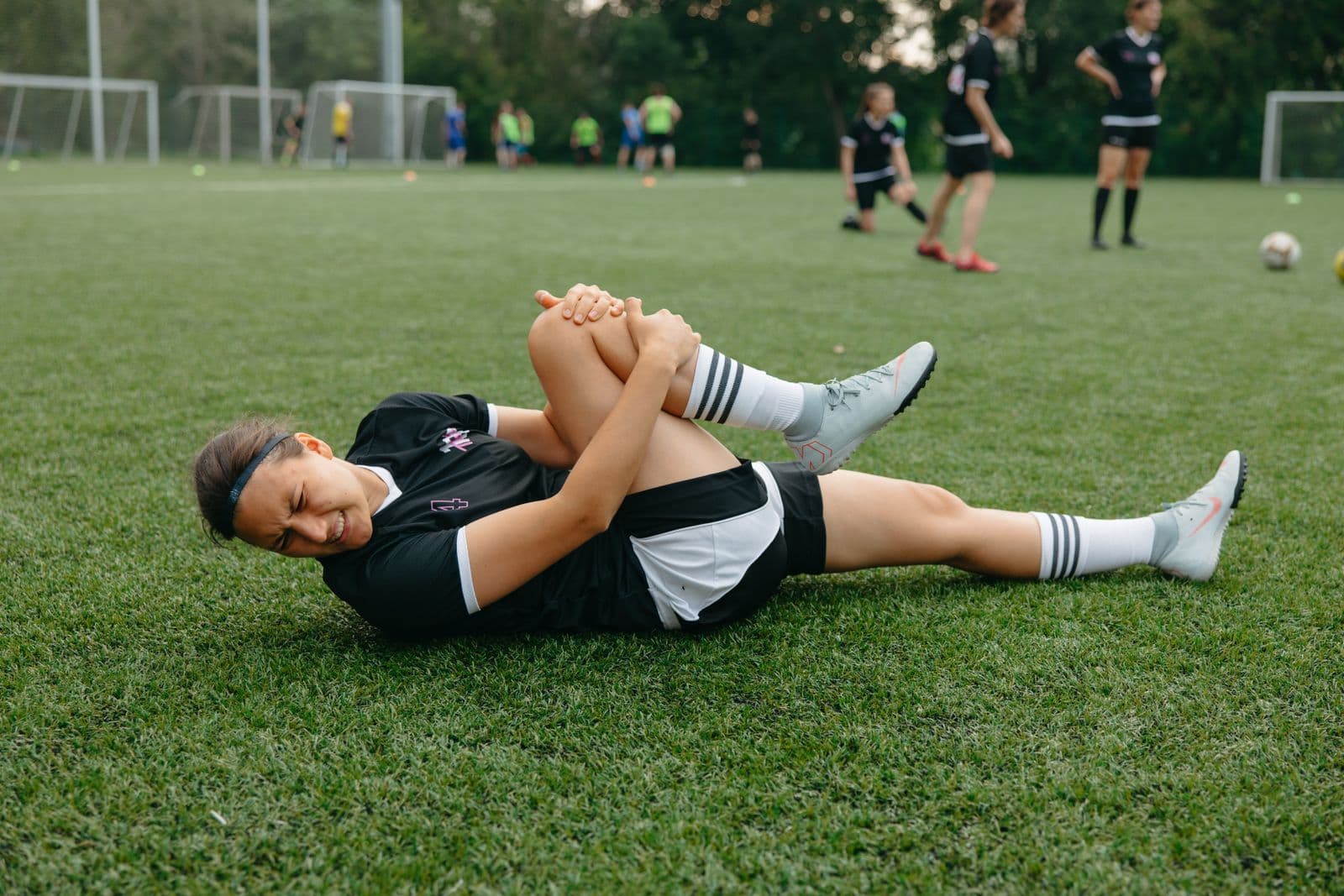
The injury soccer is built to produce
Professional injury surveillance is blunt about it: muscle strains are soccer's most common injury, and the hamstring leads the list. The mechanism is baked into the game — repeated maximal sprints, on legs that are progressively more fatigued, with the hamstring working hardest exactly when it's longest (the late swing of a full-speed stride). That's why the classic story is a grab in the back of the thigh during a sprint in the last twenty minutes, or at the end of a heavy training week.
It's a load-and-capacity injury with a twist: the capacity side is very trainable, which makes the hamstring both soccer's most common strain and its most preventable one.
What it feels like, by grade
- Mild (grade 1): a sudden tightness or low-grade grab; you can usually walk normally within a day. Typical return: 1–3 weeks.
- Moderate (grade 2): a sharp pain that stops the sprint; walking is sore for days, and bruising may appear behind the thigh. Typical return: 3–8 weeks.
- Severe (grade 3): a pop with immediate loss of power, sometimes a visible divot or heavy bruising. These belong in front of a physician — complete tears occasionally need surgical opinions. Return: 2–3+ months.
One teenage-specific note: hamstring pain at the sit bone after a sprint or a split deserves an X-ray conversation — growing athletes can avulse the tendon's bony anchor, which changes management entirely.
Why reinjury is the real opponent
Hamstrings have soccer's ugliest habit: coming back. The pattern is almost always the same — pain settles in two weeks, the player feels fine, returns to full training, and tears it properly within a month. "Feels fine" is the trap: pain resolves long before strength and sprint tolerance do. The fix is boring and reliable — return gates based on tested strength (compared against the other leg) and a completed sprint progression, not the calendar. The return-to-soccer plan walks the gates in order.
Rehab that actually works
Early on: calm it down for a few days (walking tolerance first), then load it early and progressively — extended rest weakens the exact tissue you need strong. The core of modern hamstring rehab is progressive loading through lengthened positions: bridges and hip hinges first, then Romanian deadlifts and sliders, then the eccentric king — the Nordic curl — and finally sprint-specific running drills. The same Nordic work that rehabs the strain roughly halves the odds of the next one when it stays in your week, which is why it anchors the soccer strength program and shows up in the warm-up that prevents soccer injuries.
Expect one or two PT visits a week with the loading program carrying the rest. Cash-pay, an evaluation runs $125–$250 ($175–$275 in the Bay Area) — what PT costs breaks it down, and a superbill often recovers part of it.
When to get it looked at
Book promptly for: any pop with real weakness or heavy bruising, a strain that isn't clearly improving after a week, pain at the sit bone in a teen, or — most importantly — any repeat strain, because the second one is announcing a strength or sprint-exposure gap that rehab never closed. A PT who works with field athletes will test both legs, grade the gap, and build the sprint progression with you — here's how to find one, and Bay Area players can browse soccer-friendly PTs by region.
Frequently asked questions
Sources (5)
- Ekstrand J, et al. Epidemiology of muscle injuries in professional football (soccer). Am J Sports Med. 2011. — AJSM
- van der Horst N, et al. The preventive effect of the Nordic hamstring exercise on hamstring injuries in amateur soccer players: a randomized controlled trial. Am J Sports Med. 2015. — AJSM
- Askling CM, et al. Acute hamstring injuries in Swedish elite football: a prospective randomised controlled clinical trial comparing two rehabilitation protocols. Br J Sports Med. 2013. — BJSM
- Petersen J, et al. Preventive effect of eccentric training on acute hamstring injuries in men's soccer: a cluster-randomized controlled trial. Am J Sports Med. 2011. — AJSM
- American Academy of Orthopaedic Surgeons, OrthoInfo. Hamstring Muscle Injuries. — AAOS OrthoInfo
This article is for education only and isn't medical advice. Always talk to a licensed clinician about your specific situation.