
Basketball Over 40: The Lunch-Run Veteran's Guide
What changes, what protects you, and how to keep hooping for decades — Achilles honesty included
Updated October 20262 minute read
Basketball over 40 is absolutely playable — but the sport's explosive jumps and first steps are exactly what aging tendons tolerate least, which is why the over-35 crowd owns the Achilles rupture statistics. The fix isn't quitting; it's calf and tendon strength year-round, a real warm-up before the first run, a run-count budget instead of playing until your legs die, and respecting the first week back after any layoff. Skill ages gracefully; bounce needs maintenance.
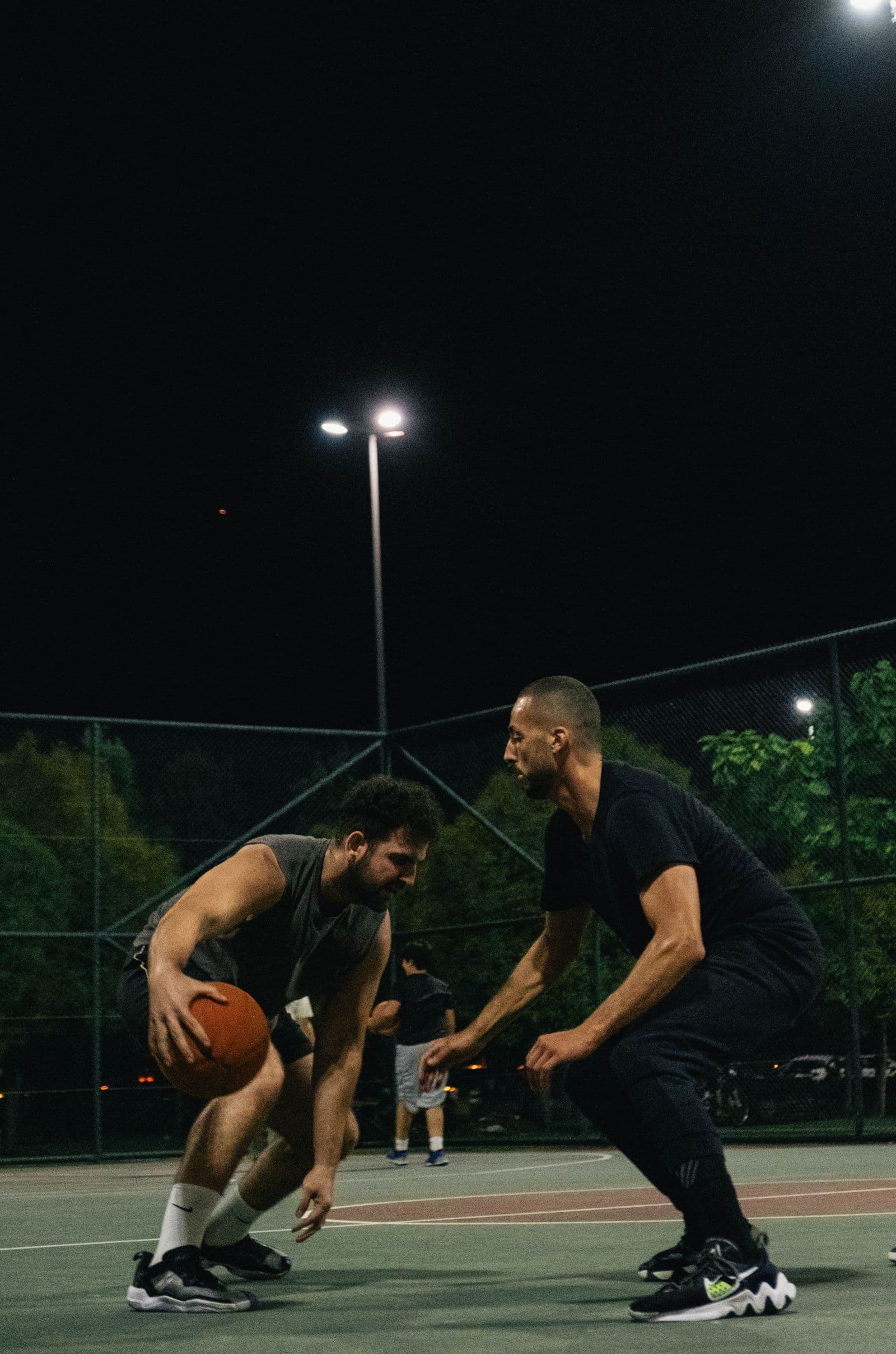
The sport that keeps score of your habits
Team sports with a social engine are among the activities most strongly linked to long, healthy lives — and basketball's mix of sprinting, jumping, and competition is genuinely great exercise. The honest asterisk: the same explosive movements that make it great exercise are exactly what aging tendons tolerate least, and the sport's injury pattern over 40 reflects habits more than age. The veterans still hooping at 55 aren't the ones who were luckiest; they're the ones who warm up, lift, and stopped playing every run until their legs died.
What actually changes
Tendon speed-tolerance goes first. Strength holds up well with use; the spring — the calf and Achilles' ability to absorb and return a maximal push-off — fades without specific maintenance. Achilles ruptures cluster in recreational athletes in their 30s, 40s, and 50s, and basketball is one of the leading causes. That's not a retirement notice; it's a job description for your calf raises — the Achilles and calf guide covers the warning signs that deserve respect.
Recovery lengthens. Back-to-back full-court days stop being free. Rest days become part of training, not time off from it.
Jumping volume tolerance drops before skill does. Your jumper's knee budget shrinks even while your mid-range gets better. Plan around it.
What protects you
- Calf and tendon strength, year-round. Heavy calf raises (straight and bent knee) plus a weekly dose of real jumps and landings keep the spring trained between runs — the strength guide is the template, and the broader evidence says structured strength work roughly halves overuse injury risk.
- The warm-up, every time. Cold first runs are where calves grab and ankles roll — warm-up trials in stop-start sports back what every veteran knows. The 6–8 minutes before your first game is the cheapest insurance in the gym.
- A run-count budget. Decide the number before you play ("three runs tonight"), not when your legs are already gone — fatigue is when landings get sloppy and ankles roll. The load rules apply doubly here.
- The first-week-back rule. After any layoff — vacation, a busy quarter, an injury — half volume, zero heroics. Deconditioned tendons plus day-one enthusiasm is the sport's most predictable injury story.
Formats are strategy, not surrender
Half-court runs cut the sprint load while keeping everything that matters. Shooting sessions and skills work count as basketball too — and a weekly skills-plus-lifting day protects the two weekly games better than a third game would. Craft ages beautifully in this sport; the players who adapt their game stay in it longest. (Friends playing tennis and pickleball are running the same playbook on different courts.)
When a PT check earns its fee
Before the season (or the comeback) if you're returning after years away; promptly for any calf "grab," a morning-stiff Achilles that's trending worse, or a knee that's swelling after runs. A cash-pay evaluation runs $125–$250 ($175–$275 in the Bay Area — what PT costs, often partly reimbursable via superbill), and it usually ends with "here's your modified month," not "stop playing." Here's how to find a PT who treats you as an athlete, and Bay Area players can browse basketball-friendly PTs by region.
Frequently asked questions
Sources (5)
- Lantto I, et al. Epidemiology of Achilles tendon ruptures: increasing incidence over a 33-year period. Scand J Med Sci Sports. 2015. — SJMSS
- Chodzko-Zajko WJ, et al. American College of Sports Medicine position stand. Exercise and physical activity for older adults. Med Sci Sports Exerc. 2009. — ACSM
- Schnohr P, et al. Various leisure-time physical activities associated with widely divergent life expectancies: the Copenhagen City Heart Study. Mayo Clin Proc. 2018. — Mayo Clin Proc
- Fradkin AJ, et al. Does warming up prevent injury in sport? The evidence from randomised controlled trials. J Sci Med Sport. 2006. — JSMS
- AAOS OrthoInfo. Achilles tendon rupture (tear). — AAOS OrthoInfo
This article is for education only and isn't medical advice. Always talk to a licensed clinician about your specific situation.