
Tennis After 50: Playing for Decades, Not Despite Them
What actually changes with age, the injuries to respect, and why the answer is more strength — not less tennis
Updated October 20262 minute read
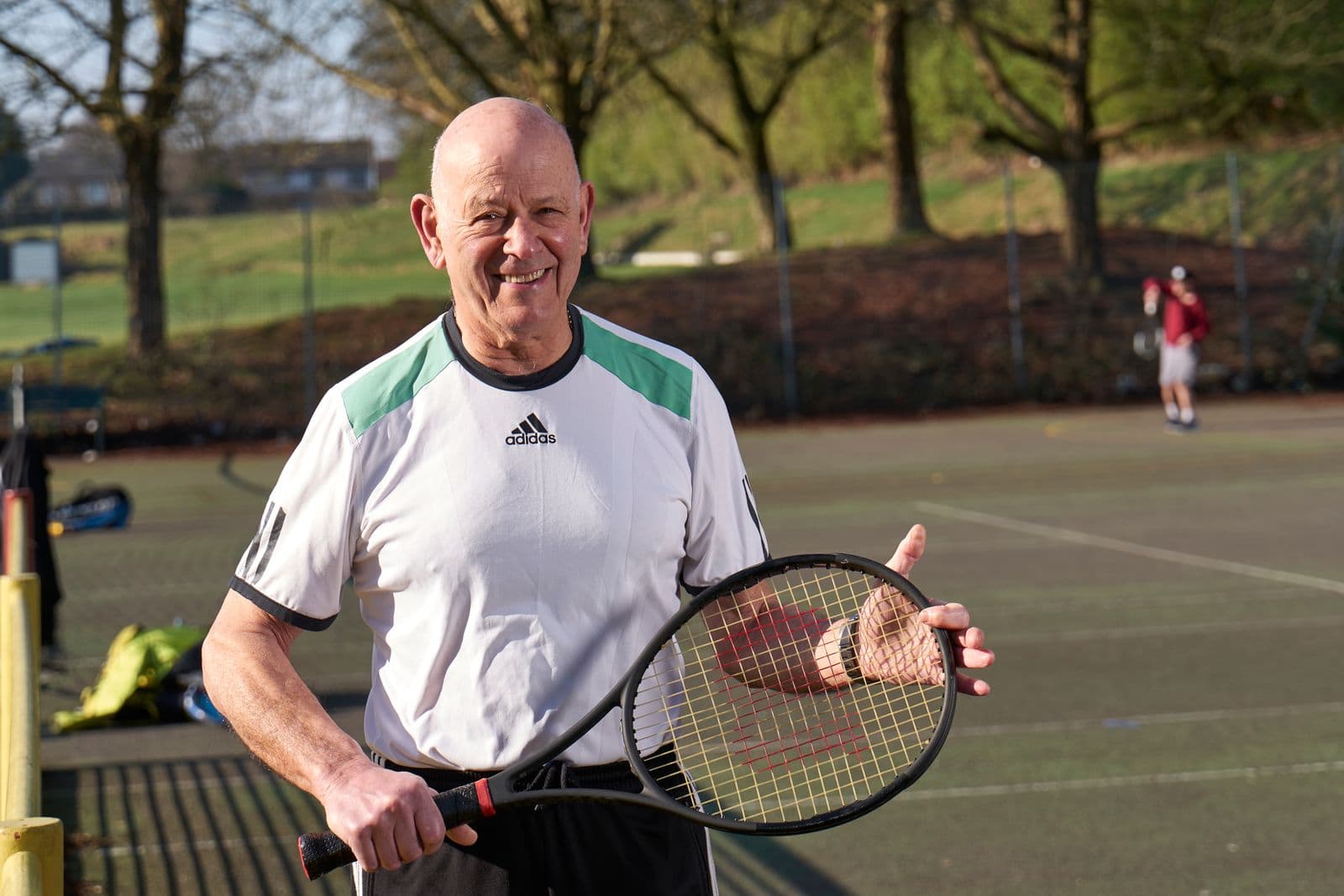
Tennis is one of the best sports to carry into your 50s, 60s, and beyond — large cohort research associates lifelong racquet sports with longer life expectancy. What changes with age isn't whether you should play; it's the support structure: calves and tendons need real warm-ups and twice-weekly strength work, recovery days count as training, and the classic 50+ injuries — tennis leg, Achilles, rotator cuff — are largely preparable-for.
The good news first — and it's real
In one of the better-known cohort studies on exercise and lifespan — the Copenhagen City Heart Study — tennis players showed the largest life-expectancy association of any activity examined. Cohort data can't prove the tennis did it (tennis players differ in lots of ways), but the direction is consistent: racquet sports, with their mix of intervals, agility, and social glue, keep showing up near the top. The goal of this page is simple: keep you in that group for another few decades.
What actually changes after 50
Not your forehand. What changes is the margin: tendons and muscles adapt more slowly, tolerate sudden spikes less, and punish skipped preparation more reliably. The practical translation:
- The classic 50+ injury list is short and specific: tennis leg (the mid-match calf "pop"), Achilles tendinopathy, rotator cuff trouble on the serving side, and the occasional frozen shoulder. Every one of them is either preventable or dramatically more fixable when caught early.
- Recovery is training. The back-to-back league nights that worked at 35 are now a load-management problem. A day between hard sessions isn't lost tennis; it's where the adaptation happens.
- Warm-ups stop being optional. Cold calves and a first-game sprint are how tennis leg happens. Progressive movement first, mini-tennis before baseline bombing, practice serves before live ones.
Strength is the non-negotiable
The honest hierarchy for staying on court: strength work beats stretching, beats braces, beats new racquets — it's the one intervention with strong evidence for cutting overuse injuries, and its effect gets more valuable with age because it directly offsets what aging takes. Two 20–30 minute sessions a week from the tennis strength guide — heavy calf raises, rotator cuff and scapular work, hip and leg strength — is the cheapest insurance in the sport.
Doubles as strategy, not surrender
Doubles halves the court you cover while keeping the parts of tennis that make it worth playing — the serve, the net game, the people. Many lifelong players mix formats deliberately: singles while fresh, doubles in heavy league weeks or while returning from an injury. Treat the choice as load management with a social upside.
When a PT check pays for itself
Three moments: before a season if last season ended with anything that still whispers; after any calf, Achilles, or shoulder episode — these recur at high rates without a capacity fix; and whenever pain changes how you hit (a shortened serve motion is load redistribution, and the elbow or shoulder will file the complaint). A cash-pay evaluation runs $125–$250 ($175–$275 in the Bay Area), no referral needed in most states — how to find a tennis-literate PT covers the vetting, what PT costs covers the money, and Bay Area players can browse the tennis PT directory directly. The goal isn't more medical care — it's making sure nothing small quietly ends a 40-year tennis habit.
Frequently asked questions
Sources (5)
- Schnohr P, et al. Various Leisure-Time Physical Activities Associated With Widely Divergent Life Expectancies: The Copenhagen City Heart Study. Mayo Clin Proc. 2018. — Mayo Clin Proc
- Lauersen JB, et al. The effectiveness of exercise interventions to prevent sports injuries: systematic review and meta-analysis. Br J Sports Med. 2014. — BJSM
- Pluim BM, et al. Tennis injuries: occurrence, aetiology, and prevention. Br J Sports Med. 2006. — BJSM
- Fradkin AJ, et al. Does warming up prevent injury in sport? The evidence from randomised controlled trials. J Sci Med Sport. 2006. — J Sci Med Sport
- AAOS OrthoInfo. Rotator Cuff Tears. — AAOS OrthoInfo
This article is for education only and isn't medical advice. Always talk to a licensed clinician about your specific situation.