
Achilles & Calf Trouble in Basketball: The Over-30 Player's Guide
The push-off grab, the grumbling tendon, and the pop every weekend hooper has heard about
Updated October 20262 minute read
Basketball's calf complaints run a spectrum: the sudden mid-game calf grab (a muscle strain that rehabs well), the Achilles that grumbles through every warm-up (a load-tolerance problem that responds to heavy calf work, not rest), and the one that ends seasons — a pop above the heel with no push-off, which is a possible Achilles rupture and a same-day medical assessment. Basketball is the classic rupture sport, and the classic patient is a 30-to-50-year-old returning to the court after time away.
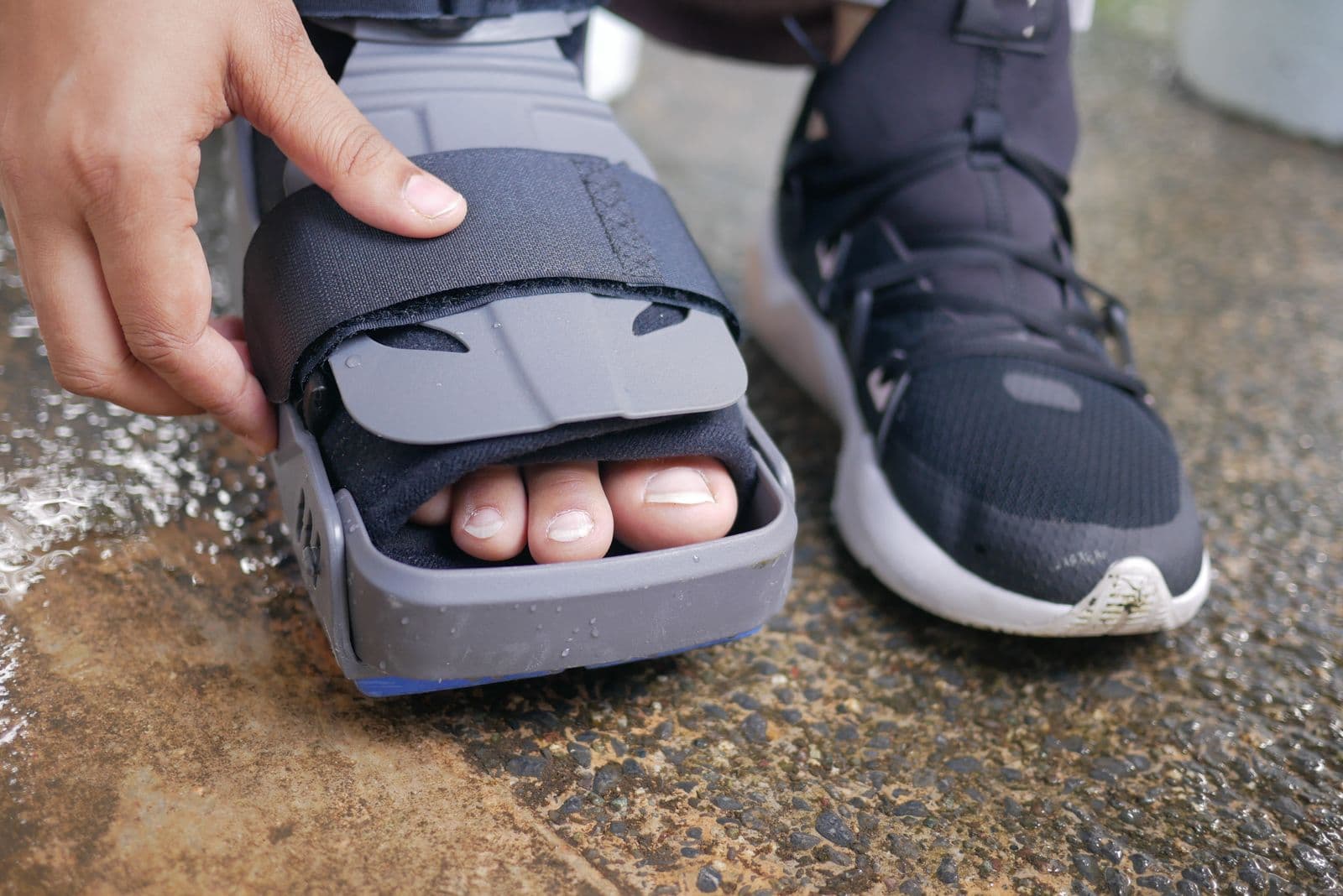
Three stories, one muscle group
Basketball concentrates explosive push-offs — first steps, closeouts, second jumps — on the calf and the Achilles tendon that anchors it. Sort your story first:
- A sudden grab mid-game — sharp pain in the calf muscle on a push-off, like a cramp with teeth → calf strain.
- A grumble that warms up — stiffness above the heel every morning and every warm-up, building over weeks → Achilles tendinopathy.
- A pop and no push-off — the "who kicked me?" moment → possible rupture, and the rest of this page can wait while you get assessed.
The calf strain: the push-off grab
The mid-game grab — often described as being hit by the ball or a teammate's knee, except nobody was there — is usually a strain of the inner calf muscle, the same injury the medical literature nicknamed "tennis leg" (basketball earns it at least as often). It rehabs predictably: brief protection, then progressive calf loading from both knee-straight and knee-bent positions, finishing with hopping and sprint work before full-court runs. Significant swelling plus calf pain deserves a clinician's look — a blood-clot check is routine diligence there, not alarmism.
The grumbling Achilles
Morning stiffness, tenderness an inch or two above the heel, pain that eases as you warm up and returns after — that's Achilles tendinopathy, and year-round hooping on a court is exactly the load pattern that feeds it. Two truths: rest alone reliably disappoints (the tendon detrains while you wait), and heavy, slow calf strengthening has the best evidence — often while continuing modified play under a pain-monitoring approach. A grumbling tendon is also the right time to act for a darker reason: building capacity is the honest protection against the injury below.
The rupture: basketball's famous pop
Achilles ruptures cluster in recreational athletes in their 30s and 40s, the incidence has been climbing for decades, and basketball is the textbook setting: a deconditioned tendon meets a game that demands maximal push-off on every possession. The story is sudden — a pop, the feeling of being kicked, then weak or absent push-off (walking flat-footed may still work, which is how people talk themselves out of care).
A pop plus weak push-off = same-day medical assessment. Treatment decisions (surgical vs. structured non-operative) belong with a physician; both paths lead through months of progressive rehabilitation where PT does the heavy lifting, ending with the criteria-based return that protects the other leg too.
The protection plan for the comeback hooper
If you're 30+, returning after years away, the honest insurance is unglamorous: heavy calf raises (straight and bent knee) twice a week, jump-landing strength work, a real warm-up before the first full-speed possession, and a ramp instead of a cannonball back into weekly runs. Strength work roughly halves overuse injury risk across sports — and the calf is where basketball spends it.
Grumbling, grabbed, or just planning the comeback: a cash-pay evaluation runs $125–$250 ($175–$275 in the Bay Area, what PT costs), and here's how to find a PT who treats hoopers — Bay Area players can browse basketball-friendly PTs by region.
Frequently asked questions
Sources (5)
- Lantto I, et al. Epidemiology of Achilles tendon ruptures: increasing incidence over a 33-year period. Scand J Med Sci Sports. 2015. — SJMSS
- Delgado GJ, et al. Tennis leg: clinical US study of 141 patients and anatomic investigation of four cadavers. Radiology. 2002. — Radiology
- Silbernagel KG, et al. Continued sports activity, using a pain-monitoring model, during rehabilitation in patients with Achilles tendinopathy. Am J Sports Med. 2007. — AJSM
- AAOS OrthoInfo. Achilles tendon rupture (tear). — AAOS OrthoInfo
- Lauersen JB, et al. The effectiveness of exercise interventions to prevent sports injuries: systematic review and meta-analysis. Br J Sports Med. 2014. — BJSM
This article is for education only and isn't medical advice. Always talk to a licensed clinician about your specific situation.