
Returning to Basketball After an Injury: A Criteria-Based Plan
From form shooting to full-court runs — the milestones that bring you back without the relapse loop
Updated October 20263 minute read
Good basketball returns are built on criteria, not calendars: pain-free daily life, tested strength, jogging, then jumping-and-landing progressions — the gate most basketball comebacks skip — then cutting, controlled half-court play, and full-court runs last, with minutes capped early. Each step is judged by the 24-hour rule, and the sport's built-in rehab gift is that shooting around counts as low-load court time while the rest rebuilds.
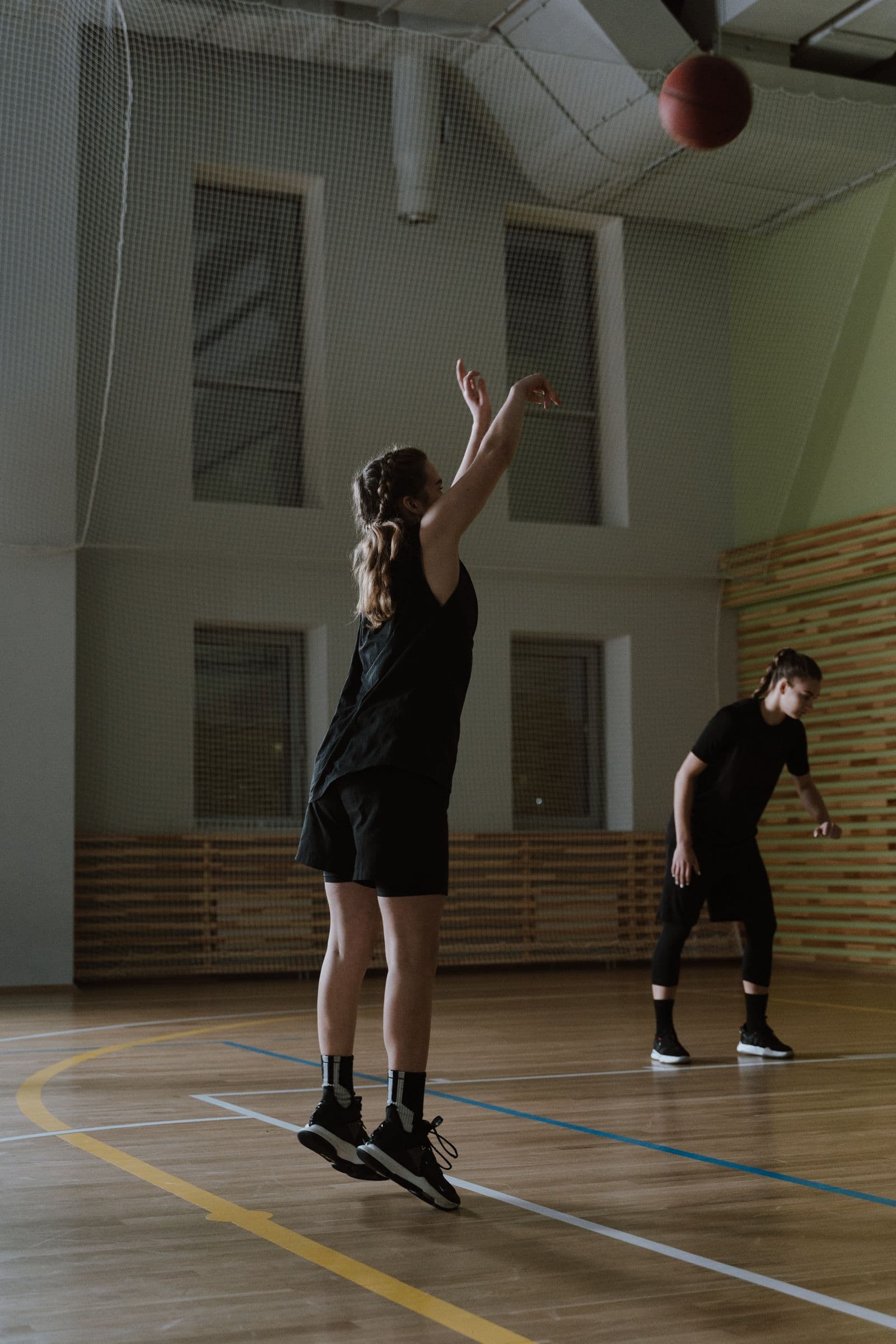
Criteria, not calendars
"Six weeks off, then hoop" is how most re-injuries are manufactured. Basketball asks more of the body than almost any recreational sport — jumping, landing, cutting, and sprinting in traffic — and tissue that's only ready for jogging will announce that fact in the first live scramble. Return-to-sport research is blunt on this: players who come back through tested milestones re-injure less than players who come back on a date. Each stage below unlocks the next, and the calendar takes care of itself.
The milestones, in order
- Pain-free daily life. Stairs, walking, a full day on your feet — quiet. Until ordinary life is boring, basketball isn't a conversation.
- Loaded strength at meaningful intensity. Calf raises, squats or step-downs, and hop-relevant strength tested — not guessed — and roughly symmetrical side to side.
- Straight-line jogging, building to easy running without a limp or next-day flare.
- Jumping and landing progressions. The gate basketball returns skip. Two-leg jumps before one-leg hops; land-and-stick before bouncing; small heights before real ones. Landing absorbs several times body weight — earn it on purpose, not in a game.
- Cutting and defensive slides. Planned changes of direction first, then reactive ones.
- Shooting around — the sport's built-in rehab gift. Form shooting and spot work are low-load court time; use them early and often between the stages above.
- Half-court controlled runs. Three-on-three, no pressing, known company.
- Full-court and real games last, with minutes capped for the first few weeks — one or two runs, not "until my legs die."
The 24-hour rule
Every step gets the same referee: how is it the next morning? Mild effort soreness that's gone by morning — the step stands. Symptoms equal or worse 24 hours later — the step was too big; repeat the previous level. When a flare happens (it probably will once), drop back two steps, not to zero, and climb again once the rule passes twice.
Per-injury wrinkles
- Ankle sprains: the cutting and landing gates are everything, and an external brace during the return season is well-supported insurance — the full story, including why unrehabbed ankles become repeat ankles, is in ankle sprains in basketball.
- Jumper's knee: jumping volume is the budget — track jumps the way runners track miles — and the heavy, slow strength work continues through the return, not just until it stops hurting. The traffic-light rules govern each step.
- Achilles rupture: the long road. Return runs on months, not weeks, gated by calf-strength symmetry and hop tests — and the research is honest that not everyone returns at their prior level, which makes disciplined milestones more valuable, not less. Start with the Achilles guide and keep a PT on this one; it's the longest relationship in basketball rehab.
Rebuild the engine while you wait
The stages above go faster when the body underneath is stronger than it was before the injury — jump, landing, and strength training is the template, and the warm-up becomes non-negotiable on the way back. Returning players are also exactly who the load rules protect: the first week back is half volume, zero heroics.
Getting help
A basketball-literate PT turns this template into your plan: which milestone you're actually at, the loading that fixes the underlying cause, and what's realistic before league night. Evaluations run $125–$250 cash-pay ($175–$275 in the Bay Area — what PT costs, often partly reimbursable via superbill). Here's how to find one, and Bay Area players can go straight to the basketball PT directory.
Frequently asked questions
It depends on the tissue, not the ambition. Rolled ankles often allow modified play within weeks when rehabbed properly; jumper's knee returns gradually alongside treatment; an Achilles rupture runs on a months-long, milestone-based clock. A criteria-based plan gets you there as fast as your tissue allows — which is the only speed available.
Sources (5)
- Ardern CL, et al. 2016 Consensus statement on return to sport from the First World Congress in Sports Physical Therapy, Bern. Br J Sports Med. 2016. — BJSM
- Zellers JA, et al. Return to play post-Achilles tendon rupture: a systematic review and meta-analysis of rate and measures of return to play. Br J Sports Med. 2016. — BJSM
- Gribble PA, et al. Evidence review for the 2016 International Ankle Consortium consensus statement on the prevalence, impact and long-term consequences of lateral ankle sprains. Br J Sports Med. 2016. — BJSM
- Silbernagel KG, et al. Continued sports activity, using a pain-monitoring model, during rehabilitation in patients with Achilles tendinopathy. Am J Sports Med. 2007. — AJSM
- Lauersen JB, et al. The effectiveness of exercise interventions to prevent sports injuries: systematic review and meta-analysis. Br J Sports Med. 2014. — BJSM
This article is for education only and isn't medical advice. Always talk to a licensed clinician about your specific situation.