
Pickleball After 50: Playing the Sport That Found You
The honest health case, the calf-and-balance upkeep, and how to play five days a week without paying for it
Updated October 20262 minute read
Pickleball after 50 is genuinely good for you — social, aerobic, and joint-friendlier than most court sports — and it asks two things of an older body in return: calves strong enough for its stop-start reality and balance sharp enough that lobs don't become falls. Both are trainable at any age. The players who last aren't the ones who play less; they're the ones who built the body that plays often.
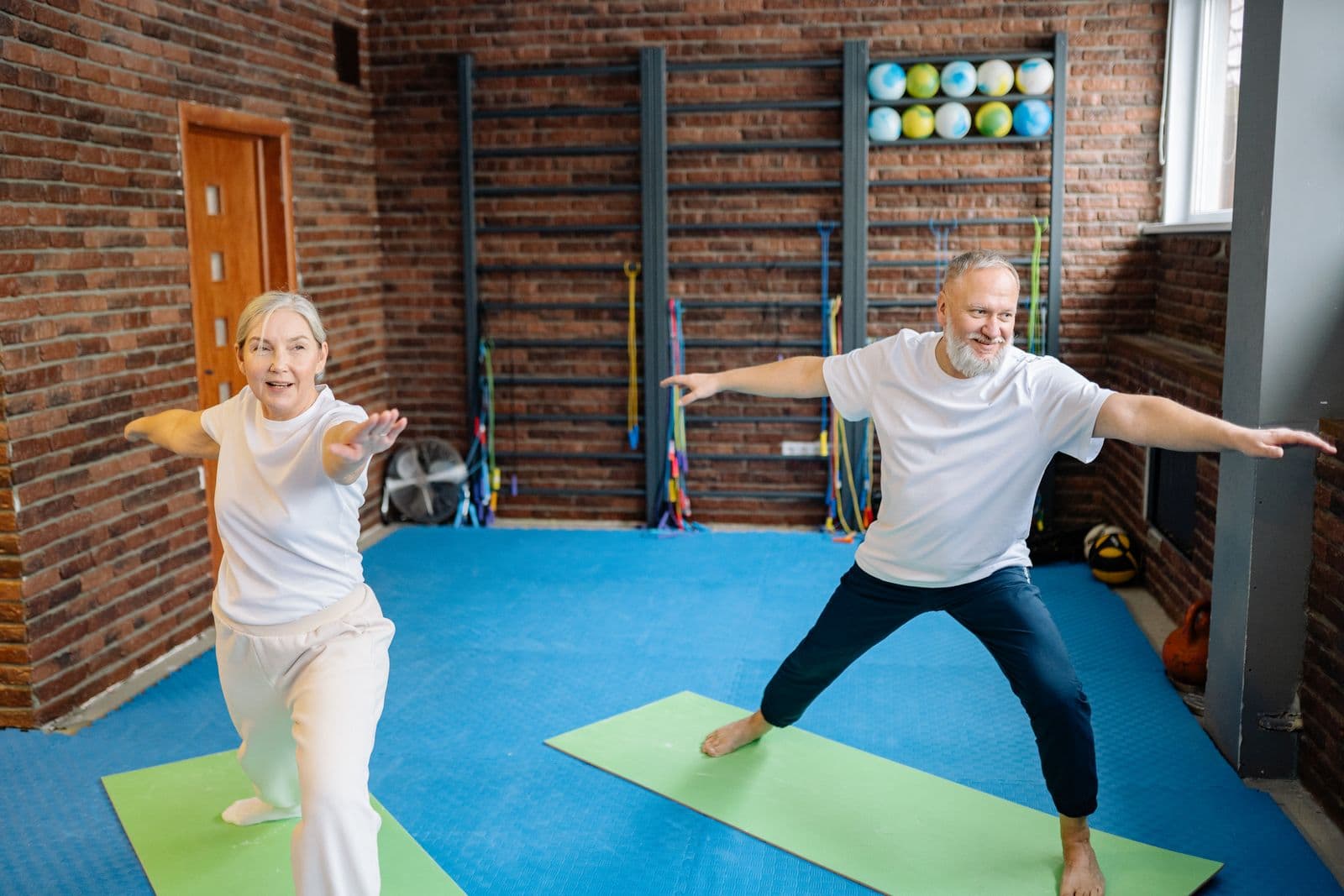
The sport that found your generation
Nobody planned for pickleball to become the fitness story of the over-50 crowd — it just fit: a small court, a social format, games short enough to rest between, and a learning curve that rewards craft over sprinting. The result is millions of people in their 50s, 60s, and 70s getting more weekly exercise than they've had in decades, with a built-in community attached. From a health standpoint, that package — aerobic work, balance practice, and social connection — is about as good as it gets.
The honest asterisk: the sport grew faster than its players' calves. A body that spent twenty years at a desk and then discovers open play has enthusiasm its tendons haven't earned yet — which is why the injuries cluster exactly where they do.
What changes after 50 (and what doesn't)
Tendons and calves adapt more slowly — they still adapt, they just want a longer runway and real strength work behind them. Balance and reaction speed drift without practice — and return with it. Recovery between sessions genuinely takes longer — which makes rest days part of training, not time off from it.
What doesn't change: the training rules. Load in small steps (the ramp), warm up before explosive movement (the six minutes), and build capacity on purpose (the strength work). Age changes the dosage, not the prescription.
The two systems that decide your pickleball future
Calves. Every first step to a dink, every push-off for a lob, runs through the calf — and the sudden calf strain is the classic 50+ pickleball injury. Heavy calf raises are the insurance policy; stronger calves also mean quicker first steps, which wins points.
Balance. The signature serious injury in older players is the backward fall chasing a lob — and the fix is a rule plus a practice: never backpedal (turn and run), and train single-leg balance until reactive steps are automatic again. Falls are not a fact of age; they're a fact of untrained balance.
Arthritis, replacements, and honest answers
Arthritic knees and hips mostly like pickleball when the load is managed — movement feeds joints. Joint replacements and pickleball coexist well for many players, with the surgeon's clearance and a PT-guided return. The pattern to respect: swelling that lasts into the next day is your knee's veto — the knee guide maps it.
Coming from tennis or golf? The same long-game logic applies; pickleball just compresses it onto a smaller court with more sessions.
When a PT check earns its fee
Before the habit (or early in it) if you're returning to sport after years away; promptly for any calf "grab," a fall with lingering wrist or shoulder pain, or a niggle surviving two weeks of sensible modification (the traffic-light rules). A cash-pay evaluation runs $125–$250 ($175–$275 in the Bay Area, what PT costs), often ends with "here's your modified week," not "stop" — and here's how to find a PT who treats you as an athlete. Bay Area players can browse pickleball-friendly PTs by region.
Frequently asked questions
Sources (5)
- Schnohr P, et al. Various leisure-time physical activities associated with widely divergent life expectancies: the Copenhagen City Heart Study. Mayo Clin Proc. 2018. — Mayo Clin Proc
- Weiss H, et al. Non-fatal senior pickleball and tennis-related injuries treated in United States emergency departments. Inj Epidemiol. 2021. — Inj Epidemiol
- Sherrington C, et al. Exercise for preventing falls in older people living in the community. Cochrane Database Syst Rev. 2019. — Cochrane
- Fragala MS, et al. Resistance training for older adults: position statement from the National Strength and Conditioning Association. J Strength Cond Res. 2019. — JSCR
- Fransen M, et al. Exercise for osteoarthritis of the knee. Cochrane Database Syst Rev. 2015. — Cochrane
This article is for education only and isn't medical advice. Always talk to a licensed clinician about your specific situation.