
Golf After 50: Playing the Long Game
What changes, what doesn't, and how the sport's core demographic keeps swinging for decades
Updated October 20262 minute read
Golf is one of the most sustainable lifetime sports — a walked round is genuine exercise, and research links golf with better health as players age. What changes after 50 is the preparation: hips and mid-back stiffen, so rotation needs maintenance work behind it; tendons want a real warm-up; and recovery days matter. A stiff or even arthritic joint doesn't end golf — it changes how you get ready for it.
The honest good news
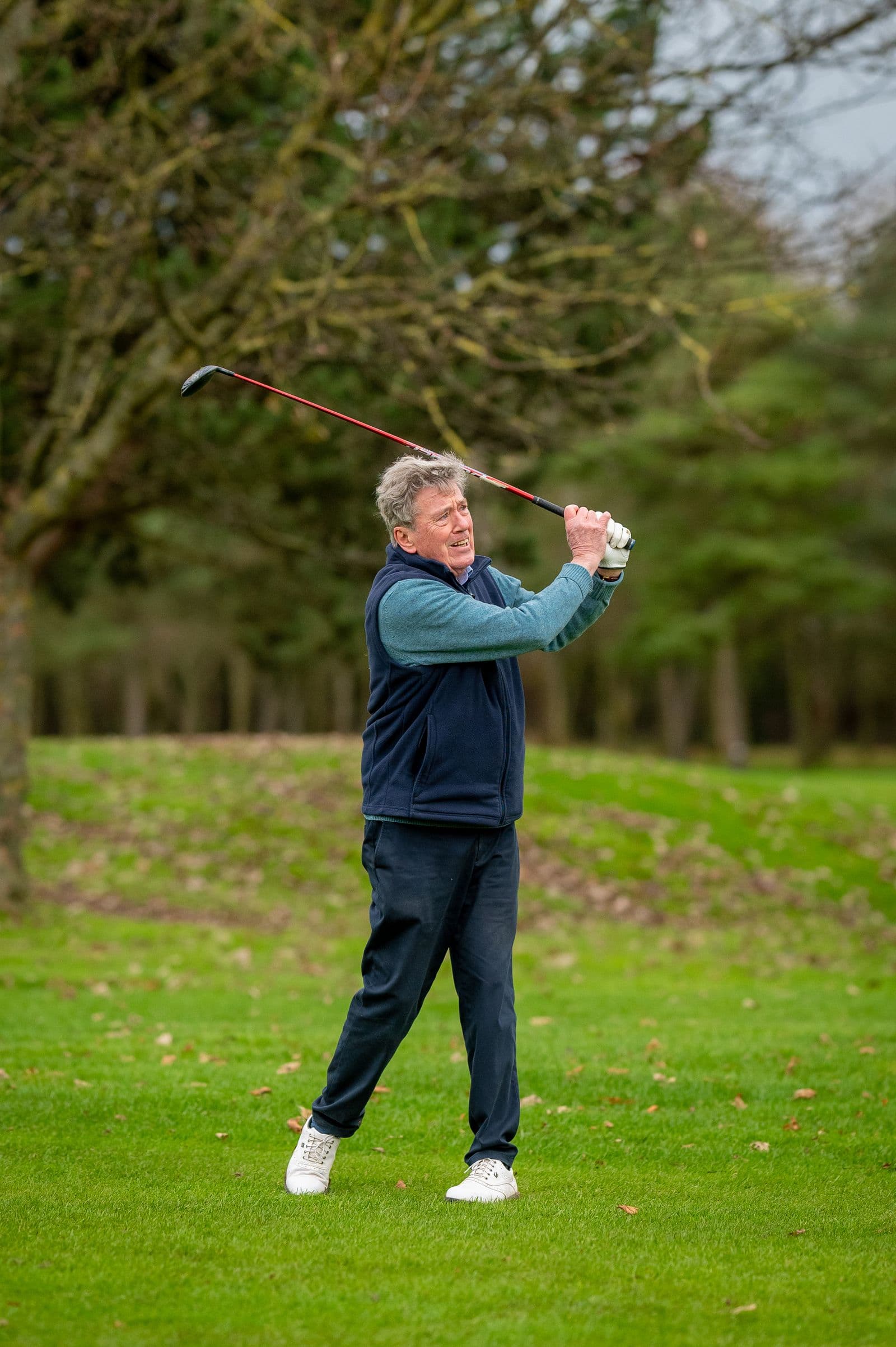
Golf is built for the long game. A walked 18 covers several miles with a few hundred rotational efforts sprinkled in, and a large scoping review of golf and health found the sport associated with better physical health and longevity markers in older players. Few sports let you compete, socialize, and train balance and rotation into your eighties. The sport isn't the risk; arriving at it unprepared is.
What actually changes after 50
- Rotation comes harder. Hips and the mid-back stiffen with age and desk decades, and the golf swing is a rotation sport. When the body stops supplying rotation, the swing borrows it from the low back — which is how the classic golf back pattern starts. The fix is maintenance: mobility and strength work twice a week protects more strokes than a new driver.
- Tendons want a longer runway. Golfer's elbow and other tendon complaints rise with age because tendon tissue tolerates spikes less — which makes the 8-minute warm-up and sane load management non-negotiable rather than optional.
- Recovery is part of the schedule. Back-to-back rounds plus a range day was fine at 35. After 50, a day between hard golf days is training, not laziness.
The classic 50+ patterns
Four complaints dominate, all very treatable: back stiffness and pain (the sport's signature — when you can play through it and when you shouldn't), golfer's elbow (volume spikes and grip force), lead-hip trouble — pinching or deep groin ache on the follow-through, where hip impingement and arthritis conversations live — and wrist complaints from range volume. None of them is a retirement notice; all of them respond to load management plus targeted strength, and all of them do better seen early (the evaluation math: one visit costs less than a month of skipped rounds).
The arthritis truth
A stiff or arthritic hip or knee is not the end of golf — and for most people, continuing to play is part of managing it. Arthritic joints respond better to regular, moderate movement than to rest; what they punish is the unprepared spike. The adjustments that work: strength work around the joint, walking volume built gradually, the cart used strategically on hilly courses, and a warm-up treated as part of the round. A PT who works with older athletes can usually find a golf-shaped plan for even a grumpy joint — here's how to find one.
Equipment, honestly
One paragraph, because it's real but secondary: graphite shafts transmit less shock than steel, slightly larger grips reduce the squeeze your forearm tendons produce, and senior-flex shafts match slower swing speeds instead of fighting them. Worth doing — and no substitute for the strength and mobility that actually keep you playing.
The pre-season check
The best money a 50+ golfer spends in March: one PT visit before the season — rotation measured, strength gaps found, a twice-weekly program and a warm-up matched to your body. Cash-pay, that's $125–$250 ($175–$275 in the Bay Area), often partly reimbursable. Bay Area players can browse golf-friendly PTs by region — year-round golf here means there's no off-season to hide a problem in.
Frequently asked questions
Sources (5)
- Murray AD, et al. The relationships between golf and health: a scoping review. Br J Sports Med. 2017. — BJSM
- Chodzko-Zajko WJ, et al. American College of Sports Medicine position stand: exercise and physical activity for older adults. Med Sci Sports Exerc. 2009. — ACSM / MSSE
- McHardy A, et al. Golf injuries: a review of the literature. Sports Med. 2006. — Sports Med
- MedlinePlus (NIH). Exercise for Older Adults. — MedlinePlus
- AAOS OrthoInfo. Golf Injury Prevention. — AAOS OrthoInfo
This article is for education only and isn't medical advice. Always talk to a licensed clinician about your specific situation.