
Golf Fitness That Works: Strength and Mobility for Golfers
The minimal effective dose, the five targets that matter, and why heavy beats bouncy
Updated October 20262 minute read
Strength training is the best-supported injury-prevention tool in sport — meta-analysis evidence shows it roughly halves overuse injury risk — and for golfers it also buys clubhead speed. The golfer's essentials: hip internal-rotation mobility, thoracic rotation, rotational power, anti-rotation core work, and glute strength, in two 20–30 minute sessions a week, loaded heavy and slow rather than light and bouncy.
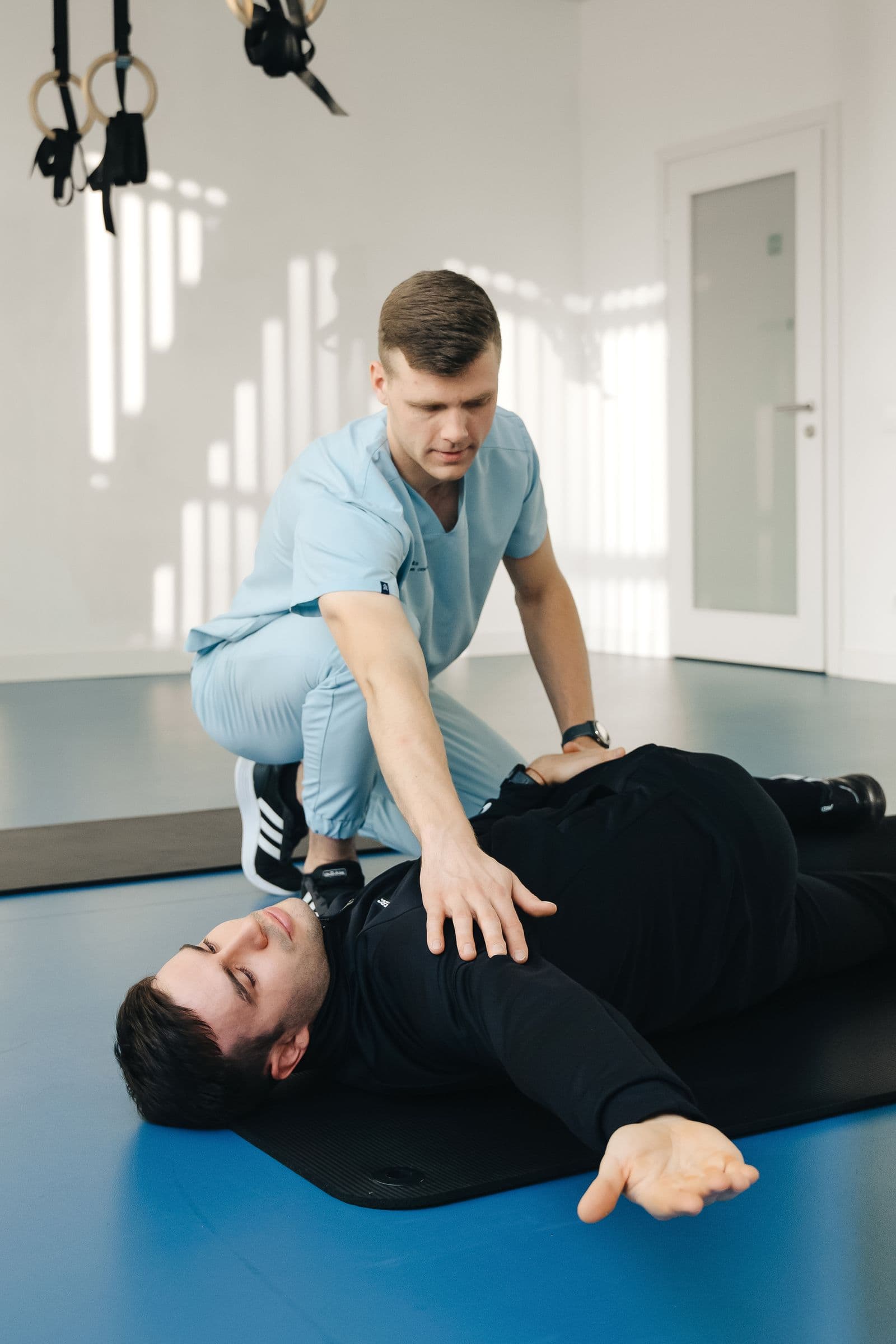
The strongest evidence in injury prevention
Most golf-fitness content is folklore with a resistance band. Strength training is the exception: a large meta-analysis of sports injury prevention trials found structured strength work cut overuse injuries by roughly half — a bigger effect than any stretching program or gadget has ever shown. For golfers there's a second dividend: stronger, faster rotation is clubhead speed you didn't have to buy.
The logic is mechanical. Golf injuries — the golf back, golfer's elbow, cranky lead wrists — are almost all capacity problems: rotational load arriving faster than the tissue can absorb, usually after a volume spike. Strength and mobility work raises the capacity side of the equation.
The golfer's five targets
- Hip internal-rotation mobility — the single highest-value target in golf. Hips that turn let the pelvis do the swing's rotation; hips that don't export the job to the lumbar spine. Ninety-ninety hip switches and lead-hip rotations, most days, a few minutes.
- Thoracic rotation — the mid-back's share of the turn. Open-book rotations and reach-backs keep the coil out of the low back.
- Glute strength — the swing's engine and the pelvis's brakes. Hip bridges progressing to single-leg, split squats, loaded over time.
- Anti-rotation core — the back's insurance policy. Pallof presses, side planks, suitcase carries: the ability to resist rotation is what lets you produce it safely.
- Rotational power + grip — medicine-ball rotational throws for speed, and farmer's carries or heavy holds for the forearm endurance that protects the elbow.
Heavy and slow beats light and bouncy
The common mistake is treating golf fitness like a warm-up that never ends: light bands, high reps, twenty exercises. Tendon and strength research points the other way — meaningful load, moved with control, in a handful of exercises: a weight you can manage 6–10 times, progressed over weeks. If your "golf workout" never requires rest between sets, it's a stretching routine wearing a weight vest. (Mobility work is the exception — frequency beats intensity there.)
Two sessions a week, 20–30 minutes, year-round. The dose that survives a busy season is the one that works — runners and tennis players run on the same minimal-dose logic.
In-season vs. off-season
- Off-season: build. Progress load week over week; this is when the winter sim league golfer should be in the gym more than on the mat.
- In-season: maintain. Two short sessions, weights held steady, nothing new — strength is slow to gain and slow to lose.
- Never introduce a new heavy exercise the week of a golf trip or a 36-hole weekend. Novel soreness plus a volume spike is the classic self-inflicted injury.
When a PT should design it
Generic golf-fitness programs assume a healthy body and average mobility. Get the plan built around your measurements when: something already hurts (dosing around an irritated back or elbow is exactly where generic programs fail — start with the traffic-light rules), you're returning from an injury, or you're about to start a swing rebuild and want the movement screen first. One or two visits usually covers it: $125–$250 cash-pay ($175–$275 in the Bay Area, what PT costs), often partly reimbursable. Bay Area golfers can find a golf-literate PT in the local directory.
Frequently asked questions
Sources (5)
- Lauersen JB, et al. The effectiveness of exercise interventions to prevent sports injuries: systematic review and meta-analysis. Br J Sports Med. 2014. — BJSM
- Vad VB, et al. Low back pain in professional golfers: the role of associated hip and low back range-of-motion deficits. Am J Sports Med. 2004. — AJSM
- Kanwar KD, et al. Injury risk-factor differences between two golf swing styles: a biomechanical analysis. Sports Biomech. 2022. — Sports Biomech
- Murray AD, et al. The relationships between golf and health: a scoping review. Br J Sports Med. 2017. — BJSM
- Titleist Performance Institute. The Body-Swing Connection: screening and golf fitness resources. — TPI
This article is for education only and isn't medical advice. Always talk to a licensed clinician about your specific situation.