
Strength Training for Runners: What Actually Prevents Injury
The minimal effective dose, the five exercises that matter, and why heavy beats high-rep
Updated October 20263 minute read
Strength training is the best-supported injury prevention tool in running — meta-analysis evidence shows structured strength work cuts overuse injury risk roughly in half. The minimal effective dose is two 20–30 minute sessions a week built around calf raises, single-leg squats, hip bridges, and side planks — loaded heavy and slow, not light and bouncy.
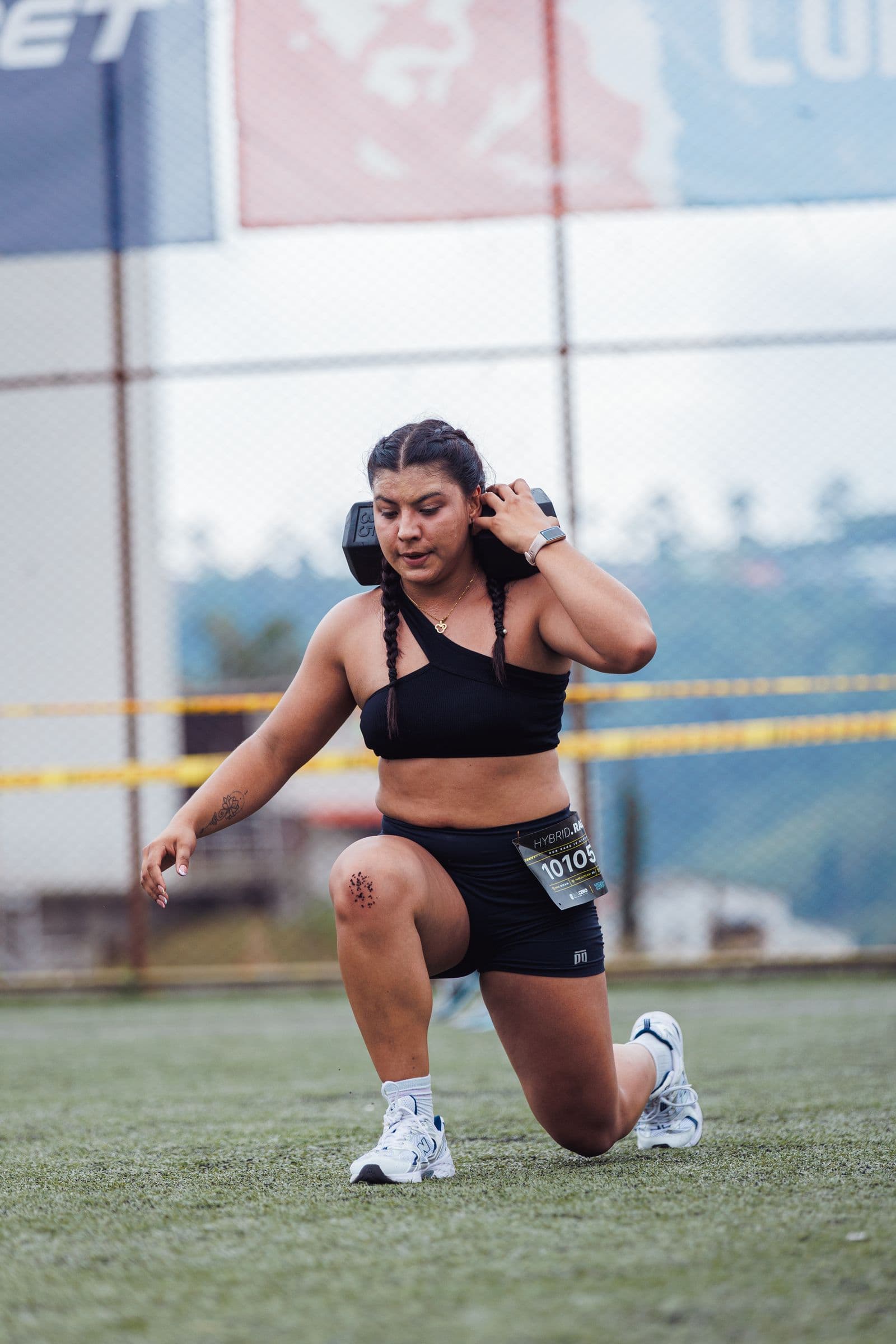
The strongest evidence in injury prevention
Most running-injury advice is folklore. Strength training is the exception: a large meta-analysis of sports injury prevention trials found structured strength work cut overuse injuries by roughly half — a bigger effect than stretching, proprioception work, or any shoe or insole intervention has ever shown. If a runner does exactly one thing beyond running to stay healthy, this is the thing.
The reason is mechanical. Running injuries — runner's knee, Achilles problems, shin splints — are almost all capacity problems: load arriving faster than the tissue can absorb it. Strength training raises the capacity side of that equation.
The minimal effective dose
Two sessions a week, 20–30 minutes each. That's it. Consistency across months matters far more than session length, and the dose that survives a busy training week is the one that works.
The runner's big five:
- Calf raises, straight knee — 3 sets of 8–12, loaded. The calf absorbs several times body weight every stride; this is the single highest-value exercise for runners.
- Calf raises, bent knee — targets the soleus, the workhorse muscle of distance running and a key player in shin and Achilles problems.
- Single-leg squat or step-down — slow and controlled. Builds the quad and hip control that protect the kneecap.
- Hip bridge or hip thrust — glute strength, progressing to single-leg and then to load.
- Side plank or banded hip abduction — lateral hip strength, the missing ingredient in most IT band and knee-tracking problems.
Experienced runners can add low-dose plyometrics — skipping, hopping, short bounds — once the basics are strong. They sharpen the tendon's spring, but they're the dessert, not the meal.
Heavy and slow beats light and bouncy
The common mistake is treating strength work like extra cardio: high reps, light weight, minimal rest. Tendon research points the other way — tendons adapt to heavy, slow loading: a weight you can only move 6–10 times, lowered over three slow seconds. That stimulus is exactly what high-rep circuits never provide. If your "strength day" doesn't require rest between sets, it's a second run in disguise.
Form matters more under load, which is where one or two sessions with a running-focused PT earn their fee — movement screening and a program built around your injury history, usually in a single visit (how to find one; Bay Area runners can start with the local running PT directory). It also pairs naturally with a gait analysis, since what shows up on the treadmill usually maps to a strength target.
In-season vs. off-season
- Off-season / base phase: this is when you build. Progress load week over week, three sessions if you enjoy it.
- In-season / race build: maintain. Two short sessions, weights held steady, nothing new. Strength is slow to gain and slow to lose — holding on costs little.
- Never introduce a new heavy exercise in the week before a long race effort. Novel soreness and a 20-miler are a bad pair.
If something already hurts
Strength work is also the core of treatment for most running injuries — but dosing around an irritated tendon or kneecap is exactly where generic programs fail. If you're training on a problem rather than ahead of one, get the plan tailored: can you run through it, and a cash-pay evaluation ($125–$250, what PT costs) typically ends with a loading program you can run alongside — not a stop order.
Frequently asked questions
Sources (5)
- Lauersen JB, et al. The effectiveness of exercise interventions to prevent sports injuries: systematic review and meta-analysis. Br J Sports Med. 2014. — BJSM
- Beyer R, et al. Heavy slow resistance versus eccentric training as treatment for Achilles tendinopathy: a randomized controlled trial. Am J Sports Med. 2015. — AJSM
- Gabbett TJ. The training-injury prevention paradox: should athletes be training smarter and harder? Br J Sports Med. 2016. — BJSM
- Fredericson M, et al. Hip abductor weakness in distance runners with iliotibial band syndrome. Clin J Sport Med. 2000. — Clin J Sport Med
- Moore IS. Is there an economical running technique? A review of modifiable biomechanical factors affecting running economy. Sports Med. 2016. — Sports Med
This article is for education only and isn't medical advice. Always talk to a licensed clinician about your specific situation.