
How to Find a Physical Therapist Who Actually Works With Golfers
TPI certification, the questions to ask, and the red flags — picking a PT who understands rotation
Updated October 20262 minute read
A golf-focused PT treats rotational athletes regularly, screens your hip and thoracic rotation before judging your swing, and plans around your season instead of telling you to stop playing. TPI certification is a genuine signal in golf. You can book directly in most states, and cash-pay means you pick the specialist rather than whoever is in-network.
Why "golf PT" is a real niche
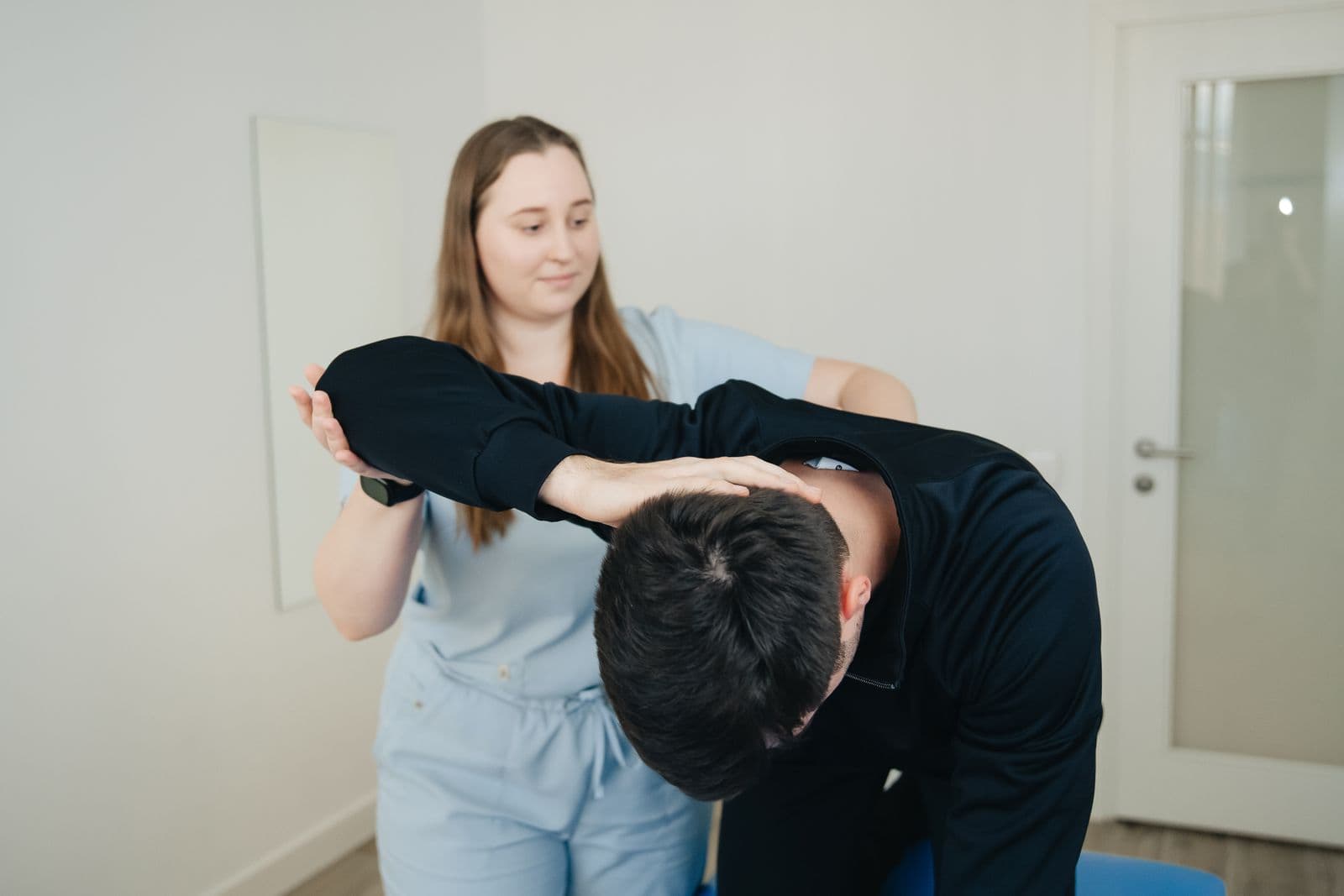
Any licensed PT can treat a sore back. But golfers present differently: the injuries are rotation-driven overuse patterns, the fix usually involves the swing and the range schedule as much as the tissue, and the goal is a season — a member-guest in June, a Bandon trip in October — not just "pain-free." A PT who treats rotational athletes screens your hip internal rotation and thoracic turn before anyone blames your swing, because a stiff hip exports its workload to the spine.
The practical test: do they ask about your game before your pain? A golf-literate evaluation wants your rounds and range volume per week, your walking-versus-cart habits, any recent lesson blocks or swing changes, and where in the swing it hurts. If none of that comes up, you're in the wrong clinic.
What to look for
- Caseload, not just credentials. Ask "how many golfers or rotational athletes do you treat in a typical month?"
- TPI certification — golf's one genuinely meaningful credential for clinicians — or SCS/OCS board certifications (credentials decoded).
- A rotation-first exam. Hip internal rotation and thoracic mobility should get measured for any golf back problem; if the evaluation never leaves the painful spot, the cause is being missed.
- A keep-you-playing philosophy. Good answer: "we'll find the swing volume your back tolerates and build from there." Bad answer: "stop golfing until it stops hurting."
Questions to ask before booking
- How many golfers or rotational athletes do you treat?
- Will you screen my hip and upper-back rotation, not just the sore spot?
- Can I keep playing during rehab, and will you plan around my season?
- Are you comfortable coordinating with my teaching pro on swing changes?
- What does a typical plan look like — visits, cost, timeline — and do you provide a superbill?
Red flags
- A blanket "stop playing" before any exam or training history
- No interest in your range volume, lesson history, or walking habits
- Passive-only care — heat, ultrasound, massage — with no strengthening or mobility plan attached
- Identical exercise sheets for every back regardless of diagnosis
Why cash-pay works in your favor here
Insurance networks assign you a PT by contract, not by specialty. Paying directly means choosing the clinician who actually understands rotation — and in most states you can book without a referral. Many plans still reimburse part of the cost via superbill.
Playing in the Bay Area? The local golf guide covers prices and the course scene, and you can browse golf-friendly PTs across the region when you're ready to compare.
Frequently asked questions
Sources (6)
- APTA. Direct Access by State: physical therapist direct access laws summary. — APTA
- Physical Therapy Board of California. Direct access to physical therapist services (Business and Professions Code §2620.1). — PTBC
- Titleist Performance Institute. The Body-Swing Connection: screening and golf fitness resources. — TPI
- Murray AD, et al. The relationships between golf and health: a scoping review. Br J Sports Med. 2017. — BJSM
- McHardy A, et al. Golf injuries: a review of the literature. Sports Med. 2006. — Sports Med
- Smith JA, et al. Risk Factors Associated With Low Back Pain in Golfers: A Systematic Review and Meta-analysis. Sports Health. 2018. — Sports Health
This article is for education only and isn't medical advice. Always talk to a licensed clinician about your specific situation.