
Knee Pain From Pickleball: What the Pattern Is Telling You
Kneecap ache, lunge pain, or a swollen knee after a twist — each points somewhere different
Updated October 20262 minute read
Pickleball knee pain sorts by pattern: an ache around the kneecap after long sessions is usually a load problem that rehab fixes, pinpoint pain below the kneecap with lunging points to the patellar tendon, and a knee that swelled or locks after a twist needs evaluation this week — that's the meniscus conversation. Arthritic knees usually do better playing managed pickleball than resting; the skill is matching the dose to the knee.
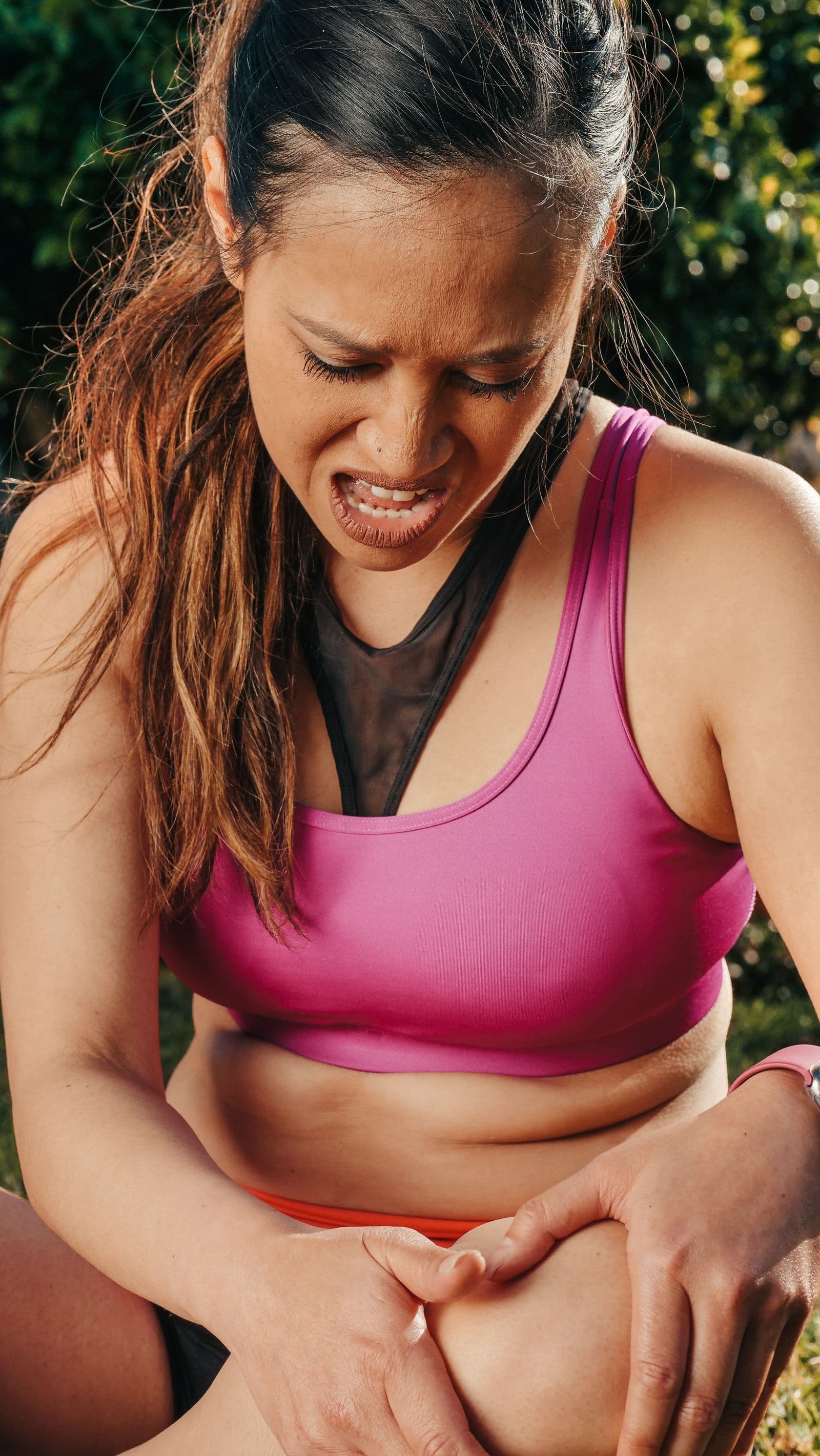
Start with the pattern
Pickleball asks knees for repeated lunges, quick direction changes, and long sessions on hard courts — and knee complaints sort cleanly by pattern. Point to the spot, and note whether there was a single moment or a gradual build.
Ache around or under the kneecap after long sessions
A diffuse ache you can't pin with one finger, worse after long open-play days, on stairs, and after sitting. That's the kneecap-loading pattern — the same patellofemoral problem runners get, delivered by lunges and hard courts instead of miles. It's a load-versus-capacity problem, not damage: quad and hip strengthening plus a managed session budget resolves most cases in 4–6 weeks, usually without stopping play.
Pinpoint pain below the kneecap with lunges
One tender spot on the tendon just below the kneecap, worst at the start of play and after hard sessions, often stiff the next morning. That's the patellar tendon complaining about explosive lunging. Tendons respond to progressive loading, not rest — waiting for it to disappear is how a six-week problem becomes a six-month one.
Swelling, locking, or giving way after a twist
A knee that swelled after a pivot, catches or locks (a locked knee has its own page), or feels untrustworthy is a different category — in players over 50 pivoting hard on planted feet, that's the meniscus conversation. A swollen or locking knee after a twist is a this-week evaluation, not a tough-it-out — early assessment sorts the knees that settle with rehab (most of them) from the few that need more. Swelling with no injury at all is its own pattern and also worth a look.
What's usually driving it
- Session spikes. Three-hour open plays, back-to-back days, league season — knee complaints track the load math more than any single movement.
- Lunge mechanics and leg strength. The kitchen-line lunge is a single-leg squat performed at speed; quads and glutes that aren't trained for it send the bill to the kneecap — the strength program is the fix.
- Footwear. Running shoes on a pickleball court contribute to more than ankle sprains — court shoes change how lunges load the knee. Paddles, shoes, and injury covers it.
What to try for two weeks — and when to stop waiting
For the two gradual patterns: trim session length and frequency by about a third, add two short strength sessions, and judge the trend with the traffic-light rules. Two honest weeks without progress — or any swelling, locking, or giving way — means book an evaluation. In most states that's direct access, no referral, $125–$250 cash-pay with reimbursement often available. Bay Area players can browse pickleball-friendly PTs by region.
Frequently asked questions
Sources (5)
- Fransen M, et al. Exercise for osteoarthritis of the knee. Cochrane Database Syst Rev. 2015. — Cochrane
- American Academy of Orthopaedic Surgeons (OrthoInfo). Meniscus Tears. — AAOS OrthoInfo
- MedlinePlus (National Library of Medicine). Knee Injuries and Disorders. — MedlinePlus
- Forrester MB. Pickleball-related injuries treated in emergency departments. J Emerg Med. 2020. — J Emerg Med
- Lauersen JB, et al. The effectiveness of exercise interventions to prevent sports injuries: systematic review and meta-analysis. Br J Sports Med. 2014. — BJSM
This article is for education only and isn't medical advice. Always talk to a licensed clinician about your specific situation.