
Skiing After 40: Legs, Legs, and the Long Game
Why the Tahoe weekend warrior is the sport's classic knee patient — and the maintenance contract that changes the story
Updated October 20262 minute read
Skiing ages beautifully — technique compounds, lift lines respect nobody's birthday, and plenty of people ski their best decades after their first. What changes is the contract: year-round leg strength stops being optional, multi-day trips need recovery built in, icy afternoons deserve more respect than soft mornings, and the no-training-since-last-March comeback weekend is exactly how the over-40 knee becomes an ACL statistic. Pay the legs their dues and the mountain keeps paying you back.
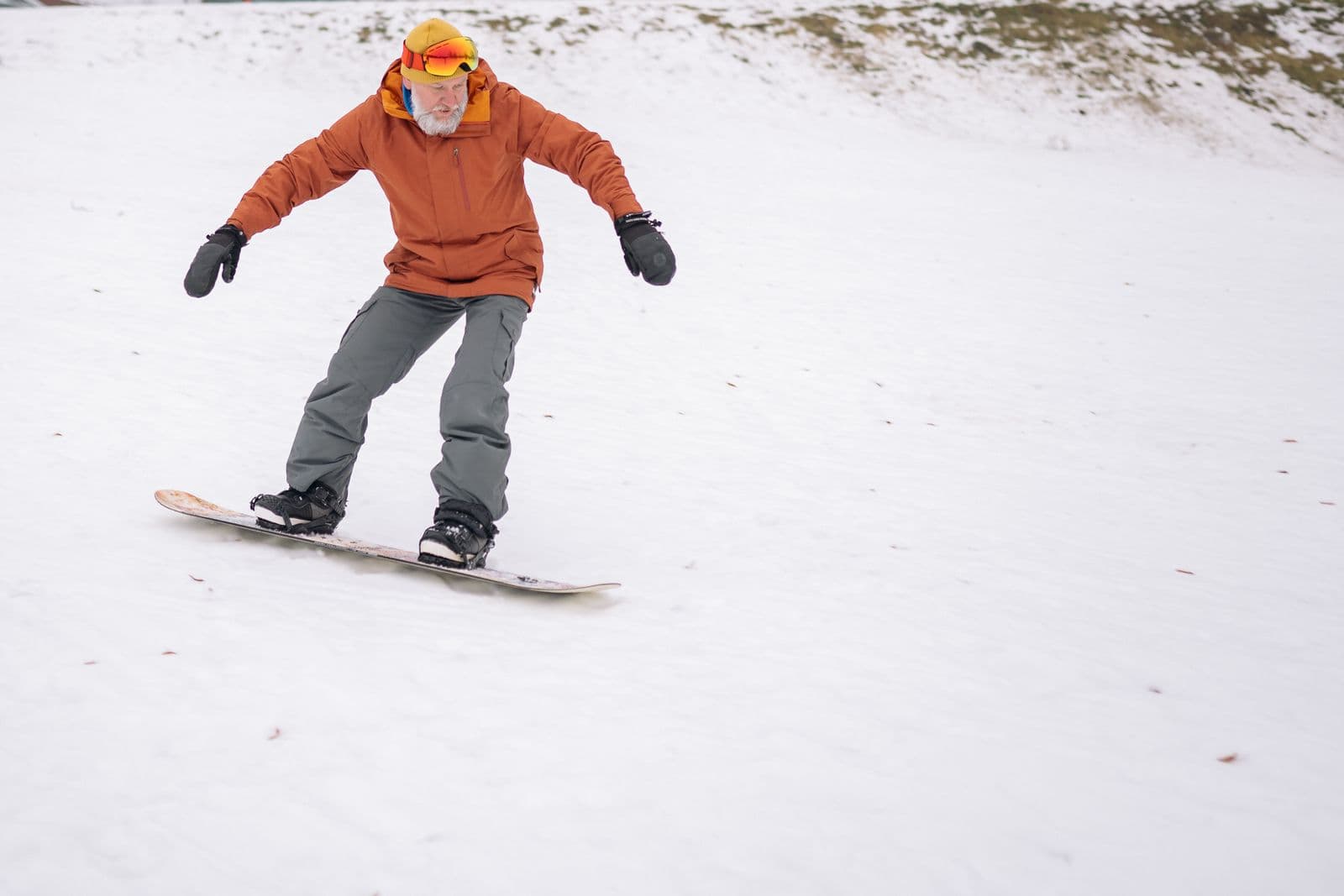
The sport that rewards patience — and bills for neglect
Skiing is kind to age in ways most sports aren't: technique keeps compounding, efficiency replaces brute effort, and the chairlift does the cardio nobody misses. Bay Area skiing adds its own pattern — the Friday-night drive to Tahoe, three hard days, and a season that might hold six of those weekends with nothing in between.
That pattern is the whole story of the over-40 ski injury. The knee that tears in February usually lost its case in October, when the leg strength that absorbs moguls and catches a backseat moment didn't get built. The weekend-warrior load spike is the sport's classic injury setup, and the 40-something returning skier is its classic patient.
The maintenance contract
- Legs, year-round. Two or three strength sessions a week — squats, lunges, step-downs, single-leg balance work. The injury-prevention literature's clearest finding is that strength training cuts injury risk; skiing is where you feel it by 2 p.m.
- Build the season before the season. Six weeks of ski prep turns the first weekend from a gamble into a warm-up.
- Trips are training blocks. Hardest skiing early in the trip and early in the day; a rest or half day in the middle of a long trip; hydration and sleep counted as recovery, because at altitude they are.
- Conditions are a choice. Soft morning groomers and spring corn are friendly loads; refrozen afternoon ice is not. Over 40, you get to pick your battles — that's the privilege of not racing anybody.
- The 3 p.m. decision. Fatigue is when knees get hurt. "One more run" on cooked legs is the most expensive sentence in skiing; the skiers still skiing at 70 are the ones who learned to end on a good run instead of a last one.
- Gear honesty. Bindings checked and boots that actually fit are knee and shin protection you can buy.
When something already hurts
Morning-stiff knees that warm up are normal mileage; pain that changes how you ski is not — the traffic-light rules sort one from the other, and the knee guide covers the MCL-vs-ACL-vs-wear-and-tear stories. Coming back from a reconstruction? The ACL return ladder is the honest version, at any age.
The same long-game logic runs through climbing after 40 and basketball over 40 — the sports change, the contract doesn't.
The pre-season check
A ski-literate PT can measure what October owes February: quad and hamstring strength, single-leg control, hip and ankle mobility, and a plan for the gaps. Here's how to find one — and if you're local, browse ski and snowboard PTs across the Bay Area. Most plans with out-of-network benefits reimburse part of the fee via superbill.
Frequently asked questions
No. Exercise guidance for older adults is unambiguous that strength and balance training keep working at every age, and skiing is a skill sport where experience buys efficiency the twenty-somethings don't have. The honest requirement isn't youth — it's legs that trained between seasons.
Sources (5)
- Chodzko-Zajko WJ, et al. American College of Sports Medicine position stand: exercise and physical activity for older adults. Med Sci Sports Exerc. 2009. — ACSM
- Lauersen JB, et al. The effectiveness of exercise interventions to prevent sports injuries: systematic review and meta-analysis. Br J Sports Med. 2014. — BJSM
- Gabbett TJ. The training-injury prevention paradox. Br J Sports Med. 2016. — BJSM
- Johnson RJ, et al. Myths concerning alpine skiing injuries. Sports Health. 2009. — Sports Health
- MedlinePlus. Sports injuries. — MedlinePlus
This article is for education only and isn't medical advice. Always talk to a licensed clinician about your specific situation.