
Ski Knee Injuries: MCL, ACL & the Pop Heard on the Mountain
The sport's signature joint explained — why most MCL sprains heal without surgery, and what an ACL pop actually means
Updated October 20262 minute read
The knee is skiing's signature joint. The most common injury is the MCL sprain — the inside-of-knee ligament, hurt in snowplow falls and caught edges — and it mostly heals without surgery. The famous one is the ACL tear: a pop deep in the knee, often from the backward twisting "phantom foot" fall, followed by swelling within hours. Twist-pop-swelling goes to a physician and imaging first; after that, whether the road is surgical or not, rehab is measured in months and a criteria-based return is what protects the comeback.
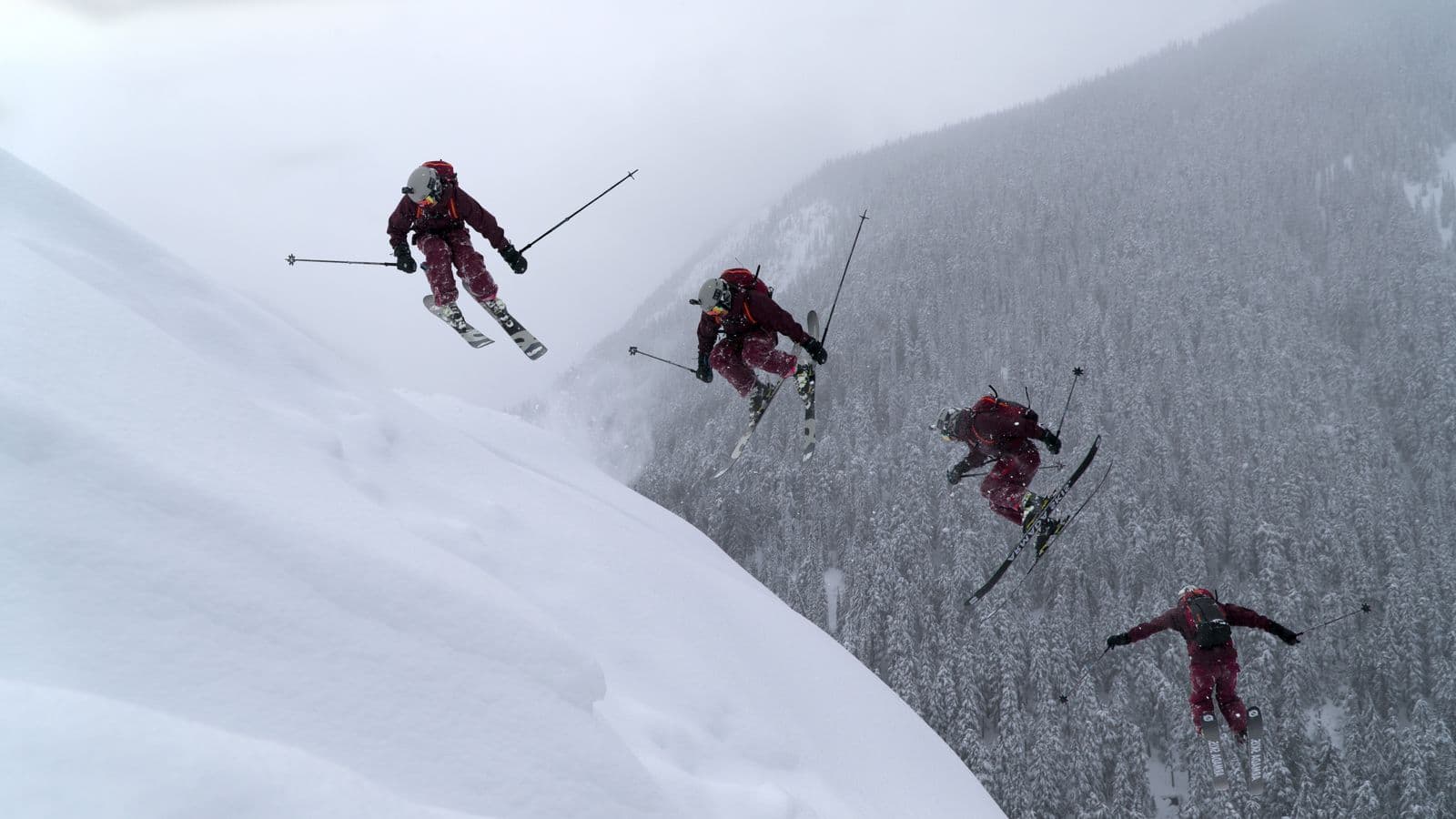
Why skiing owns the knee
Skis are levers, and your knee sits at the end of them. Edges catch, boots hold the ankle rigid, and twisting forces that other sports spread across the whole leg concentrate in two ligaments: the MCL on the inside of the knee and the ACL in its center. Add the Bay Area pattern — months off snow, then a three-day Tahoe weekend on tired legs — and the knee is where skiing's bill usually arrives.
The common one: MCL sprains
The MCL is skiing's most-injured ligament, strained when the ski tips wide and the knee dives inward — snowplowing beginners, caught inside edges, and tangled falls. The story is inside-of-knee pain, tender to the touch, worse pushing the knee inward, usually without dramatic swelling.
The good news is genuine: most MCL sprains heal without surgery. Grade 1–2 injuries respond to progressive loading over roughly 2–8 weeks — early motion, then strengthening, then sport-pattern work (the MCL condition guide goes deeper). Even many grade 3 injuries are managed with bracing and rehab. What they punish is impatience: re-spraining a half-healed MCL is the classic February mistake.
The famous one: ACL tears
The ACL tear is skiing's celebrity injury for a reason. The classic mechanisms are well studied: the phantom foot fall — sitting back and twisting, the ski's tail acting like a foot pointing the wrong way — and the hard landing caught on edge. Ski-injury researchers built awareness programs around recognizing these positions, and teaching them measurably reduced serious knee sprains among ski-area staff.
The story: a pop deep in the knee, pain, a knee that may feel briefly wrong-then-fine, then swelling within hours as the joint fills with blood. Some skiers even finish the run — stability at walking pace says little about ligament status.
The rule: twist-pop-swelling goes to a physician and imaging first. This is not a ski-through-it situation, and it's not a PT-first situation either; PT owns the months after the diagnosis.
Surgery or not is a genuine decision, not a reflex. A landmark randomized trial found many active adults did as well with structured rehab first — reconstructing later only if instability persisted — as with early surgery. Skiers chasing aggressive, high-edge skiing often choose reconstruction; recreational cruisers sometimes don't. Either way, the ACL condition guide covers the decision, and the comeback runs through criteria-based return — strength symmetry and hop tests, not anniversaries.
The quiet one: meniscus
Twisting injuries can also catch the meniscus — the knee's cartilage washer. Clues: joint-line pain, swelling that comes and goes, catching or locking sensations (more here). True locking — a knee stuck short of straight — deserves prompt assessment. Most degenerative meniscus trouble in over-40 skiers responds to loading rehab, not arthroscopy.
Getting the right help
A ski-literate PT grades what happened, coordinates imaging when the story demands it, and builds the strength road back — here's how to find one, and Bay Area skiers can browse ski-friendly PTs by region. Evaluations run $125–$250 cash-pay ($175–$275 in the Bay Area); MCL episodes usually resolve within 6–12 visits, while ACL rehab — surgical or not — honestly runs months, much of it self-managed between check-ins. A superbill often recovers part of the cost (what PT costs), and California's direct access means the first assessment needs no referral.
Frequently asked questions
Sources (6)
- Ettlinger CF, Johnson RJ, Shealy JE. A method to help reduce the risk of serious knee sprains incurred in alpine skiing. Am J Sports Med. 1995. — AJSM
- Frobell RB, et al. A randomized trial of treatment for acute anterior cruciate ligament tears. N Engl J Med. 2010. — NEJM
- Posch M, et al. Ski-geometric parameters do not differ between ACL injury mechanisms in recreational alpine skiing. Knee Surg Sports Traumatol Arthrosc. 2022. — KSSTA
- Ardern CL, et al. 2016 Consensus statement on return to sport from the First World Congress in Sports Physical Therapy, Bern. Br J Sports Med. 2016. — BJSM
- AAOS OrthoInfo. Anterior cruciate ligament (ACL) injuries. — OrthoInfo
- AAOS OrthoInfo. Collateral ligament injuries. — OrthoInfo
This article is for education only and isn't medical advice. Always talk to a licensed clinician about your specific situation.