
Masters Rowing After 40: The Comeback Sport, Done Right
Why rowing might be the best lifetime sport there is — and what backs, ribs, and hips want in exchange
Updated October 20262 minute read
Rowing is one of the great lifetime sports: low-impact, scalable to any fitness, and rowed competitively into people's 80s — and the Bay Area masters scene rows year-round. The traps are specific: the comeback-after-decades spike (your aerobic engine returns faster than your tissue tolerance), rib honesty for masters rowers with lower bone density, and the hinge strength and hip mobility the stroke quietly assumes. Pay those bills and the sport pays back for decades.
The good news first
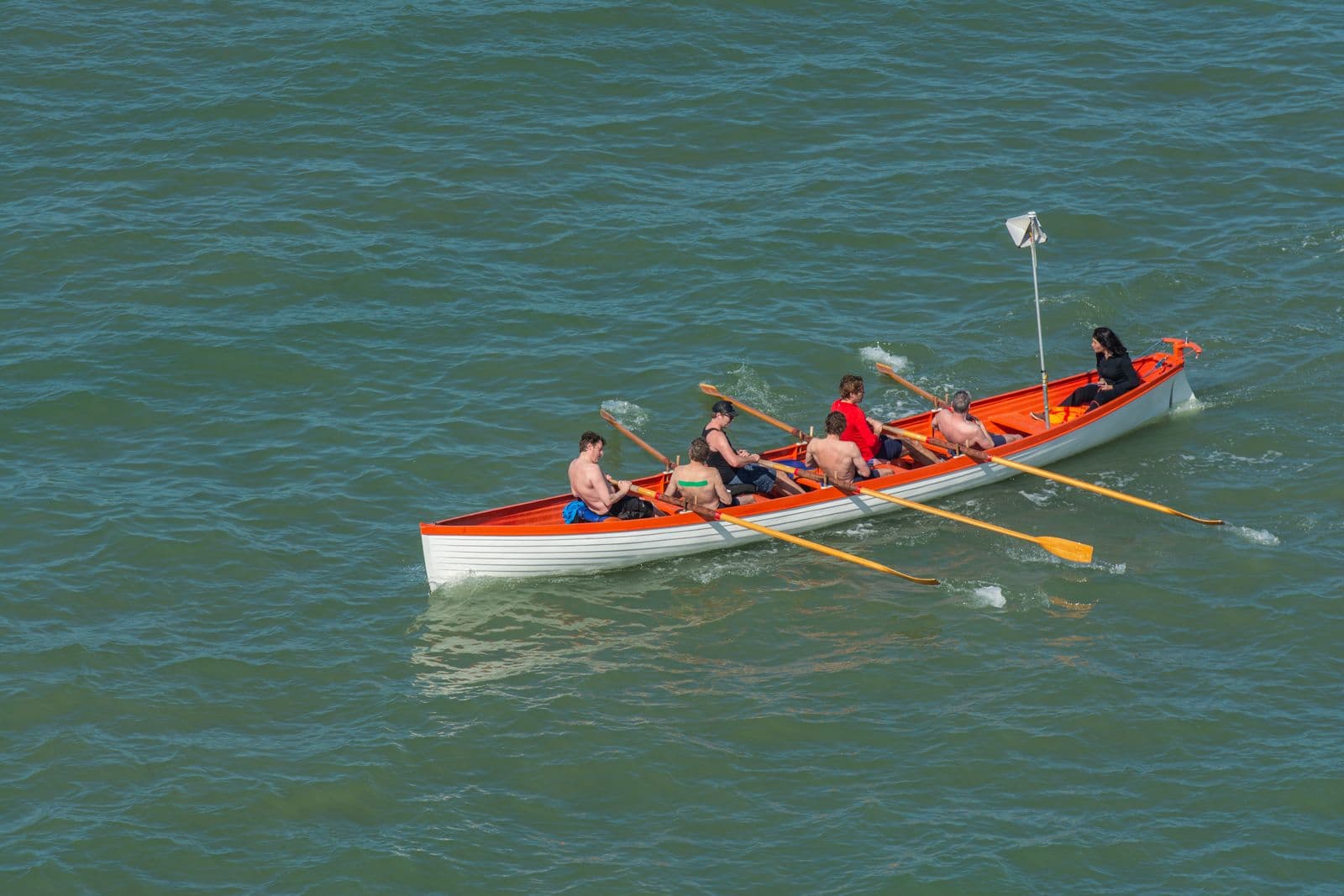
Rowing ages extraordinarily well. It's zero-impact, symmetric in the sculling boats, infinitely scalable by rate and pressure, and genuinely competitive at every age — masters events run into the 80-plus categories, and sports-medicine writing has recommended the sport to older athletes for decades. The engine responds to training at any age, and the Bay Area's year-round water means no forced off-season. Many of the strongest club rowers you'll meet started after 40.
What changes isn't the ceiling. It's the contract.
The comeback-after-decades trap
The sport's classic masters injury story isn't the beginner — it's the returner. Fitness and technique come back in weeks; tissue tolerance for a thousand loaded strokes per outing comes back in months. The workload research is blunt: it's the spike that injures, not the total. The returner's rules:
- Ramp meters like a novice regardless of pedigree — add duration first, then rate, then pressure, one at a time (the load guide covers the arithmetic).
- Let boredom gate progress. Hold each dose until it feels easy for two weeks before climbing.
- Respect the erg's honesty. The erg never balances badly or catches a crab — it will happily let you pull harder than your back is ready for.
Rib honesty
Rib stress injuries track with load spikes and with bone density, and the research specifically names reduced bone mineral density as a risk factor — which makes them a masters issue, and particularly a masters-women's issue after menopause. The rule: focal, point-able rib-cage pain that hurts with deep breaths, coughing, or pressing gets assessed and rested early. Caught in week one, it costs weeks; rowed through, it costs a season.
The maintenance work that stops being optional
- Hinge strength, year-round. The stroke is a loaded hinge a thousand times an outing; deadlift-pattern strength is what makes that survivable, and the trial evidence on strength training for injury prevention is about as one-sided as sports science gets. The strength and mobility guide is the menu.
- Hip mobility and thoracic rotation. Stiff hips make the spine round at the catch; a stiff upper back feeds side-specific trouble in sweep boats. Ten minutes of mobility buys compression the back doesn't have to absorb.
- Recovery rules for doubling up. Masters calendars love the Saturday double (row plus erg, or row plus regatta). After 40, back-to-back high-pressure days are the flare generator — follow hard days with easy or off, and treat sleep as training.
Technique is the superpower
The masters rower's edge is the same as the masters climber's and skier's: efficiency. Clean sequencing — legs, then body, then arms — a tall catch, and honest pressure management load the engine instead of the spine. If you're returning after years away, two or three coached technique sessions are worth a month of solo meters.
The pre-season PT check
One cash-pay visit before your season — hinge and hip assessment, a six-week load plan, a rib-risk conversation if you're postmenopausal — runs $125–$250 nationally, $175–$275 in the Bay Area (what PT costs; a superbill can recover part). Here's how to find a PT who knows the stroke, and Bay Area rowers can browse rowing-friendly PTs by region. Fellow travelers: masters swimming, climbing after 40, and skiing after 40 run the same playbook in other sports.
Frequently asked questions
Sources (5)
- Boland AL, Hosea TM. Rowing and sculling and the older athlete. Clin Sports Med. 1991. — Clin Sports Med
- Chodzko-Zajko WJ, et al. American College of Sports Medicine position stand: exercise and physical activity for older adults. Med Sci Sports Exerc. 2009. — ACSM
- Vinther A, et al. Exercise-induced rib stress fractures: influence of reduced bone mineral density. Scand J Med Sci Sports. 2005. — Scand J Med Sci Sports
- Lauersen JB, et al. The effectiveness of exercise interventions to prevent sports injuries: systematic review and meta-analysis. Br J Sports Med. 2014. — BJSM
- Gabbett TJ. The training-injury prevention paradox: should athletes be training smarter and harder? Br J Sports Med. 2016. — BJSM
This article is for education only and isn't medical advice. Always talk to a licensed clinician about your specific situation.