
Erg Technique and Setup: The Machine Is a Load Multiplier
Damper honesty, drag factor, sequencing, and the setup details that decide what your spine pays per meter
Updated October 20262 minute read
The erg compounds whatever you bring to it: a damper set too high turns every stroke into a heavy deadlift, a lunge at the catch sends the legs' work to the low back, and a foot stretcher set wrong changes the hinge a thousand times a session. Lower damper is not weaker — most fast rowers train at drag factors far below the lever's maximum — and sequencing (legs, then back, then arms) is the cheapest back protection in the sport. If pain shows up on the erg but not the water, or the reverse, that's a technique-and-setup clue worth an assessment.
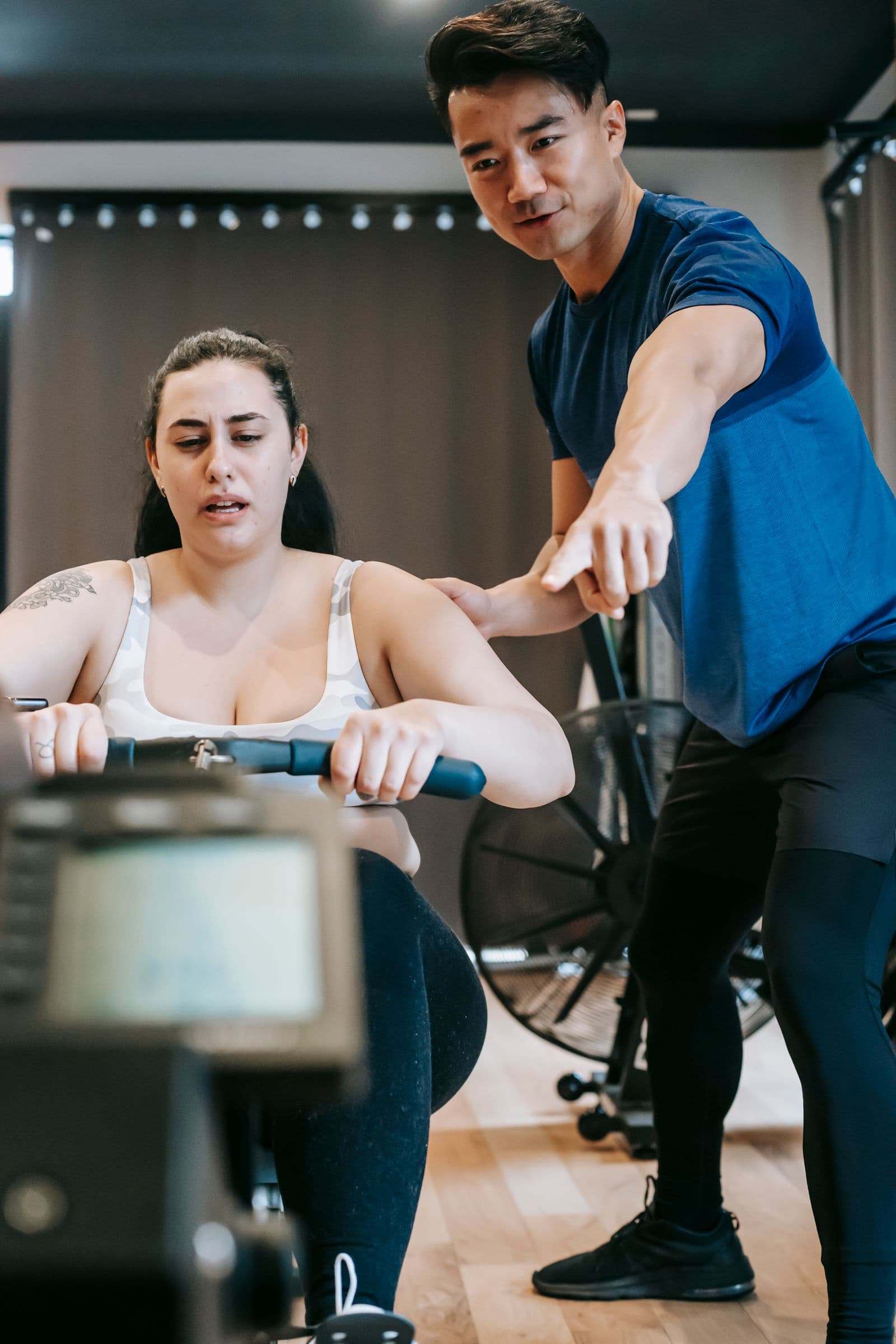
The honest machine
The ergometer is rowing's most valuable training tool and its best-documented injury driver — the same study that made erg volume famous as a back-pain predictor is the reason every serious program now audits its winter blocks. The machine isn't dangerous; it's honest. It repeats exactly what you give it, with no run between strokes and no water to forgive a fault. Setup and technique decide whether that honesty compounds fitness or damage.
Damper and drag: the ego dial
The damper lever doesn't measure effort — it sets how much the flywheel resists, and the drag factor readout is the real number. High drag turns each stroke into a slow, heavy lift: more spinal load per stroke, more fatigue per piece, no extra fitness for the price. Most fast rowers train at moderate drag and make speed with sequencing and rate. Check your drag factor, set it deliberately, and stop treating the lever like a strength test.
Sequencing: legs, back, arms — in that order
The stroke's cheapest back protection is order of operations:
- Catch: shins vertical, spine long, hips loaded — not a lunge. The lunge-at-the-catch fault reaches with the lumbar spine for length the hips should supply.
- Drive: legs push first; the trunk swings through the middle; arms finish last. "Shooting the slide" — legs extending while the handle waits — leaves the back to drag the handle alone.
- Finish and recovery: arms away, body over, then slide — giving the next catch time to be a hinge instead of a scramble.
Ergometer biomechanics research shows measurable lower-limb asymmetries even in elite rowers — another reason the single-leg and hinge work belongs in every week.
Setup details that change the bill
- Foot-stretcher height: measurably changes technique and loading. Set it so the catch comes from the hips; lower is often kinder to stiff hips and long femurs.
- Slides or dynamic ergs: reduce the reversing load at the catch — worth trying for rowers whose backs tolerate water but not winter blocks.
- The screen: chasing a split while form degrades is an injury behavior, not toughness. Cap hard pieces by technique, not just by time — the last 500 of a tired piece is where rib and back stories begin.
When the machine is telling you something
Pain that appears only on the erg — or only in the boat — is diagnostic gold: same engine, different loading, and the difference points at technique, setup, or tissue tolerance. Bring the pattern to a rowing-literate PT (direct access; $125–$250 cash-pay, and what PT costs covers reimbursement). Here's how to find one — and Bay Area rowers can browse rowing-friendly PTs across the region.
Frequently asked questions
Sources (6)
- Wilson F, et al. Ergometer training volume and previous injury predict back pain in rowing; strategies for injury prevention and rehabilitation. Br J Sports Med. 2014. — BJSM
- Buckeridge E, et al. Kinematic asymmetries of the lower limbs during ergometer rowing. Med Sci Sports Exerc. 2012. — MSSE
- Buckeridge EM, et al. Influence of foot-stretcher height on rowing technique and performance. Sports Biomech. 2016. — Sports Biomech
- Vinther A, et al. Management of rib pain in rowers: emerging issues. Br J Sports Med. 2016. — BJSM
- MedlinePlus. Sports injuries. — MedlinePlus
- Thornton JS, et al. Treating low back pain in athletes: a systematic review with meta-analysis. Br J Sports Med. 2021. — BJSM
This article is for education only and isn't medical advice. Always talk to a licensed clinician about your specific situation.