
Forearm & Wrist Pain in Rowing: The Feathering Tax
Intersection syndrome, tendon overload, and the grip and technique fixes that calm them down
Updated October 20262 minute read
Rowing's forearm and wrist problems come from the feather: thousands of wrist rolls per session, a too-tight grip, cold wet early-season water, and volume spikes. The classic is intersection syndrome — an ache (sometimes a creak) a few finger-widths above the wrist on the thumb side — alongside extensor tendon overload and its cousin de Quervain's. Nearly all of it settles with load management, grip and technique fixes, and graded loading; what it shouldn't get is months of ignoring.
The feather is the dose
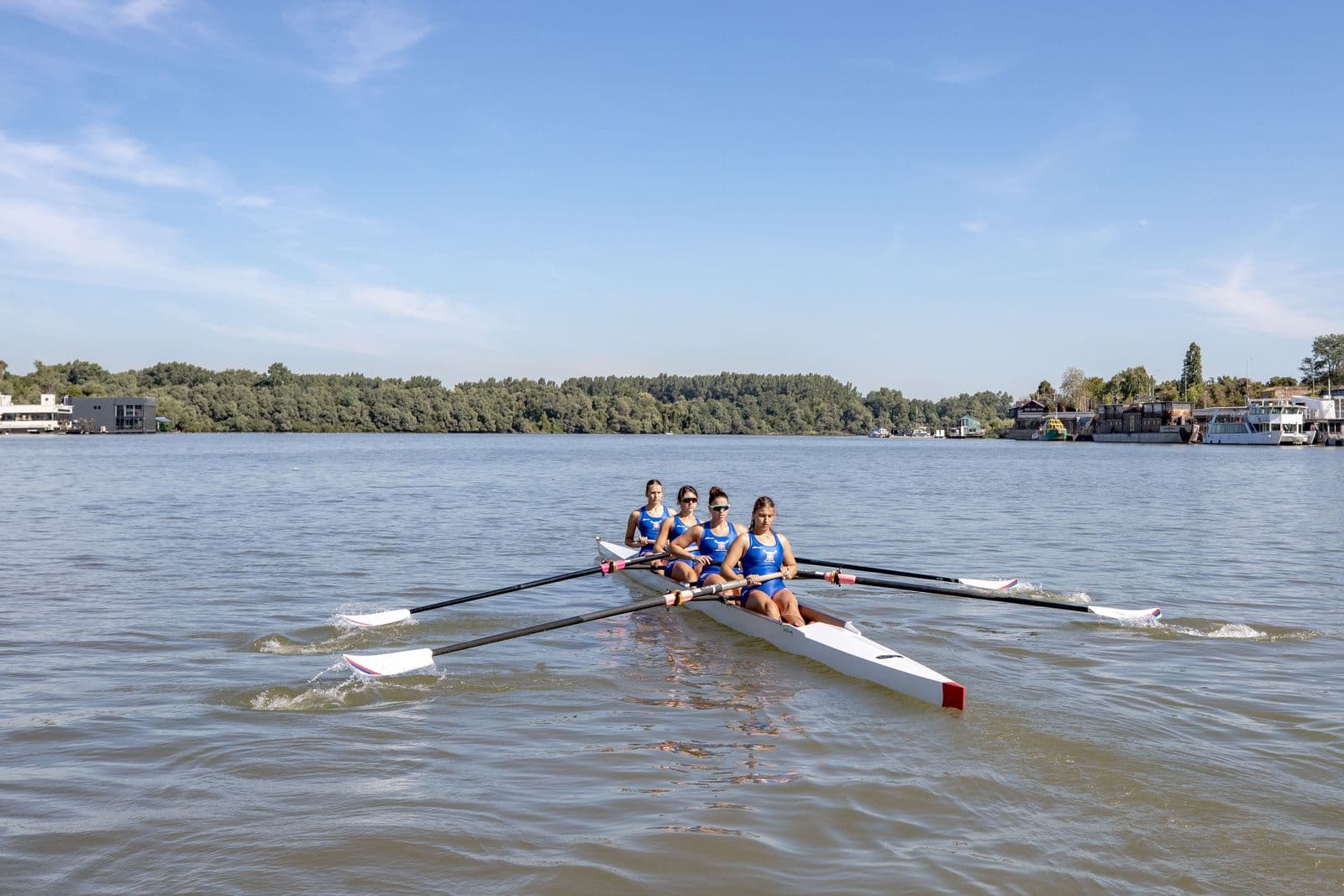
Every stroke, the inside wrist rolls the oar flat and square again — the feather. At thirty strokes a minute for an hour, that's nearly two thousand wrist rolls per session before you count the erg, and the rowing-injury literature has listed wrist tendon overload among the sport's characteristic complaints for decades. The usual aggravators: a death grip on the handle, cold, wet early-season rows, volume spikes, and blade work that fights chop instead of riding it.
The usual suspects
- Intersection syndrome — rowing's classic. An ache, swelling, and sometimes an honest-to-goodness creak on the thumb side of the forearm, a few finger-widths above the wrist, where two muscle groups cross. It flares with feathering and erg mileage and settles with load management and graded loading.
- Extensor tenosynovitis — the tendons that lift the wrist get hot from the same work; pain runs along the back of the wrist.
- de Quervain's tenosynovitis — the look-alike that lives at the thumb side of the wrist itself and hates thumb motion. Different address, similar rent: load management plus graded loading.
Two things that deserve a different queue: wrist pain after an actual fall onto the hand (bone until proven otherwise — especially with tenderness in the snuffbox below the thumb), and numbness or pins-and-needles in the fingers, which point to nerve irritation rather than tendon.
What actually helps
- Calm it: a short stretch of relative rest — reduced feathering (square-blade work is rehab in disguise), softer grip, shorter sessions. Sharp cases earn a brief support or taping phase.
- Fix the inputs: grip pressure (hook, don't strangle), handle size and condition, feathering mechanics, and the cold-weather warm-up the forearms never get.
- Rebuild: graded wrist-extensor and grip loading so the tendons tolerate next month's mileage — the forearm block in rowing strength and mobility.
- Re-enter the volume honestly: load management covers the build-back, and the return guide applies when a longer layoff was needed.
Steroid injections exist for stubborn tendon-sheath cases, but they're a later-line conversation with a physician — not a substitute for fixing grip, technique, and volume.
Getting the right help
A rowing-literate PT can tell intersection syndrome from de Quervain's in one exam, watch your grip and feather on the erg, and build the graded return. Here's how to find one, and Bay Area rowers can browse rowing-friendly PTs by region. Evaluations run $125–$250 cash-pay ($175–$275 in the Bay Area), most episodes resolve in 6–12 visits, and a superbill often recovers part of the cost (what PT costs).
Frequently asked questions
Sources (6)
- Tan YL, et al. Intersection Syndrome: A Proximal Cause of Radial-Sided Wrist Pain. Am J Phys Med Rehabil. 2024. — Am J Phys Med Rehabil
- Rumball JS, et al. Rowing injuries. Sports Med. 2005. — Sports Med
- Thornton JS, et al. Rowing Injuries: An Updated Review. Sports Med. 2017. — Sports Med
- Pujalte GGA, et al. Injections of the Hand and Wrist: Part II. Carpal Tunnel Syndrome, Ganglion Cyst, Intersection Syndrome, and de Quervain Tenosynovitis. Am Fam Physician. 2024. — Am Fam Physician
- MedlinePlus. Wrist injuries and disorders. — MedlinePlus
- Cuenca-Zaldívar JN, et al. Conservative treatments for De Quervain's tenosynovitis: A systematic review and network meta-analysis. J Hand Ther. 2026. — J Hand Ther
This article is for education only and isn't medical advice. Always talk to a licensed clinician about your specific situation.