
Knee Pain in Basketball: Jumper's Knee, Kneecap Ache, or the Urgent One
Below the kneecap, around it, or after a twist — each pattern plays by different rules
Updated October 20262 minute read
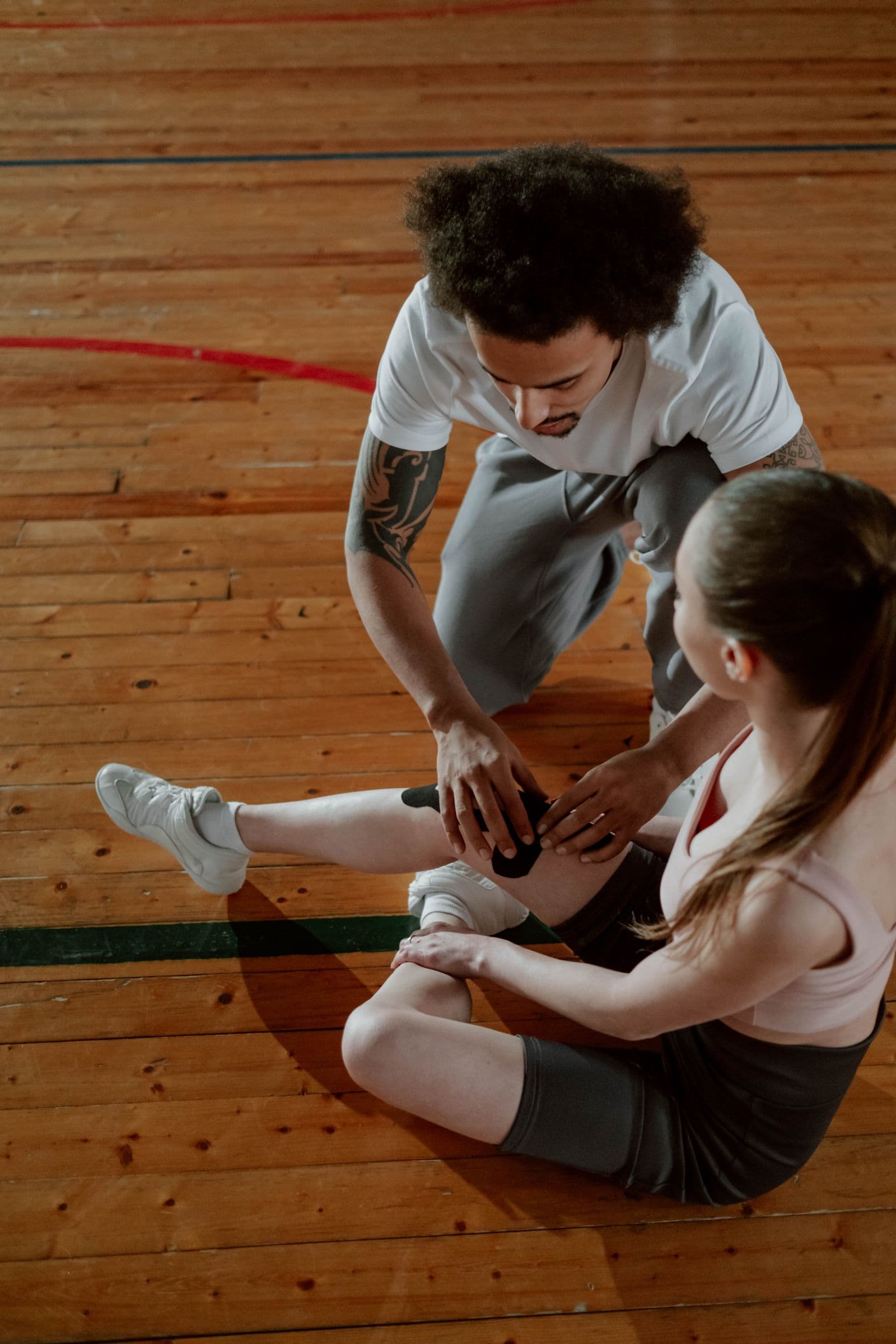
Basketball knee pain sorts into three stories: pinpoint pain on the tendon below the kneecap that flares with jumping is jumper's knee — the sport's signature tendon problem, fixed by loading programs rather than rest; a vaguer ache around the kneecap that tracks minutes played is the kneecap-overload pattern; and a twist or landing with a pop, fast swelling, or giving way is the urgent lane — ACL and meniscus territory that needs evaluation this week, not another run.
Start with the story, then the spot
Basketball asks more of knees than almost any sport — hundreds of jumps, landings, and decelerations per game — and NBA injury data ranks the knee among the sport's biggest minute-stealers. The good news: your knee pain's story sorts it fast. Did it build gradually with jumping? Did it creep in with heavy minutes? Or did one play change everything?
Pinpoint pain below the kneecap: jumper's knee
Pain you can touch with one fingertip on the tendon just below the kneecap — worst with jumping, deep lunges, and the first minutes of a run, often stiff the next morning — is jumper's knee (patellar tendinopathy). It earned its name honestly: prevalence studies put basketball and volleyball at the top of every sport surveyed, with a large share of elite jumpers affected at any given time.
Two truths run this condition. First, it's a load-tolerance problem, not damage — the tendon's capacity fell behind the jumping demand. Second, rest doesn't rebuild capacity — progressive heavy, slow strength work does, built toward jumping again. That's why players who "rested it all summer" relapse in week one, and why the loading approach is the treatment, not just the prevention. The traffic-light rules cover playing through a rehab block.
Ache around or behind the kneecap: the overload pattern
A vaguer ache you can't pinpoint — around or under the kneecap, worse with minutes played, stairs, and sitting with bent knees — is the kneecap-overload pattern (the runner's-knee story, which belongs to hoopers too). It tracks volume spikes: a new league on top of pickup, two-a-day runs, a return after months off. Hip and quad strengthening with short-term load management resolves most cases — and basketball's load math explains the spike that started it.
Contact to the outside of the knee: MCL
A blow to the outside of the knee that produces pain on the inside — a screen gone wrong, a collision in the paint — is the MCL pattern. Most heal well without surgery, graded properly.
The urgent lane: twist, pop, swelling, giving way
A plant-and-twist or an awkward landing, a pop you felt or heard, swelling arriving within hours, or a knee that buckles when you cut — that's ACL and meniscus territory, and it's a this-week evaluation, not a see-how-Sunday-feels. A knee that locks or catches joins the same lane. Playing on an unstable knee is how one structure's injury becomes two. The honest ACL guide covers risk, prevention, and the road back in depth — everything in it applies to basketball's plant-and-cut reality.
When to book
Two honest weeks of volume trimming without progress on either overuse pattern — or any urgent-lane sign — earns an evaluation. Cash-pay, that's $125–$250 ($175–$275 in the Bay Area, what PT costs), usually with a plan that keeps you on the court at modified load. Here's how to find a PT who treats hoopers, and Bay Area players can browse basketball-friendly PTs by region.
Frequently asked questions
Sources (7)
- Lian OB, et al. Prevalence of jumper's knee among elite athletes from different sports: a cross-sectional study. Am J Sports Med. 2005. — AJSM
- Malliaras P, et al. Patellar Tendinopathy: Clinical Diagnosis, Load Management, and Advice for Challenging Case Presentations. J Orthop Sports Phys Ther. 2015. — JOSPT
- Willy RW, et al. Patellofemoral Pain: Clinical Practice Guidelines. J Orthop Sports Phys Ther. 2019. — JOSPT
- Drakos MC, et al. Injury in the National Basketball Association: a 17-year overview. Sports Health. 2010. — Sports Health
- MedlinePlus. Knee injuries and disorders. — MedlinePlus
- Breda SJ, et al. Effectiveness of progressive tendon-loading exercise therapy in patients with patellar tendinopathy: a randomised clinical trial. Br J Sports Med. 2021. — BJSM
- van der Heijden RA, et al. Exercise for treating patellofemoral pain syndrome. Cochrane Database Syst Rev. 2015. — Cochrane
This article is for education only and isn't medical advice. Always talk to a licensed clinician about your specific situation.