
Basketball Shoes, High-Tops & Courts: What the Evidence Actually Says
The high-top myth, the traction truth, and why blacktop season loads different
Updated October 20262 minute read
The classic beliefs mostly don't survive the research: high-tops haven't been shown to prevent ankle sprains (a randomized basketball trial found no difference by collar height), while ankle braces have real supporting evidence for players with prior sprains. What matters more: traction (dusty courts cause slips), cushioning that still works, playing court sports in court shoes, and respecting outdoor blacktop as a heavier load than hardwood.
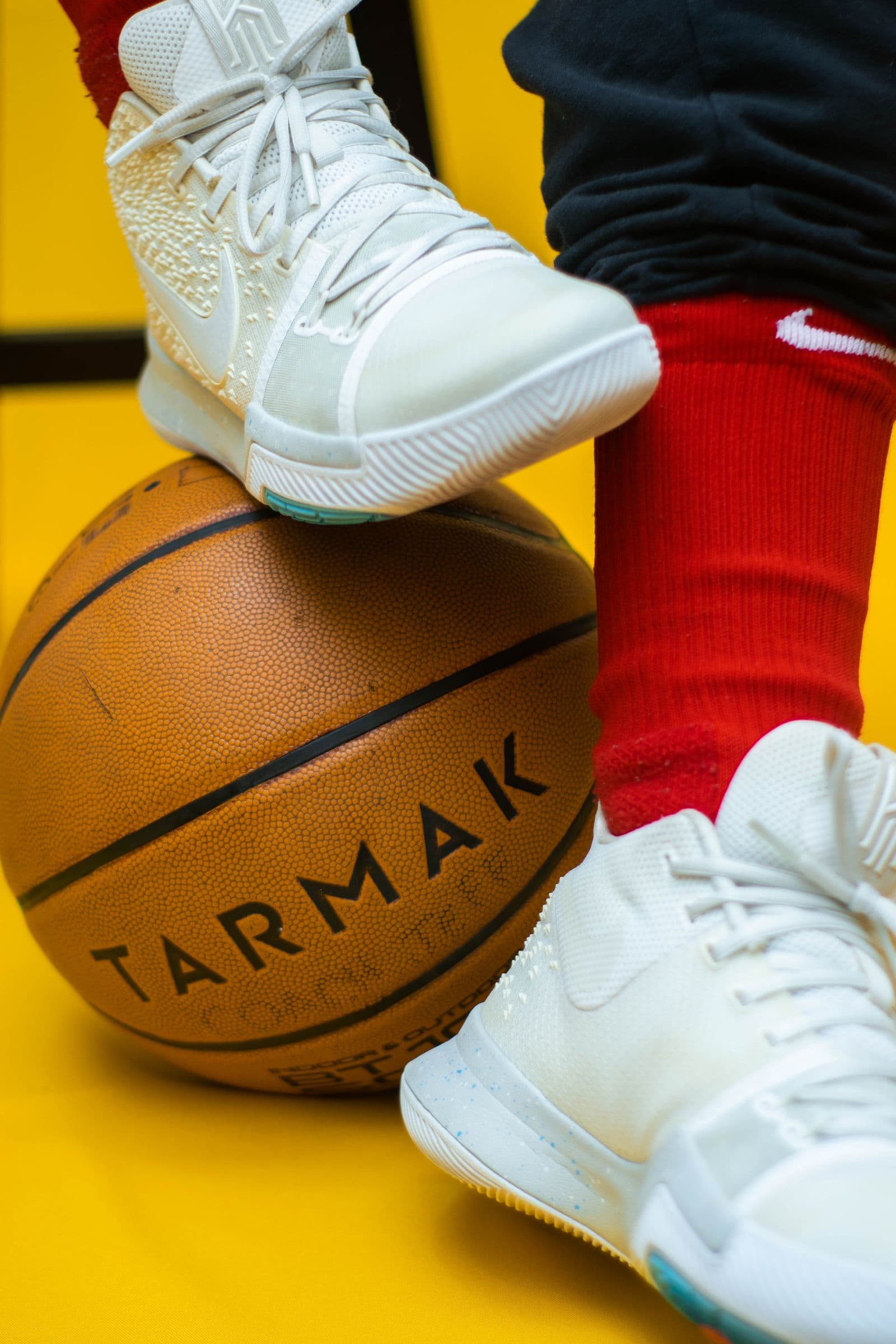
The high-top myth, retired politely
Basketball's oldest equipment belief — high collar equals safe ankle — got its clean test decades ago: a prospective randomized study of basketball players found no meaningful difference in sprain rates between high- and low-top shoes. Risk-factor research since has pointed at history (prior sprains), landing situations, and fatigue — not collar height. Half the league plays in lows now for a reason.
What the collar can't do, two things genuinely can:
- Ankle braces, for ankles with history. Trial evidence supports semi-rigid bracing to cut re-sprain risk in court athletes — the best-supported equipment intervention on this page. If you've sprained twice, that's a brace conversation plus the rehab that retrains the ankle.
- Strength and balance work — the fix that lives in your body instead of your gym bag (the program).
Traction is the real equipment variable
More court injuries trace to grip than to collars: a dusty floor turns cuts into slides and forces the cautious, flat-footed movement that rolls ankles. The unglamorous rituals work — wipe soles, play the sticky spots, retire shoes whose outsole pattern has gone smooth. If a court is genuinely slick, treat it like weather: adjust how hard you cut.
Hardwood vs blacktop
Outdoor ball is its own load profile: asphalt returns more impact through knees and tendons, eats outsoles in weeks, and summer blacktop season often triples someone's weekly run volume at the same time — the classic spike wearing a nostalgia costume. Transition into outdoor season like any load change, and give the patellar tendon rules a reread when it starts.
The umbrella rule from every court sport on this site applies here too: play court sports in court shoes — running shoes are built for straight lines and give up lateral support exactly when a closeout asks for it (the sibling logic).
When footwear belongs in a PT conversation
- Recurring ankle sprains — the brace-plus-rehab combination beats either alone
- Pain that tracks a shoe change — new signature shoe, dead cushioning, or the annual blacktop transition
- Foot pain that outlasts two weeks of sensible modification
A cash-pay evaluation runs $125–$250 ($175–$275 in the Bay Area, what PT costs), and a superbill often recovers part of it. Here's how to find a PT who knows the game, and Bay Area players can browse basketball-friendly PTs by region.
Frequently asked questions
Sources (5)
- Barrett JR, et al. High- versus low-top shoes for the prevention of ankle sprains in basketball players: a prospective randomized study. Am J Sports Med. 1993. — AJSM
- McKay GD, et al. Ankle injuries in basketball: injury rate and risk factors. Br J Sports Med. 2001. — BJSM
- Janssen KW, et al. Bracing superior to neuromuscular training for the prevention of self-reported recurrent ankle sprains. Br J Sports Med. 2014. — BJSM
- Doherty C, et al. The incidence and prevalence of ankle sprain injury: a systematic review and meta-analysis. Sports Med. 2014. — Sports Med
- ChoosePT (APTA). Physical therapy guide: ankle sprain. — ChoosePT
This article is for education only and isn't medical advice. Always talk to a licensed clinician about your specific situation.