
Indoor Cycling and Injury: Why the Trainer Loads You Harder Than the Road
Zwift hours, spin classes, and the fixed-position problem — the honest physiology of riding indoors
Updated October 20262 minute read
Indoor riding is sneaky load: no coasting, no corners, and erg mode's relentless resistance mean a Zwift hour can out-work two on the road, while the fixed position surfaces saddle, hand, and neck problems faster than outdoor riding ever did. The fixes are unglamorous and effective — treat indoor minutes as premium-intensity minutes in your weekly budget, make your indoor setup at least as good as your outdoor fit, and stand, shift, and break position often.
The hour that doesn't lie
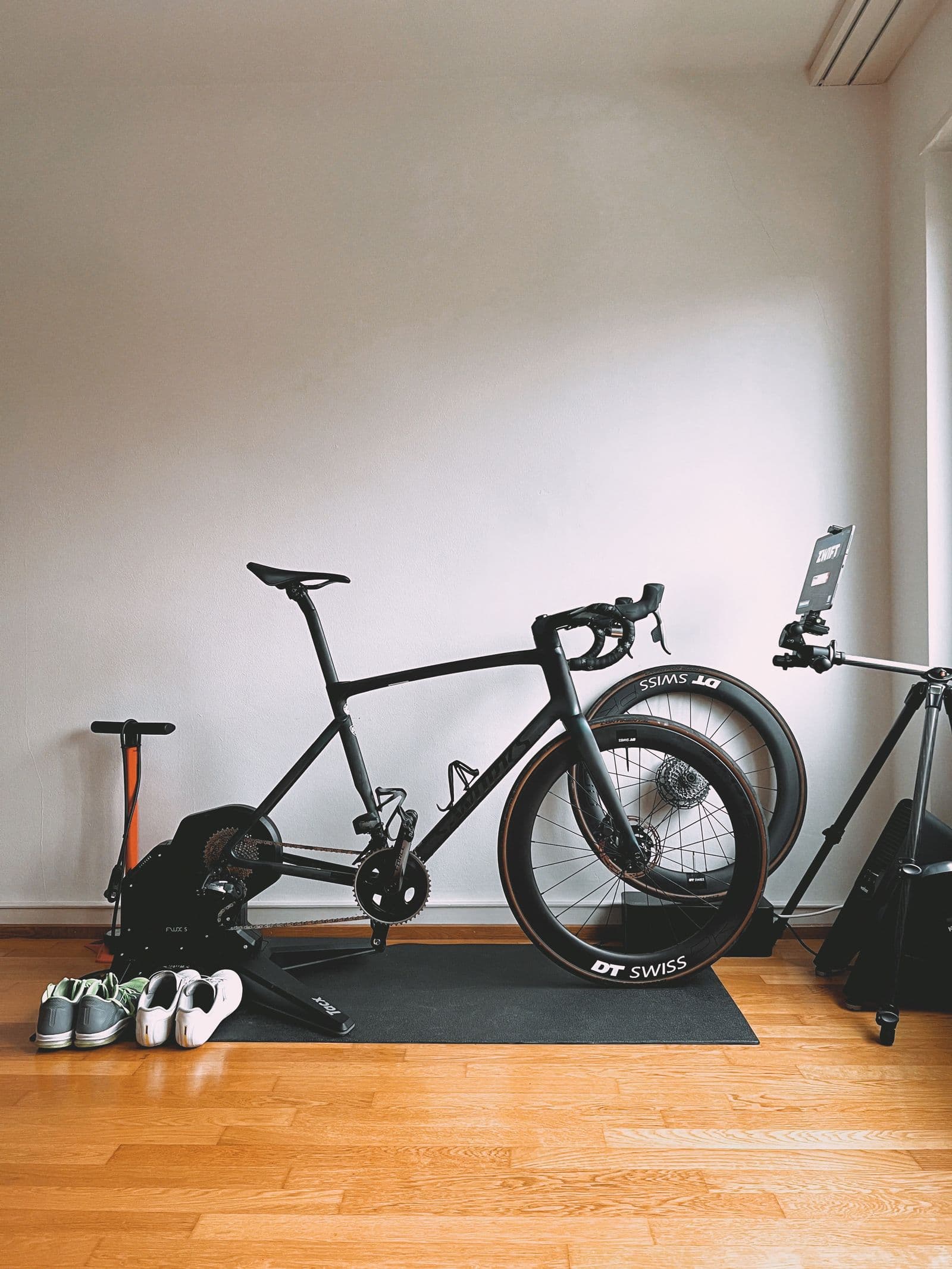
Outdoor riding is full of secret rest: you coast into corners, spin easy behind wheels, stop at lights, and freewheel descents. Strip all of that away — which is exactly what a trainer does — and the same "hour of riding" becomes something much denser. Add erg mode, which holds your target watts whether you feel like it or not, and a Zwift race league, which turns Tuesday into an interval session you didn't plan, and you have the modern pattern PTs now see every winter: riders whose outdoor fitness was fine developing knee trouble and saddle problems during their indoor months.
The load principle is the same one that governs every sport: it's not the total, it's the spike. Count indoor minutes as premium-intensity minutes in the weekly budget — the load guide does the math.
The fixed-position problem
Pro-cyclist injury research shows the pattern clearly: cycling's overuse problems concentrate where position concentrates load — knees, low back, and the contact points. Outdoors, your body constantly micro-moves: out of the saddle on rises, shifting on the hoods, coasting corners. The trainer removes all of it, so the same square centimeters of nerve, skin, and tendon take every minute.
What that means in practice:
- Numbness arrives faster indoors — hands and saddle-region numbness that outdoor riding only hinted at. Urology research on cyclists is blunt about not ignoring persistent perineal numbness; indoors, the fix starts with scheduled standing breaks every 10–15 minutes.
- Necks and backs stiffen staring at a screen in one posture — the position-pain guide applies double indoors.
- Setup errors get amplified. A saddle 1cm too high that outdoor variety forgave becomes a nagging knee indoors — saddle-height research ties small changes directly to joint load. Replicate your best outdoor fit exactly, or treat the trainer bike to a proper fit.
And a fan. Overheating changes your position (slumping, death-grip) long before it ends your ride.
Spin class: the 90-second setup
Rental bikes are set up for whoever rode them last. Before the lights dim: saddle to roughly hip height standing beside it, knee softly bent at the bottom of the stroke, saddle fore-aft so your knee sits over the pedal axle, bars at or above saddle height for your first months. Then ride the first few classes at your effort, not the playlist's — novel rhythm choreography is load too, and the first-month spike is the classic spin-class injury story.
Indoor as medicine
Everything that makes the trainer sneaky as training makes it perfect as rehab: controlled, measurable, interruptible. It's deliberately the first riding step in the return-from-injury plan, and short easy spins are often prescribed during rehab for knees and backs. Pair it with off-bike strength — the evidence says strength work roughly halves overuse risk, and no amount of riding, indoor or out, substitutes for it.
Numbness that persists, knees that track ride time, or a winter of Zwift that your spring body is complaining about — those earn an evaluation. Cash-pay runs $125–$250 ($175–$275 in the Bay Area; what PT costs), and Bay Area riders can browse cycling-literate PTs by region.
Frequently asked questions
Sources (5)
- Clarsen B, et al. Overuse injuries in professional road cyclists. Am J Sports Med. 2010. — AJSM
- Bini RR, et al. Saddle height effects on pedal forces, joint mechanical work and kinematics of cyclists and triathletes. Eur J Sport Sci. 2014. — EJSS
- Leibovitch I, Mor Y. The vicious cycling: bicycling related urogenital disorders. Eur Urol. 2005. — Eur Urol
- Gabbett TJ. The training-injury prevention paradox: should athletes be training smarter and harder? Br J Sports Med. 2016. — BJSM
- Lauersen JB, et al. The effectiveness of exercise interventions to prevent sports injuries: systematic review and meta-analysis. Br J Sports Med. 2014. — BJSM
This article is for education only and isn't medical advice. Always talk to a licensed clinician about your specific situation.