
Knee Pain From Cycling: What the Location Says About Your Fit
Front, outside, behind, or inside — each points at a different millimeter of your bike
Updated October 20262 minute read
Cycling knee pain is the most fit-correctable pain in sports: front-of-knee ache usually tracks a saddle that's too low or too much big-gear grinding, outside-knee pain tracks a saddle that's too high or cleat rotation, and pain behind the knee points the same direction. Fit changes where the load goes — but a knee that keeps complaining after a proper fit needs its capacity built, which is where physical therapy earns its fee.
The good news hiding in your knee pain
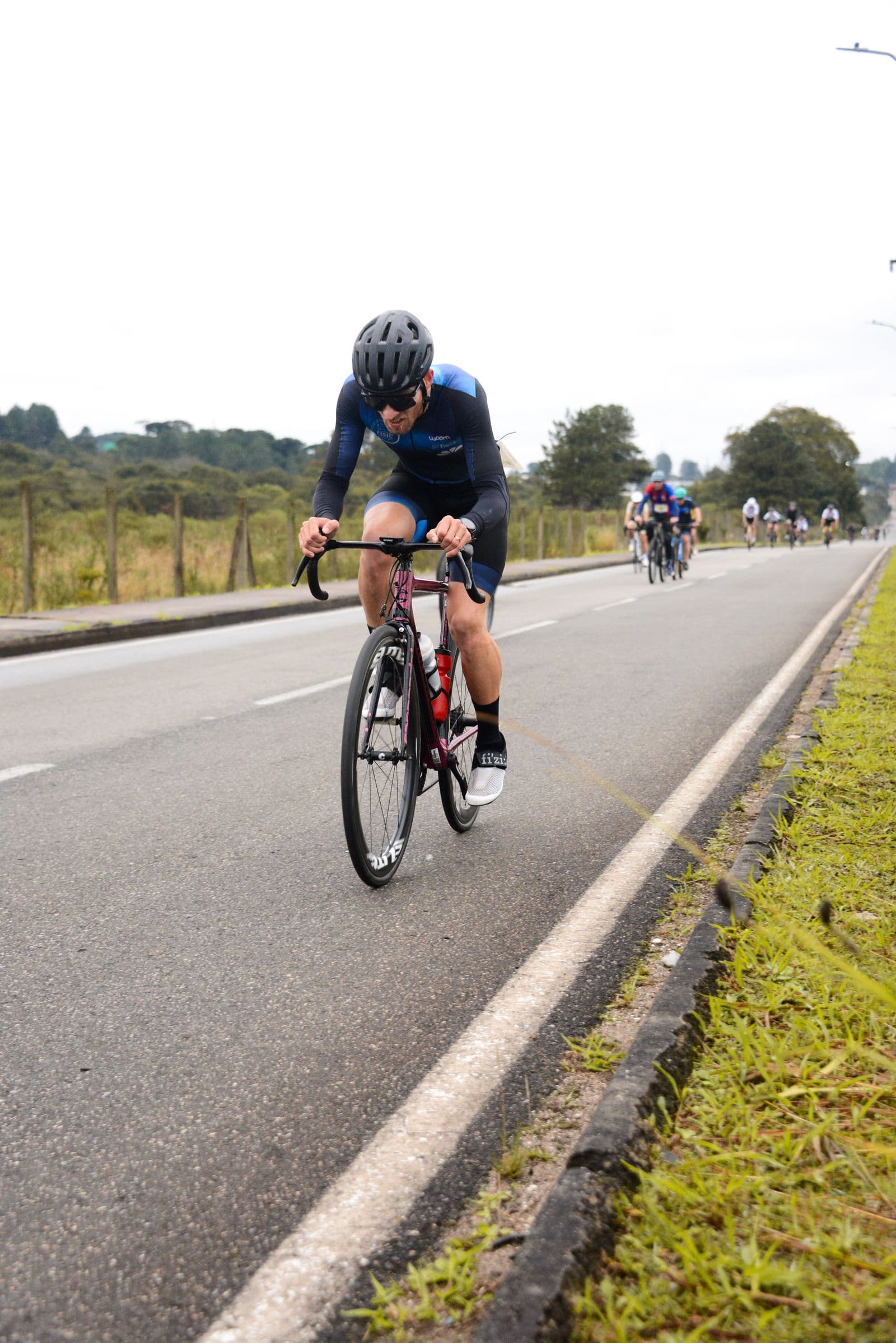
In pro-cyclist overuse studies, the knee is the most commonly affected joint — and the reason is also the cure: on a bike, your knee repeats the same arc thousands of times an hour, so a few millimeters of saddle or cleat position decide exactly which tissue absorbs the work. That makes cycling knee pain unusually honest. Point to where it hurts, and the bike usually confesses.
Front of the knee: the low-saddle signature
An ache around or under the kneecap, worse on climbs, into headwinds, and when grinding big gears. This is the patellofemoral pattern — the same runner's knee runners get, produced differently: a saddle that's too low (or too far forward) keeps the knee deeply bent at peak force, and compression under the kneecap climbs. Saddle-height research shows joint loading shifts meaningfully within the normal adjustment range.
The usual suspects: saddle lowered after a bike swap, winter trainer position drift, or a sudden love affair with big-gear intervals. First moves: raise the saddle toward a proper fit, spin an easier gear at higher cadence, and trim climbing volume for two weeks.
Outside of the knee: the high-saddle signature
Sharp or burning pain on the outer edge of the knee that shows up at a predictable time into the ride — IT band syndrome's cycling version. A saddle that's too high (or cleats rotated so your toes point in) makes the leg over-reach at the bottom of the stroke and the band snaps across the outside of the knee with every revolution. Dropping the saddle a few millimeters and checking cleat rotation and stance width is the first experiment.
Behind and inside the knee
Behind the knee usually means over-extension — saddle too high or too far back, loading the hamstring attachments. Inner knee pain often tracks cleat position (stance too wide or too much float lets the knee wander). Both are fit-first patterns; both deserve an evaluation if they survive a fit correction.
The two-week self-check
For pain with no swelling and no crash in the story:
- Check the fit basics — or book a proper fit: saddle height, fore/ aft, cleat rotation (the fit guide explains what each adjustment changes).
- Spin, don't grind — higher cadence, easier gears, flat routes.
- Trim volume by a third and skip the big climbs (the load logic).
- Use the ride-through-pain rules to judge each ride.
Two honest weeks without progress — or pain that's altering your pedal stroke — means book an evaluation. The knee has adapted down and needs capacity built, not just millimeters moved: that's progressive single-leg and hip strength work (strength for cyclists), usually 6–12 weeks alongside riding, not instead of it.
When to see someone
A cash-pay evaluation runs $125–$250 ($175–$275 in the Bay Area), needs no referral in most states, and a cycling-literate PT will look at your position — some will watch you on your own bike — before prescribing anything. What PT costs covers the money, a superbill often recovers part of it, and Bay Area riders can browse cycling-friendly PTs by region.
Frequently asked questions
Sources (6)
- Clarsen B, et al. Overuse injuries in professional road cyclists. Am J Sports Med. 2010. — AJSM
- Bini RR, et al. Saddle height effects on pedal forces, joint mechanical work and kinematics of cyclists and triathletes. Eur J Sport Sci. 2014. — EJSS
- Dettori NJ, Norvell DC. Non-traumatic bicycle injuries: a review of the literature. Sports Med. 2006. — Sports Med
- Willy RW, et al. Patellofemoral Pain: Clinical Practice Guidelines. J Orthop Sports Phys Ther. 2019. — JOSPT
- AAOS OrthoInfo. Patellofemoral Pain Syndrome. — AAOS OrthoInfo
- van der Heijden RA, et al. Exercise for treating patellofemoral pain syndrome. Cochrane Database Syst Rev. 2015. — Cochrane
This article is for education only and isn't medical advice. Always talk to a licensed clinician about your specific situation.